Why Xinglong Coffee Is a Must-Try Stir-Fried Brew
Visiting Hainan and missing Xinglong Coffee would be like going to Naples and skipping the pizza. This regional brew, born from the hands of returned overseas Chinese, isn’t just famous locally—it’s steeped in a century of cultural fusion and farming ingenuity. But what makes it truly different? It’s not just the growing conditions or the history, but the way it’s roasted.
The key to Xinglong Coffee’s signature bold, aromatic taste lies in its stir-frying method, where local roasters add sugar, salt, and butter during roasting—an approach rooted in Southeast Asian technique and tailored specifically to the medium-sized beans grown in low-altitude Hainan.
The Origins of Xinglong Coffee
Xinglong Coffee was first introduced to Hainan in 1953, shortly after the establishment of the Xinglong Farm. At the time, the strategy was 'using short-cycle crops to support long-cycle ones'—meaning crops like coffee, lemongrass, and rice were planted to generate early income while rubber trees matured. Coffee was chosen partly for its quick returns, and the first seeds came from Chengmai’s Fushan region.
Early trials compared three main coffee species: large, medium, and small. Large-bean varieties grew well but lacked cup quality. Small-bean Arabicas, though premium in flavour, demanded high altitudes and cool climates—neither of which Hainan offered. The compromise? Medium-bean arabica, later classified more precisely as a '' or 'medium-sized variety', became the clear choice due to its adaptability to Hainan’s tropical, low-elevation environment.
Why Medium-Bean Coffee Works in Hainan
Hainan’s geography—low elevation, coastal latitude, and humid tropical climate—proved unsuitable for highland-adapted beans like Typica or Bourbon (commonly small- or medium-bean types with strict altitude needs). The medium-bean variety, however, could thrive at Hainan’s elevation and produced a heavier body with acceptable acidity when grown using careful cultivation.
By the 1950s, over 3,000 acres of coffee were under cultivation in Xinglong. Workers handpicked only ripe cherries—one by one—and during busy seasons, students from nearby farms joined in for half-days of picking. This selective harvesting helped maintain high bean quality. However, after the 1990s, falling global coffee prices caused a sharp decline in production. Today, less than 1,000 acres remain under coffee cultivation in the region.
The Unique Stir-Fried Roast Method
Xinglong’s signature stir-frying technique is not just a gimmick—it’s a deliberate process adapted from Southeast Asian coffee traditions. During roasting, local roasters carefully control the heat and, at key moments, introduce three ingredients: white sugar, salt, and butter. These additions don’t just flavour the beans superficially—they catalyse Maillard reactions and deepen the roast profile, creating a cup that’s unusually rich, slightly sweet, and full-bodied.
This method produces a dark-to-medium-dark roast character without being overly bitter. The result is a brew with a strong, lingering aroma, often described as 'unctuous' or 'comforting'—a profile quite distinct from standard light or medium roasts typical in Western specialty markets. Some local roasters still practise this technique today, especially in smaller family-run operations or tourist-focused cafes.
Historical Endorsements and Cultural Impact
In February 1960, then-Premier Zhou Enlai visited Xinglong Farm and tried the local coffee. His remark—'Xinglong Coffee is world-class. I’ve had many foreign coffees, but ours tastes better'—became an enduring highlight in the region’s coffee lore. That endorsement, paired with the rich aroma of freshly roasted beans, cemented Xinglong Coffee’s reputation, at least locally, as something truly special.
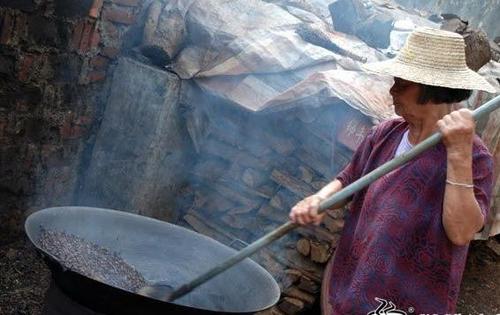
To this day, some cafes and tourist sites in Xinglong roast beans on-site, allowing visitors to watch the stirring, smell the aromas, and taste coffee fresh off the pan. Yet despite the technique, heritage, and even praise from national leaders, Xinglong Coffee has yet to achieve widespread recognition beyond Hainan—a lingering regret for many locals.
Frequently Asked Questions
What makes Xinglong Coffee different from other Chinese coffees?
Xinglong Coffee is distinct because it is grown in low-altitude Hainan and uses a medium-bean variety suited to tropical climates. It is also processed using a traditional stir-frying method with added sugar, salt, and butter during roasting, creating a rich, aromatic, and slightly sweet cup unlike most other Chinese or specialty coffees.
Why did Xinglong switch from large to medium coffee beans?
Early trials in the 1950s showed that large beans lacked cup quality, while small beans couldn’t thrive in Hainan’s low-altitude, hot climate. The medium-bean variety offered the best balance of adaptability, yield, and flavour for the region’s conditions.
Is Xinglong Coffee still widely available today?
No. Although historically significant, Xinglong Coffee now comes from fewer than 1,000 acres of planted area, down from 3,000 acres in the 1950s. Most of it is consumed locally or sold to tourists, and it is not broadly distributed on national or international specialty markets.
What flavours can you expect from stir-fried Xinglong Coffee?
The stir-frying method, which includes sugar, salt, and butter, results in a cup with a heavy body, strong aroma, and a slightly sweet, toasted profile. Notes often include dark caramel, roasted nuts, and a hint of buttery smoothness, rather than bright acidity or fruity tones.
Why didn’t Xinglong Coffee become as famous as Yirgacheffe or Blue Mountain?
Despite its unique method and historical prestige, Xinglong Coffee has remained a regional product due to limited production, lack of global distribution, and minimal marketing outside Hainan. Meanwhile, regions like Yirgacheffe and Jamaica have established international branding, export infrastructure, and consistent specialty profiles.
Recommended FrontStreet Beans for Medium Roast Lovers
If you enjoy the bold, rich character of Xinglong’s stir-fried coffee, try FrontStreet’s Jamaica Blue Mountain No.1 for its balanced chocolate and almond notes, or Brazil Queen Manor for creamy peanut and toffee richness with a smooth finish. Both offer medium-to-dark roast complexity without excessive brightness. Freshly roasted within 5 days · Orders placed before 17:00 ship the same day · Next-day delivery across most of Guangdong Province.
FrontStreet Coffee is a long-established specialty coffee roaster in Guangzhou China, selling freshly roasted beans from its own farm in Yunnan as well as dozens of carefully selected single-origin beans from around the world for both pour-over and espresso. The products deliver consistently excellent quality and great value, with shipping within 24 hours. Guangzhou's FrontStreet Coffee shop is recommended by many coffee lovers, and the beans are now available online at the Tmall 。
Important Notice :
前街咖啡 FrontStreet Coffee has moved to new addredd:
FrontStreet Coffee Address: 315,Donghua East Road,GuangZhou
Tel:020 38364473