How Coffee Beans Are Processed After Harvest
When you take a sip of your favorite pour-over or espresso, you’re tasting the result of precise post-harvest decisions made within hours of picking. In Yunnan, coffee farms are now in full harvest mode—but without the right processing, even the ripest cherries can turn into flawed beans. What happens between picking the coffee cherry and roasting the green bean determines much of your cup’s character.
Coffee is processed using one of three main methods: washed (fully washed), honey (semi-washed), and natural (dry). Each method affects flavor, body, and sweetness. In Yunnan, the washed method is most common, aiming to remove the coffee fruit layers efficiently while preserving bean quality.
What’s Inside a Coffee Cherry?
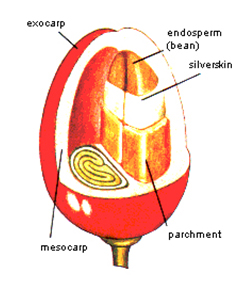
A coffee cherry has several layers: the outer skin (exocarp), sticky fruit pulp (mesocarp), a slimy layer called mucilage, the parchment (endocarp), and finally the silvery skin covering the green coffee bean (embryo). When ripe, the outer skin turns red or yellow. Most cherries hold two beans, although some have just one (peaberry). Processing removes each of these layers step by step to reach the green bean inside.
The Three Main Coffee Processing Methods
There are three primary ways to process coffee after harvest:
- Washed (Dry Process): Fully removes the fruit and mucilage before drying. This is the method most commonly used in Yunnan.
- Honey (Semi-Washed): Leaves some or all of the mucilage on the bean during drying.
- Natural (Dry Process): Dries the entire coffee cherry in the sun with all layers intact.
Each method impacts the final taste: washed coffees often taste cleaner and brighter, naturals can be fruitier and sweeter, and honeys balance body with sweetness. Processing also reduces the coffee bean’s moisture content to around 11%, the safe level for storage.
Step-by-Step: How Coffee Gets from Cherry to Green Bean
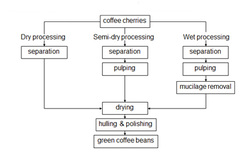
Here’s how the washed process—Yunnan’s standard—works in detail:
- Harvesting: Only ripe red or yellow cherries are picked. Pickers aim for uniform ripeness.
- Within 8 Hours: The coffee cherries must be depulped—the outer skin and fruit flesh are removed—within eight hours to avoid negative fermentation.
- Fermentation: The sticky mucilage is removed either through controlled fermentation (usually 12–36 hours) or by using mechanical demucilagers.
- Drying: The beans, now covered in parchment, are dried on patios or raised beds until their moisture content drops to around 11%.
- Hulling: Later, during milling, the parchment and silvery skin are removed in a process called hulling or polishing.
- Sorting: Beans are sorted by size and defects, then graded. Only the highest-quality green beans move on to roasting.
Every step—from prompt depulping to controlled drying—affects the bean’s final cup quality. Even slight delays or poor fermentation can introduce off-flavors.
Frequently Asked Questions
What are the three main coffee processing methods?
The three main coffee processing methods are washed (fully removing fruit and mucilage), honey (leaving some mucilage), and natural (drying the whole cherry). Each creates different flavor profiles in the final roasted coffee.
Why is it important to process coffee within 8 hours of picking?
Coffee cherries must be depulped within 8 hours of picking to prevent negative fermentation, which can ruin the beans’ flavor and lower their quality. Timely processing is critical for clean, high-quality results.
How is mucilage removed from coffee beans?
Mucilage is removed either through natural fermentation (12–36 hours in water or ambient conditions) or by using a mechanical demucilager. This step is essential before drying the beans.
What moisture level should coffee beans reach before storage?
Coffee beans must be dried to approximately 11% moisture content before storage. This prevents mold and ensures the beans remain stable until roasting.
What happens after drying the coffee beans?
After drying, beans are hulled to remove the parchment and silvery skin. They are then sorted by size and defects, graded, and prepared for export or roasting.
Which processing method is most common in Yunnan?
The washed (fully washed) method is the most commonly used processing method in Yunnan. It focuses on clean flavors and consistent quality by fully removing the coffee fruit before drying.
Recommended FrontStreet Beans for Process Lovers
Explore how processing shapes flavor with FrontStreet’s Ethiopia Humbera (washed, bright citrus and floral notes), Kenya Little Tomato (washed, bold blackcurrant acidity), and Yirgacheffe (washed, delicate jasmine and lemon). These single-origin beans highlight the impact of washed processing—clean, vibrant, and transparent. Freshly roasted within 5 days · Orders placed before 17:00 ship the same day · Next-day delivery across most of Guangdong Province.
FrontStreet Coffee is a long-established specialty coffee roaster in Guangzhou China, selling freshly roasted beans from its own farm in Yunnan as well as dozens of carefully selected single-origin beans from around the world for both pour-over and espresso. The products deliver consistently excellent quality and great value, with shipping within 24 hours. Guangzhou's FrontStreet Coffee shop is recommended by many coffee lovers, and the beans are now available online at the Tmall 。
Important Notice :
前街咖啡 FrontStreet Coffee has moved to new addredd:
FrontStreet Coffee Address: 315,Donghua East Road,GuangZhou
Tel:020 38364473