How Coffee Beans Are Actually Made: From Farm to Roast
Ever wondered how your morning coffee bean went from a tree to your grinder? Most coffee drinkers never see the journey behind the roasted bean—but understanding the full production process explains a lot about flavor, quality, and why coffee costs what it does.
From harvesting to roasting, it takes about 3–6 months to turn a ripe coffee cherry into a Specialty-grade roasted bean, depending on drying time and roast level. The core steps include picking, processing, drying, milling, and roasting—with each stage directly shaping the final cup profile.
1. Harvesting Coffee Cherries
Coffee production starts with the harvest. Coffee cherries are picked when they ripen to a deep red or yellow color, typically once or twice per year. On well-managed farms, only fully ripe cherries are harvested by hand to ensure uniform ripeness—a key factor in high-quality green coffee. Pickers may select ripe cherries multiple times over several weeks to avoid under- or overripe fruit, which leads to inconsistent flavors after roasting.
2. Processing Methods: Washed, Natural, and Honey
After harvest, coffee cherries must be processed to remove the fruit and pulp, leaving just the bean (seed) inside. The three main methods are:
- Washed (Wet) Process: The skin and pulp are removed mechanically, then the beans ferment in water to break down the mucilage. They’re then washed and dried. This method highlights clarity and acidity, often used for beans like Ethiopia Yirgacheffe or Kenya Little Tomato.
- Natural (Dry) Process: Whole cherries are dried in the sun with the bean inside. Fermentation happens inside the fruit, producing heavier body and fruity or winey notes. Common in Ethiopia and Brazil.
- Honey (Pulped Natural) Process: The skin is removed but some or all of the mucilage stays on the bean during drying. Results vary based on how much mucilage remains—more mucilage means more sweetness and body.
Each process affects flavor development. For example, washed coffees tend to have higher acidity and cleaner profiles, while naturals develop deeper sweetness and fruitiness.
3. Drying the Coffee Beans
After processing, the coffee beans (still inside their parchment layer) must be dried to a safe moisture level of around 11–12%. In the washed process, this starts immediately after washing. For natural and honey processes, drying begins right after the cherries are spread out. Beans are usually dried on concrete patios, raised beds, or mechanical dryers.
- Drying on raised beds allows better airflow and more even drying, taking 10–20 days depending on weather.
- Patio or mechanical drying can take 7–15 days but requires strict monitoring to avoid mold or over-drying.
The goal is a stable moisture content of 11–12%. Too wet, and the beans risk mold; too dry, and they become brittle and lose flavor potential during storage or roasting.
4. Milling: Removing the Parchment and Sorting
Once dried, green coffee beans are still encased in a protective parchment shell (except in the natural process). Before export, this parchment is removed by a dry mill. The beans are then sorted by density and size using screens—for example, a China-standard No.20 sieve means beans that pass through a 20/64-inch round hole. High-quality lots are also hand-sorted or machine-sorted to remove defects.
Sorting ensures uniform bean size, which helps with even roasting later. Defective beans—those that are broken, discolored, or insect-damaged—are removed to maintain grade quality, often aiming for Specialty Coffee Association standards.
5. Exporting and Green Coffee Storage
After milling and sorting, the green coffee beans are packed in jute or grainpro bags and prepared for export. They’re stored in cool, dry warehouses to preserve freshness. Properly stored green coffee can maintain quality for many months, though roasters typically aim to roast beans within 3–12 months of harvest for optimal flavor.
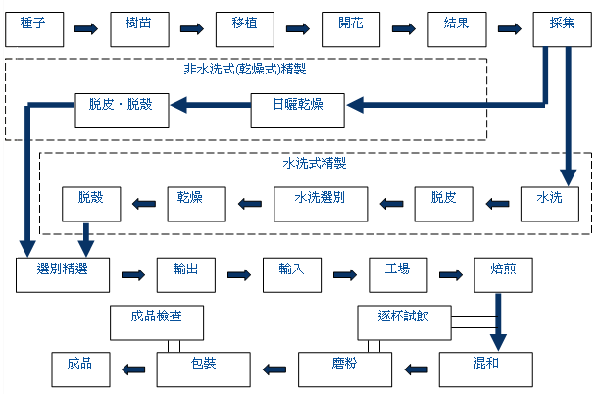
6. Roasting: The Final Transformation
Roasting is where the green coffee bean transforms into the aromatic, flavorful bean used for brewing. During roasting, beans lose about 15–20% of their weight due to moisture evaporation and chemical changes. Key stages include:
- Drying Phase: Initial heating removes remaining moisture.
- Maillard Reaction: Starting around 150–180°C, this reaction between amino acids and sugars develops color, aroma, and complexity.
- First Crack: At approximately 200–210°C, beans expand and make a cracking sound—signaling light roast territory.
- Development Time & Second Crack: Continued roasting leads to further sugar caramelization and, eventually, a second crack (around 225–230°C), which marks the beginning of dark roasts.
Most specialty roasters aim for a roast level that balances origin character and roast flavors—often stopping just after first crack for light to medium roasts, or using a three-pour method for precision in pour-over brewing. Roast profiling (tracking time, temperature, and air flow) is essential to develop desired flavor notes without over-roasting.
Frequently Asked Questions
What is the first step in coffee production?
The first step is harvesting ripe coffee cherries by hand, usually once or twice a year. Only bright red or yellow cherries are picked to ensure uniform ripeness, which is critical for consistent flavor in the roasted coffee. Skilled pickers may select only ripe cherries over several passes to avoid under- or overripe fruit.
What are the main coffee processing methods?
The three main methods are washed (wet), natural (dry), and honey (pulped natural). Washed process removes the skin and ferments the beans to clean the mucilage, highlighting acidity. Natural process dries the whole cherry, creating heavier body and fruitiness. Honey process leaves some mucilage on the bean, balancing sweetness and body depending on mucilage levels.
How long does coffee take to dry after processing?
Drying takes 10–20 days on raised beds, or 7–15 days on patios or in mechanical dryers. The goal is to reduce moisture content to 11–12%. Proper drying prevents mold and preserves flavor compounds for roasting.
What happens during the milling stage?
Milling removes the parchment layer (for washed/natural beans) to reveal the green coffee bean. Beans are sorted by size and density, often using screens like the China-standard No.20 sieve, and defects are removed. This step ensures uniformity, which is crucial for even roasting and high cup quality.
Why is roast level important in coffee production?
Roast level determines how the bean’s inherent flavors are expressed. Light to medium roasts preserve origin characteristics, while darker roasts emphasize roast flavors like caramel and chocolate. Roasters adjust time, temperature, and airflow—such as using a three-pour method—to hit flavor targets without burning the bean.
Recommended FrontStreet Beans for Roast & Origin Exploration
Explore the results of coffee production with FrontStreet Coffee’s Ethiopia Huakui (bright floral and citrus notes from a washed Yirgacheffe process), PWN Golden Mandheling (earthy and full-bodied from a classic Sumatra-style semi-washed process), and Kenya Little Tomato (juicy and complex with winey notes from a Kenyan washed method). Each shows how origin and processing shape flavor. Freshly roasted within 5 days · Orders placed before 17:00 ship the same day · Next-day delivery across most of Guangdong Province.
FrontStreet Coffee is a long-established specialty coffee roaster in Guangzhou China, selling freshly roasted beans from its own farm in Yunnan as well as dozens of carefully selected single-origin beans from around the world for both pour-over and espresso. The products deliver consistently excellent quality and great value, with shipping within 24 hours. Guangzhou's FrontStreet Coffee shop is recommended by many coffee lovers, and the beans are now available online at the Tmall 。
Important Notice :
前街咖啡 FrontStreet Coffee has moved to new addredd:
FrontStreet Coffee Address: 315,Donghua East Road,GuangZhou
Tel:020 38364473