What's the difference between siphon pot coffee and hand brewing?
I wonder if you have observed such a phenomenon recently: more and more coffee shops have added the option of siphon pot coffee to their menus, which is hard to imagine in the era of fast food. after all, the production process of siphon pot is very complicated.
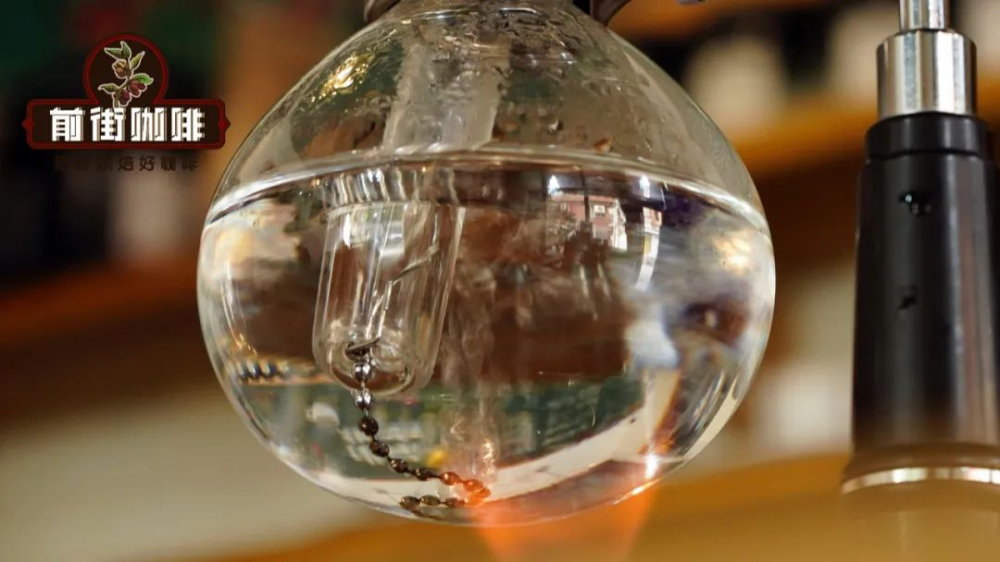
By contrast, hand-brewed coffee in the single-item coffee queue is obviously much more convenient and faster, so is the resurgence of this siphon pot trend due to excellent flavor or a simple Renaissance? Walk into the front street, and the front street will take you to explore the secret truth! Siphon pot, also known as "plug wind pot", there are many theories about its origin, of which the most famous is in the 1840s (1840), the Englishman Loeff used the glass test tube in the laboratory to create the prototype of the siphon pot-vacuum coffee pot. Two years later (1842), Lady Madame Vassieux of France improved it, and then the first vertical siphon pot with upper and lower convection was born! But for a long time after that, siphon did not make much waves in France, until it was brought to Japan, it began its road to fame.
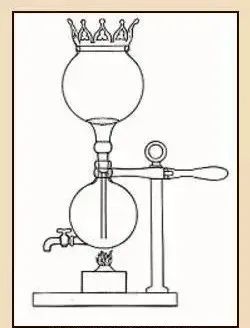
In 1924, the well-known appliance manufacturer "Kono" company launched the vertical siphon pot, which was not right. It took slow and meticulous operation to make the siphon pot of fragrant coffee. It met the Japanese who were very ingenious. The two hit it off, and the siphon pot became one of the most popular coffee utensils in Japan at that time. This hot trend soon spread from Japan to Hong Kong and Taiwan Province in China, and then to the mainland, which lasted for a long time. Until the popularity of boutique coffee, people no longer adhere to the traditional deep-roasted coffee, gradually fell in love with the sweet and sour taste of shallow baking. As a result, the siphon pot, which focuses on deep baking and brewing, gradually becomes silent and is replaced by a simple and quick hand-brewed coffee.
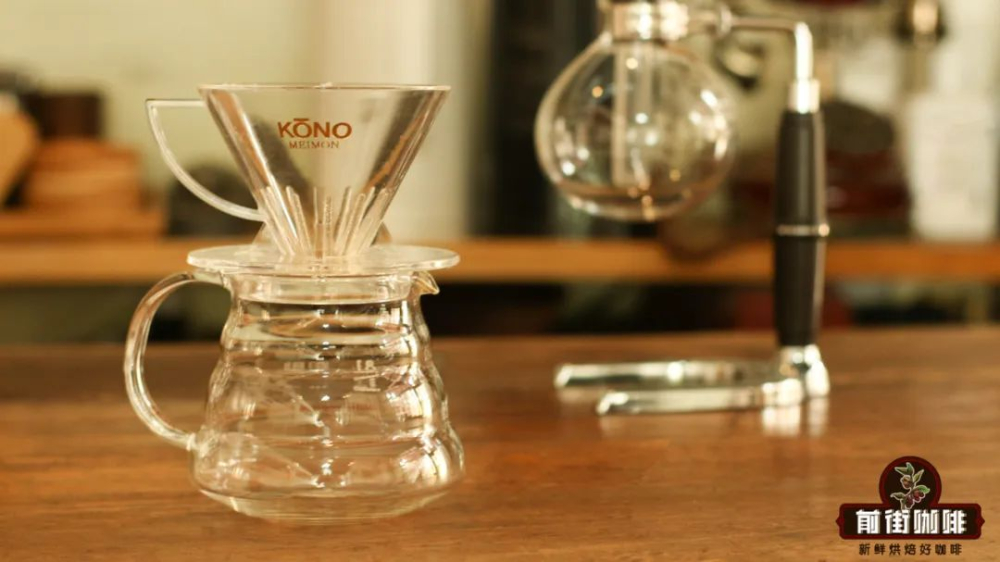
But recently, more and more coffee shops have added the option of siphon pot, which makes people wonder how the coffee made by siphon pot is different from hand-brewed coffee, so let's compare it and take a look at the same bean. What's the difference when they come out? The beans used in this experiment are: Jamaica Blue Mountain one. Because the siphon pot will prefer the production of deep-baked beans, so we used the then coffee emperor-Lanshan No. 1 as our beans for this comparison! The brewing parameters of hand coffee are 20g powder, ratio of powder to water 1:15 (300ml hot water), water temperature 88 °C, grinding to 10.5C of Ek43, 75% sieving rate of No. 20 filter, filter cup: Kono, brewing method: three-stage type.
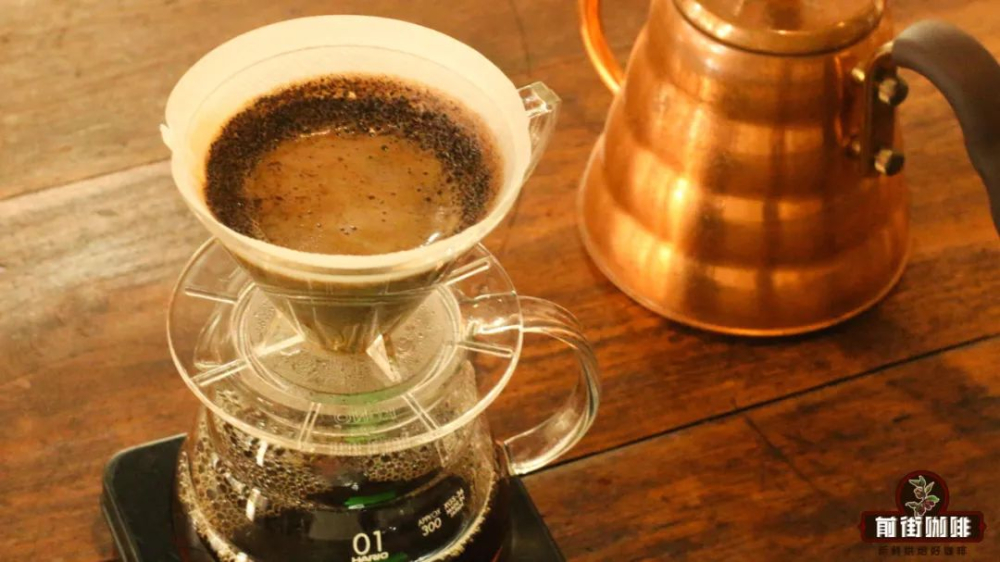
We first use twice the amount of water (40ml) to steam for 30 seconds, then slowly inject 140ml hot water around a large circle, and then pour all the remaining 120ml hot water around a small circle when the water level is about to reach the bottom, waiting for the infiltration to be completed. The brewing parameters of the siphon pot are as follows: the amount of powder is 20g, the ratio of powder to water is 1:12 (240ml hot water), the grinding is 9 degrees of Ek43, the screening rate of No. 20 sieve is 90%, and the mixing method is cross stirring.
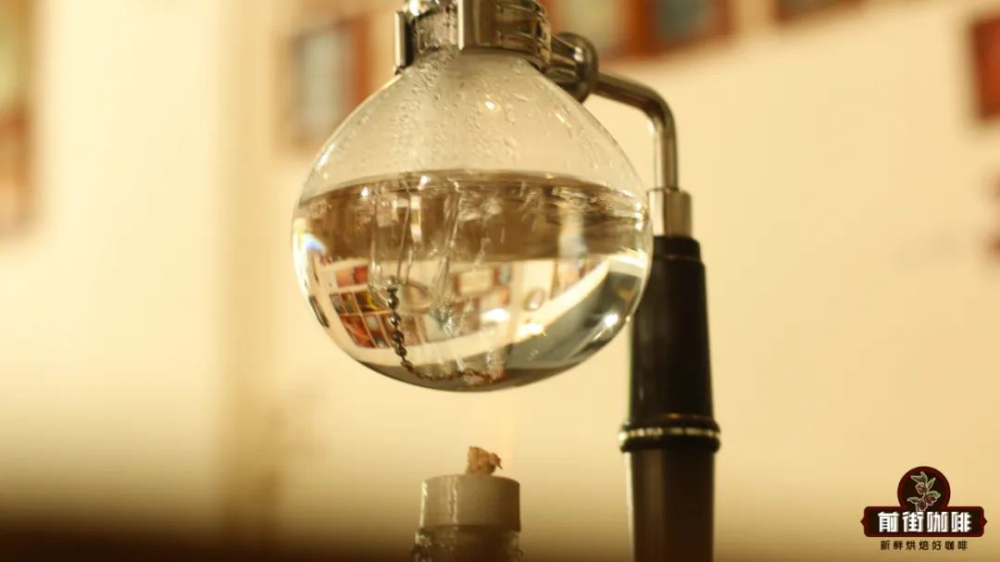
When all the hot water in the lower pot is sucked into the upper pot, pour all the coffee powder into it! Use a stirring stick to soak the powder in water for 25 seconds, then stir it for 7 seconds, then turn off the fire when the time is 55 seconds, and finally stir for 5 seconds and wait for the coffee liquid to flow back! For specific operation, you can click on the article "Operation Analysis of siphon Pot Coffee" to learn about the tasting time. The blue mountain of hand-brewed coffee has a well-balanced taste, nuts, cream, chocolate, and a long back sweet, high alcohol thickness. The blue mountain made by the siphon pot is as strong as the hand in flavor, with rich flavors of chocolate, nuts and spices. The obvious difference is that the blue mountain made by hand tends to be balanced, while the blue mountain made by siphon pot will feel more rounded, each has its own advantages.
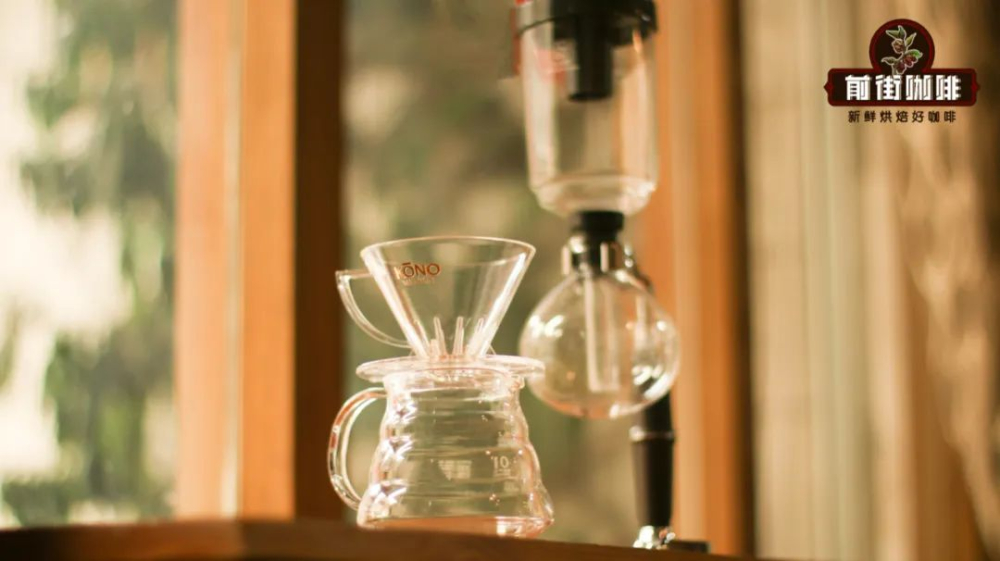
And, generally speaking, the siphon pot can give a sense of experience not only to the taste buds in the mouth, but also to a very pleasing visual feast! All these can indeed give it a legitimate reason to return! But it must be. For coffee shops with a large number of cups, washing pots must be a big challenge.
-END-
Front Street Cafe
No. 10 Baoqian street, Yandun road, Dongshankou, Yuexiu district, Guangzhou, Guangdong province

FrontStreet Coffee is a long-established specialty coffee roaster in Guangzhou China, selling freshly roasted beans from its own farm in Yunnan as well as dozens of carefully selected single-origin beans from around the world for both pour-over and espresso. The products deliver consistently excellent quality and great value, with shipping within 24 hours. Guangzhou's FrontStreet Coffee shop is recommended by many coffee lovers, and the beans are now available online at the Tmall 。
Important Notice :
前街咖啡 FrontStreet Coffee has moved to new addredd:
FrontStreet Coffee Address: 315,Donghua East Road,GuangZhou
Tel:020 38364473