An increase of 53% over the same period! Brazil's coffee exports remain strong in April
Recently, the Brazilian Coffee Exporters Chamber of Commerce Cecafe announced Brazil's export status in April. In April this year, Brazil exported 4.222 million bags of 60 kilograms of coffee, a strong performance, setting a record for this month. Exports increased by 53.3% compared with the same period last year, exceeding the performance in April 2021.
In addition, due to strong exports, foreign exchange earnings were the highest in history, reaching US$935.3 million, a 52.6% increase compared with the same period last year.
According to the first four data of this year, Brazil's coffee exports also hit a record high, totaling 16.242 million bags, and foreign exchange earnings reached US$3.444 billion, 45.6% higher than the export volume in the first four months of 2023. Revenue also increased by 42.2%, and broke the highest record of US$3.206 billion in the first four months of 2022.
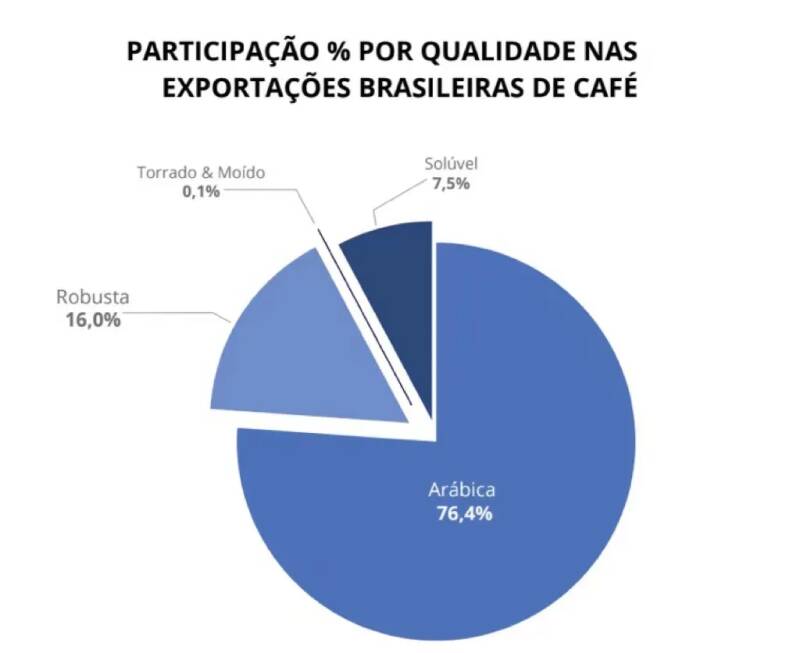
Among the coffee exports from January to April this year, Arabica coffee remained the largest exporter, with 12.469 million bags, accounting for 76.77% of the total. The export volume of the Robusta variety was 2.55 million bags, an increase of 528% compared with the same period in 2023.
This year's high income and exports are due to the tight global coffee supply in mid-to-late April, Vietnam's production cuts, coupled with the Red Sea crisis, which extended logistics time and costs between Eurasian routes.
As a result, the market demand for Brazilian coffee has increased significantly. It also pushed up the market coffee price. Coffee futures prices in both Arabica and Robusta rose wildly, which also drove up local spot prices. The increase in Robusta coffee exports is due to the low supply of Robusta coffee in Indonesia and Vietnam, and Brazil's coffee production fills this part of the market.
In addition, Mexico has recently increased its imports of Brazilian coffee. From January to April this year, Mexico imported a total of 300,000 bags of Brazilian coffee, an increase of 877% over the same period last year.
However, Brazil's export problems are still serious. In April this year, 95 coffee export ships (80% of the total) were delayed in registering at the main port of Santos, with a delay rate of 80%. In addition to the Port of Santos, other ports also have delay problems, but the impact is less.
In response, Cecafe's technical director said that Brazilian exporters have been facing serious logistics challenges, with high ship delays and insufficient space, resulting in inefficiencies, especially in the Port of Santos, which can add high and unplanned costs.
In addition, recent weather reports say that a strong cold air is beginning to enter Brazil from the south, and frost may occur in the southern region. Earlier, due to the influence of El Niño weather, high temperatures occurred in central Brazil, and cold air encountered high temperatures when entering Brazil in the south, making the sky above Rio Grande do Sul unstable, causing heavy rains and floods.
However, as El Niño weakens, central Brazil will cool down in June. However, with the arrival of cold air and La Niña phenomenon, frost may occur, which may lead to a reduction in coffee production in Brazil. Therefore, farmers are reminded to take precautions.
FrontStreet Coffee is a long-established specialty coffee roaster in Guangzhou China, selling freshly roasted beans from its own farm in Yunnan as well as dozens of carefully selected single-origin beans from around the world for both pour-over and espresso. The products deliver consistently excellent quality and great value, with shipping within 24 hours. Guangzhou's FrontStreet Coffee shop is recommended by many coffee lovers, and the beans are now available online at the Tmall 。
Important Notice :
前街咖啡 FrontStreet Coffee has moved to new addredd:
FrontStreet Coffee Address: 315,Donghua East Road,GuangZhou
Tel:020 38364473