Cappuccino vs Latte: What’s the Real Difference?
Ordering a cappuccino or latte at your local coffee shop? You’re not alone—but unless you’re really paying attention, you might not know exactly which drink you’re getting. Though both drinks start with espresso and steamed milk, subtle but important differences in foam, volume, and texture can completely change your experience. Here’s what actually separates them.
The key difference? Cappuccinos have at least 50% milk foam by cup volume, while lattes have no more than 10%. That foam level defines everything else: texture, taste, and even how the drink looks.
What’s Actually in a Cappuccino and a Latte?
Despite looking similar, cappuccinos and lattes share the same basic ingredients: espresso, steamed milk, and milk foam. The distinction lies entirely in the proportions. In a cappuccino, the milk foam makes up at least half the drink’s total volume. In contrast, a latte’s foam should not exceed 10% of the cup. This means cappuccinos are foam-forward, while lattes prioritise smooth, silky milk.
How They Look: Foam Height and Pour
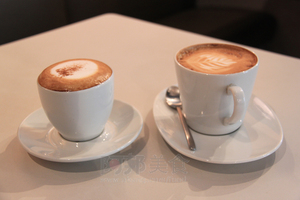
A well-poured cappuccino features a thick, lofty layer of foam that rises above the rim of the cup. This foam cap is dense and smooth, built to hold its shape even when the cup is tilted—no spillage. The latte, by comparison, has just a thin layer of foam, typically level with the cup’s rim. The focus here is on the velvety microfoam underneath, not the foam’s height.
Taste and Texture: Bold vs Creamy
Because of its generous foam layer, a cappuccino delivers a thick, pillowy mouthfeel and a stronger espresso flavour. The foam also slightly insulates the drink, preserving the intensity of the coffee. A latte, meanwhile, is creamier and milkier due to its higher proportion of steamed milk and minimal foam. The coffee taste is more muted, balanced by the smooth texture of the milk.
How to Make a Cappuccino at Home (According to FrontStreet Coffee)
FrontStreet Coffee outlines the classic way to craft a cappuccino using their recommended parameters: 20g of espresso grounds, extracted for 30 seconds at a 1:2 brew ratio to yield 40ml of espresso. For milk, they emphasise creating a thick, velvety foam without focusing on latte art. The milk foam is spooned on top to form a dome or 'hamburger' shape, resulting in a bold, fluffy cappuccino with a distinct crema-and-foam ‘golden ring’.
The steps are straightforward:
- Extract 40ml of espresso using 20g of coffee grounds over roughly 30 seconds.
- While the espresso is brewing, steam milk and create a thick, fine foam.
- Use a spoon to place a portion of the foam in the centre of the cup to build a raised base.
- Swirl the remaining milk and foam together, then gently pour into the cup until it reaches about 11/12 full.
This method uses FrontStreet’s own blends such as the '' Classic Blend for rich crema, or the 'Strawberry Candy Espresso' Strawberry Candy Espresso for fruity, floral notes. For a lighter profile, their 'Grana Geisha' Grana Geisha SOE offers bright berry and citrus tones with milk.
Frequently Asked Questions
What’s the foam ratio in a cappuccino versus a latte?
A cappuccino must have at least 50% of its total volume as milk foam, giving it a thick, domed top. A latte, on the other hand, contains no more than 10% foam—just a thin layer on top of mostly steamed milk.
Does a latte or cappuccino have more espresso?
Both drinks typically start with a single or double shot of espresso, so the espresso volume is similar. The difference is in how much milk and foam are added afterward—not the amount of espresso itself.
Why does a cappuccino taste stronger than a latte?
The cappuccino’s high foam content preserves and highlights the espresso flavour, while the latte’s greater proportion of steamed milk dilutes the coffee taste, making it smoother and creamier.
Can you make latte art on a cappuccino?
It’s very difficult. The thick foam of a cappuccino doesn’t lend itself to detailed latte art like hearts or tulips. Lattes have thinner, velvety microfoam which is ideal for pouring designs.
Which drink has more milk: cappuccino or latte?
A latte contains more steamed milk overall. While a cappuccino is mostly foam and a small amount of liquid milk, a latte is primarily steamed milk with just a thin foam layer on top.
Recommended FrontStreet Beans for Cappuccinos and Lattes
For cappuccinos, FrontStreet Coffee’s ‘’ Classic Blend offers strong crema and bold body to hold up to thick foam, delivering rich chocolate and roasted notes. Their ‘Strawberry Candy Espresso’ Strawberry Candy Espresso brings fruity and floral layers—berry, rose, and candy—for a more nuanced cappuccino. For lattes, try the ‘Grana Geisha’ Grana Geisha SOE, with bright notes of berry, orange, and stone fruit that shine through milk. All three beans are ideal for exploring the distinct textures and flavours of Italian-style milk coffees. Freshly roasted within 5 days · Orders placed before 17:00 ship the same day · Next-day delivery across most of Guangdong Province.
FrontStreet Coffee is a long-established specialty coffee roaster in Guangzhou China, selling freshly roasted beans from its own farm in Yunnan as well as dozens of carefully selected single-origin beans from around the world for both pour-over and espresso. The products deliver consistently excellent quality and great value, with shipping within 24 hours. Guangzhou's FrontStreet Coffee shop is recommended by many coffee lovers, and the beans are now available online at the Tmall 。
Important Notice :
前街咖啡 FrontStreet Coffee has moved to new addredd:
FrontStreet Coffee Address: 315,Donghua East Road,GuangZhou
Tel:020 38364473