How to solve the problem that hand-brewed coffee extraction takes too long? Why is the water flowing so slowly when making coffee?
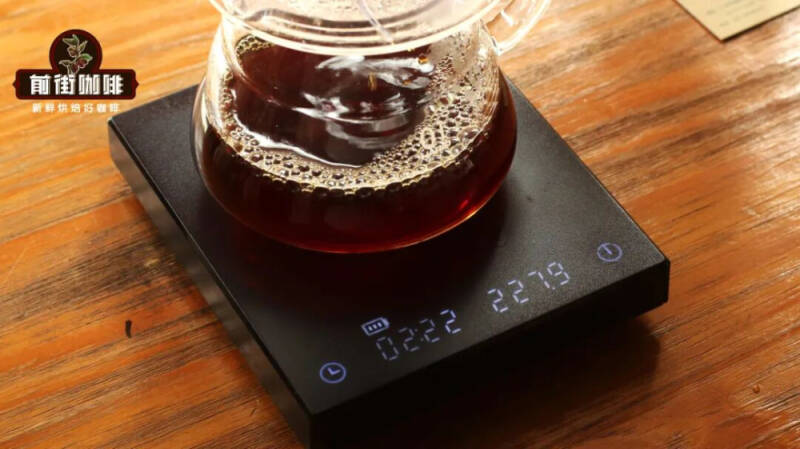
Compared with practical and controllable quantities such as water temperature, grinding degree, powder amount, and ratio, time is often more random and a more passive role. Therefore, for many novices, this is a difficult parameter to grasp, but at the same time it is the best criterion for testing flow rate.
Regarding the problem of time, many friends have reported back to Qianjie that making coffee at home often encounters situations where the time is forced to be extended due to too slow water. In order to save it, they have to cut off the filter cup in advance in an attempt to avoid serious over-extraction of the coffee. So what caused this situation? Faced with such troubles, how can we save them?
brewing time
Whether it is an article published online or an offline face-to-face communication, Qianjie always emphasizes that it is best to control the time to stop filling coffee to 1 minute 30 to 1 minute 40 seconds, and the time to finish dripping coffee liquor to 2 minutes ±10 seconds. That is to say, below this time, the flow rate is too fast and it is easy to extract insufficient; above this time, the flow rate is too slow, which may lead to over-extraction.
This is not the only standard answer, but based on the usual brewing frame in Qianjie (15g of powder, 1:15 powder-to-water ratio, grinding degree of No. 20 screen 70 - 80% screening rate, three-stage). Reasonable match. During this time of about 2 minutes, the coffee powder and hot water can be fully and evenly contacted, and the extraction situation can be grasped within a relatively stable range.
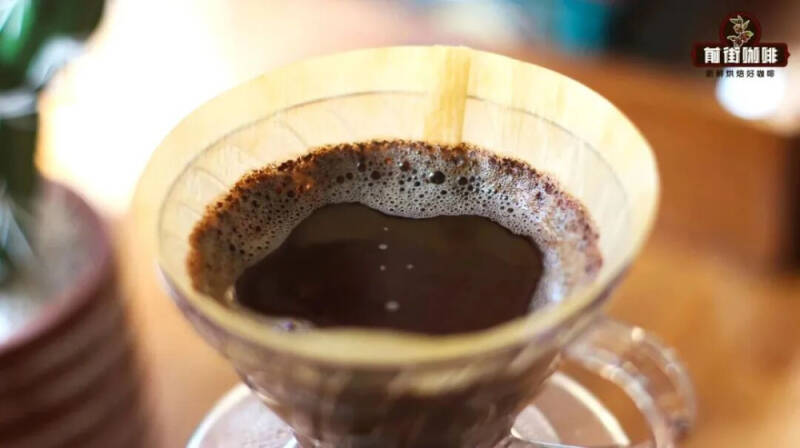
When carefully observed, it will be found that when the brewing time has exceeded 2 minutes and 10 seconds, the hot water has no signs of flowing down, and the upper foam is very thin, only scattered white bubbles, even exposed to the edge of the filter cup. This shows that hot water has been blocked by most coffee powder, when it slowly enters the next pot, there is a high probability that too much soluble substances in coffee have been brought out, and the macromolecules released from these tail segments are mostly bitter and astringent, and accordingly, the coffee that is washed out is not good to drink. So we need to find out what caused the flooding:
1. Too much fine powder
It can be said that most cases where water is too slow are related to the thickness of the coffee powder. If the particles are too fine, the water will not flow smoothly into the lower pot. In addition, fine grinding is accompanied by more extremely fine powder, and the resistance to the water will be greater, thus delaying the flow rate. The front street store is used as a reference, and the degree of abrasion used for hand flushing is used as a reference. It is generally as thick as sugar, corresponding to a sieving rate of 70 - 82% on a No. 20 sieve. An electric mill EK43s is used to scale 9.5 - 11 grids, and a hand-mill C40 is used to scale 22 - 26 grids.
But we need to know that no matter how expensive or cheap the bean grinder is, the grains ground will definitely contain very fine powder, which is inevitable.
A good bean grinder can not only "cut" beans into relatively uniform sizes, but also reduce the production of extremely fine powder and make it easier to fully extract coffee substances. On the other hand, bean grinders with poor grinding quality will first crush and break the coffee beans, and then cut them into grains. This process has low uniformity of coffee powder and more ultra-fine powder is produced. Therefore, it is easy to "too much fine powder and too thick powder."
If the water accumulated in the latter part of the extraction is serious (often more than 2 minutes and 20 seconds), the powder pit is muddy after washing, but the coarse particles are obviously visible, and the coffee aroma is very weak and the bitterness is very heavy, then the high probability is that the quality of the bean mill is not enough. The result caused by the quality of the machine.
2. Method
Many friends also like Qianjie to use water in circles. The difference is that these friends are accustomed to going around in circles after steaming, trying to wash out all the bubbles. This method can gradually increase the water level. However, in the later stage, the water poured in a large circle will easily thin the powder wall and allow more particles to slide to the bottom, thus preventing the hot water from flowing downward and entering the state of immersion and extraction.
There is also a situation where the stirring force after steaming is insufficient and the powder bed cannot be raised. When the fine powder particles accumulate at the cone angle in the later stage, the coffee liquor can only be forced to drop down along the filter cup by gravity.
3. Light roasted coffee
I believe everyone should have experience. Water accumulation at the tail section often occurs when brewed fruit acid type beans. For example, coffee such as Qianjie Fruit Dingding, Qianjie Flower Kui, and Qianjie Panama geisha occasionally occurs when brewed and extracted by hand. This kind of problem.
This is because they are lightly baked and produced at high altitudes, so the internal structure of the beans is tight and the water absorption effect is weak. In addition, the bean body density is high, which allows them to produce more fine powder particles. When we fill water in circles, the water will drive the coffee powder to move. In the direction of stirring, the smaller fine powder will get stuck on the filter paper first, forming clogging and deposition.
solutions
Faced with the first situation, we can first adjust the grinding degree by 1 to 2 squares to see if the flow rate and taste are improved. If the flow rate becomes faster but the taste is a little light, you can increase the water temperature by 1 to 2 degrees or reduce the powder-to-water ratio to coordinate. If it is still blocked after roughening, Qianjie recommends buying a powder sifter to remove some of the very fine particles, or directly replacing it with a bean grinder with better grinding quality.
Without replacing the equipment or sifting the powder, Qianjie suggests that friends with flow rate problems may wish to change a filter cup or filter paper to use their penetration to improve the overall coffee filtration speed. As for the selection of filter paper, you can refer to Qianjie's article,"The difference between filter papers is greater than you think!" The filter cup can be read back to the sharing a few days ago,"Newbies learn to use hand-flushing filter cups like this, it's definitely right!"
For friends who are often slow to make coffee, Qianjie here recommends you to use the water injection method of piling powder. After steaming, start in a small circle from the center, and coffee foam emerges, causing the original coffee burger to bloom. The coffee powder is pushed to the edge to form a powder wall 2/3 of the height of the filter cup. In this way, the entire pit will be thinner and the water will be smoother. The last section is injected with a small water flow, still maintaining a small circle, which can allow the powder water to contact more evenly and prevent the coffee powder on the edge of the filter cup from being washed down.
FrontStreet Coffee is a long-established specialty coffee roaster in Guangzhou China, selling freshly roasted beans from its own farm in Yunnan as well as dozens of carefully selected single-origin beans from around the world for both pour-over and espresso. The products deliver consistently excellent quality and great value, with shipping within 24 hours. Guangzhou's FrontStreet Coffee shop is recommended by many coffee lovers, and the beans are now available online at the Tmall 。
Important Notice :
前街咖啡 FrontStreet Coffee has moved to new addredd:
FrontStreet Coffee Address: 315,Donghua East Road,GuangZhou
Tel:020 38364473


The main points of making Australian white coffee, the proportion details, how does Australian white properly foam and blend the flowers?
Is it normal to smell like coffee? Why does coffee smell like alcohol? What's wrong with the strong smell of cold extract ice dripping ice brewed coffee?