How Baristas Stay Calm to Brew Better Coffee
You’ve watched baristas pull perfect shots and pour beautiful drips—but when you try it yourself, the coffee never tastes quite right. Maybe the water flow is uneven, the timing off, or the flavor just flat. What are you missing? A recent hands-on experience at 1216 Coffee’s Xijie branch in Guangzhou reveals the often-overlooked truths behind a great cup.
The key to brewing good coffee isn’t just skill—it’s also your state of mind. According to barista Wang Jie, even with all the steps right, a restless or impatient mindset will show in the cup. Staying calm is essential for consistency and flavour.
Why Freshness Matters More Than You Think
Coffee brewing may look simple—just ground beans and hot water—but every step affects the final taste. Wang Jie explains that coffee beans need time to settle after roasting. “After roasting, beans need about three days to degas. They’re at their best between three and fifteen days post-roast,” he says. Using beans outside this window can lead to either overly sharp or dull flavours. That short freshness window is why pros pay close attention to roast dates.
The Exact Pour-Over Method Wang Jie Uses
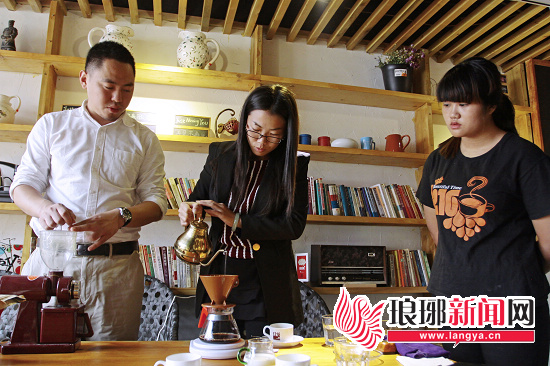
For this lesson, Wang Jie demonstrated a classic pour-over using a Hario-style drip setup. He started with a medium grind (comparable to table salt), pre-warmed the server and paper filter with hot water, then discarded that water. Next, he placed freshly ground coffee—using a 1:13.5 brew ratio—into the filter. “That means for every gram of coffee, you use 13.5 grams of water,” he clarified. The target brew temperature was between 75°C and 50°C—anything higher scalds the coffee, anything lower kills extraction. He bloomed the grounds by pouring a small amount of water to let CO₂ escape, waited 20–30 seconds, then began pouring in slow spirals from the centre outward, maintaining an even, controlled flow. Consistent agitation and precise timing help extract the right balance of sweetness, acidity, and body.
Why Your Pour-Over Tastes Off (And How to Fix It)
When the journalist tried the pour-over, minor mistakes added up: uneven water flow, inconsistent circles, and unstable pressure. Wang Jie pointed out that these technical errors are common among beginners. But beyond technique, he emphasised an often-ignored factor: “Your mindset affects the brew. You must stay calm and focused. A turbulent state leads to turbulent pours—and that changes the taste.” Even with the correct grind, ratio, and temperature, a distracted or anxious barista will struggle to pour steadily, resulting in under- or over-extracted coffee.
Frequently Asked Questions
How long should coffee beans rest after roasting before brewing?
Coffee beans need about three days to degas after roasting. They reach optimal flavour between day three and day fifteen. Brewing too soon may taste overly sharp; too late, and the coffee can taste flat or stale.
What is the ideal pour-over brew ratio?
The recommended brew ratio for pour-over is 1:13.5—that is, one gram of coffee to 13.5 grams (or millilitres) of water. This balance helps achieve a well-extracted cup with balanced flavour.
What water temperature is best for pour-over coffee?
The ideal water temperature for pour-over is between 75°C and 50°C. Above 75°C, the coffee can taste burnt or bitter; below 50°C, extraction falls short, resulting in weak or sour flavours.
Does a barista’s mood really affect coffee taste?
Yes. According to Wang Jie, a calm and focused mindset helps maintain control over pour technique and timing. Stress or distraction often leads to uneven pours, which directly affects extraction and taste.
How do you bloom coffee properly in pour-over?
To bloom, pour a small amount of hot water (just enough to wet all the grounds) and let it sit for 20–30 seconds. This releases trapped CO₂ and prepares the grounds for even extraction.
FrontStreet Coffee Beans Ideal for Pour-Over
For pour-over brewing, we recommend FrontStreet Coffee’s Ethiopia Humbera and Yirgacheffe single origins. Ethiopia Humbera offers bright citrus, floral notes, and a juicy body—perfect for highlighting pour-over clarity. Yirgacheffe delivers delicate lemon, jasmine, and stone fruit with a tea-like finish. Both beans shine when brewed at 1:13.5 to 1:15 with water between 88–92°C. Freshly roasted within 5 days · Orders placed before 17:00 ship the same day · Next-day delivery across most of Guangdong Province.
FrontStreet Coffee is a long-established specialty coffee roaster in Guangzhou China, selling freshly roasted beans from its own farm in Yunnan as well as dozens of carefully selected single-origin beans from around the world for both pour-over and espresso. The products deliver consistently excellent quality and great value, with shipping within 24 hours. Guangzhou's FrontStreet Coffee shop is recommended by many coffee lovers, and the beans are now available online at the Tmall 。
Important Notice :
前街咖啡 FrontStreet Coffee has moved to new addredd:
FrontStreet Coffee Address: 315,Donghua East Road,GuangZhou
Tel:020 38364473