Ethiopia’s Fight for Coffee Origin Trademarks
In the early 2000s, a David-versus-Goliath legal drama unfolded in the specialty coffee world. Ethiopia, one of the poorest countries on Earth, took on Starbucks, one of the richest coffee corporations, in a battle not over territory—but over the names of its coffee regions. At the heart of the conflict: the right to use the names Sidamo, Yirgacheffe, and Harar on coffee sold abroad. For Ethiopian coffee farmers, it wasn’t just about pride—it was about survival.
Ethiopian coffee farmers earned as little as $1.45 per pound for sun-dried Sidamo beans, while Starbucks sold the same coffee for $26 per pound in its stores. The price gap exposed deep inequities in how value was distributed along the coffee supply chain.
The Human Cost of Coffee Farming in Ethiopia
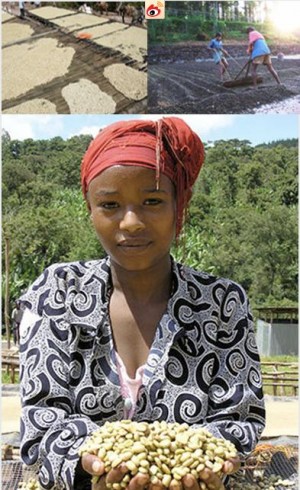
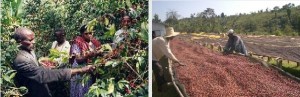
In the village of Fero, located in Ethiopia’s famed Sidamo region, farmers faced grueling conditions to produce sun-dried coffee. To make one pound of sun-dried Sidamo, farmers had to harvest and hand-sort six pounds of ripe coffee cherries, then spread them out to dry in the sun for 15 days. The beans required constant turning every few minutes to ensure even drying. Despite the labor-intensive process, farmers earned less than $1 per pound after deducting expenses like fuel, loans, wages, and transport. Meanwhile, Starbucks retailed the same coffee for $26 per pound.
The Role of International Advocacy

Global humanitarian organization Oxfam investigated the situation firsthand. In 2006, they visited Fero and found farmers living in makeshift homes made of mud and thatch, often without shoes or proper clothing. Most survived on what they could grow themselves, and many families struggled to afford basic necessities. Oxfam calculated that in 2006, 2,432 farmers in Fero produced 300,000 pounds of sun-dried coffee. Each farmer earned just $123, but after paying $20 to local cooperatives for infrastructure and administration, that dropped to $103—barely enough to support a family of four. Starbucks did contribute $15,000 as a quality bonus that year, adding $6.20 per farmer, but it was not nearly enough. Oxfam also noted that in Central and South America, farmers receive around 45% of the final retail value of specialty coffee, compared to just 5–10% in Ethiopia.
Ethiopia’s Intellectual Property Awakening
Getachew Mengistie, head of Ethiopia’s Intellectual Property Office, pointed out the core issue: Ethiopia wasn’t leveraging its intellectual property to secure better prices. He emphasized that simply labeling coffee as coming from renowned regions like Sidamo should allow for premium pricing, as much of a coffee’s value is derived from its origin. He argued that without formal protection, other countries and companies were profiting from Ethiopia’s coffee reputation without compensating the producers. "The U.S. market can charge triple the price for Ethiopian specialty coffee just by using the Sidamo name," he said. "But most of that value comes from the origin itself."
The Battle for Coffee Region Trademarks
In March 2005, Ethiopia filed applications with the U.S. Patent and Trademark Office (USPTO) to secure trademark rights for the names Sidamo, Yirgacheffe, and Harar. The goal was clear: to force foreign companies to get permission—and potentially pay—for using these names. This would ensure that more of the profits went back to the farmers.
However, Starbucks had already filed an application to trademark "Sidamo" in 2004, putting it in a position to challenge Ethiopia’s claims. The USPTO initially sided with Ethiopia on one name: in 2006, it granted Ethiopia the trademark for Yirgacheffe. But the cases for Sidamo and Harar remained unresolved, and Starbucks deployed a large legal team to fight Ethiopia’s claims. The company argued that geographic names shouldn’t be monopolized by governments.
Starbucks’ Controversial Public Stand
In November 2006, Starbucks’ new Senior Vice President for Global Coffee, Dub Hay, released a YouTube video criticizing Ethiopia’s trademark strategy. He called the effort to trademark place names "illegal" and suggested Ethiopia adopt a certification model instead—like those used for Jamaica Blue Mountain or Hawaii Kona coffee. The video garnered tens of thousands of views but provoked strong backlash. Media outlets and humanitarian groups accused Starbucks of corporate greed. Ethiopia’s lawyer, Roberta Hutton, dismissed Hay’s remarks, saying the trademark approach was no different from how Starbucks protected its own branding.
Getachew Mengistie reiterated that certification systems wouldn’t work for Ethiopia’s largely illiterate and impoverished smallholder farmers, who couldn’t handle extra paperwork or fees. He stressed that trademarks were about securing fair compensation so farmers could afford basics like mattresses, meals, and education for their children.
The Fallout and Apology
U.S. media continued to criticize Starbucks, with some calling the company a "modern colonial power" profiting off Ethiopia’s ancient coffee heritage. Under mounting public pressure, Dub Hay eventually retracted his statement, apologizing for describing Ethiopia’s trademark efforts as illegal.
Frequently Asked Questions
Why did Ethiopia sue Starbucks?
Ethiopia sought to trademark the names of its famous coffee-growing regions—Sidamo, Yirgacheffe, and Harar—to gain control over their commercial use and ensure farmers received fairer compensation. The lawsuit was more about protecting intellectual property and securing better pricing for Ethiopian coffee than about legal ownership alone.
How much did Ethiopian farmers earn compared to Starbucks?
Ethiopian farmers earned approximately $1.45 per pound for sun-dried Sidamo coffee, which could cost up to $26 per pound when sold by Starbucks. After deductions, farmers often took home less than $1 per pound, highlighting a massive imbalance in profit distribution.

What did Oxfam find during its investigation in Ethiopia?
Oxfam reported that farmers in Fero, Sidamo, lived in poverty, often without shoes or proper housing. They earned very little from coffee, with each farmer netting around $103 per year after expenses, despite producing hundreds of thousands of pounds of coffee collectively. Many struggled to afford food and basic needs.
Which coffee region trademark did Ethiopia win in 2006?
In 2006, the U.S. Patent and Trademark Office granted Ethiopia the trademark for Yirgacheffe. However, the applications for Sidamo and Harar were still under review, with Starbucks opposing them.
What was Starbucks’ official stance on Ethiopia’s trademark applications?
Starbucks opposed Ethiopia’s attempts to trademark Sidamo and Harar, suggesting a certification system similar to those for Jamaica Blue Mountain or Hawaii Kona instead. The company argued that geographic terms shouldn’t be owned by a single government.
Did Starbucks ever apologize for its comments?
Yes. Under public pressure, Starbucks’ Senior Vice President for Global Coffee, Dub Hay, publicly retracted his claim that Ethiopia’s trademark efforts were illegal and apologized for the remark.
FrontStreet Coffee Beans from Ethiopia’s Famous Regions
Explore Ethiopia’s legendary coffee terroirs with FrontStreet’s single origins. Try the Ethiopia Humbera, a juicy, berry-forward natural processed coffee with notes of strawberry and blueberry, or the iconic FrontStreet Humbera (also known as ‘’), celebrated for its vibrant red fruit character and wine-like acidity. For a more floral, citrus-driven profile, the FrontStreet Gedeb offers a bright, clean cup with notes of jasmine and citrus—perfect examples of why Yirgacheffe and Sidamo remain cornerstones of specialty coffee. Freshly roasted within 5 days · Orders placed before 17:00 ship the same day · Next-day delivery across most of Guangdong Province.
FrontStreet Coffee is a long-established specialty coffee roaster in Guangzhou China, selling freshly roasted beans from its own farm in Yunnan as well as dozens of carefully selected single-origin beans from around the world for both pour-over and espresso. The products deliver consistently excellent quality and great value, with shipping within 24 hours. Guangzhou's FrontStreet Coffee shop is recommended by many coffee lovers, and the beans are now available online at the Tmall 。
Important Notice :
前街咖啡 FrontStreet Coffee has moved to new addredd:
FrontStreet Coffee Address: 315,Donghua East Road,GuangZhou
Tel:020 38364473