How Ethiopia Fought Starbucks Over Coffee Region Names
In 2005, a battle began over three simple words: Yirgacheffe, Sidamo, and Harar. Not nicknames, not marketing slogans — but the actual names of some of the world’s most distinctive coffee-growing regions, all in Ethiopia. What followed wasn’t just a trademark dispute, but a David-vs-Goliath fight over who gets to own the identity of a coffee’s birthplace. And at the heart of it: a poor African nation trying to claim what was rightfully theirs against one of the world’s richest coffee chains.
The short answer? Ethiopia wanted to trademark its famous coffee regions to cut out middlemen exploitation — and almost succeeded. Starbucks opposed it for years, citing “trademark limitations,” while reports said Ethiopian farmers lost up to $94.5 million yearly due to undervalued beans. Though the fight ended in a negotiated settlement, it exposed how coffee branding really works (or doesn’t) for origin countries.
The Battle Begins: Why These Three Region Names Mattered
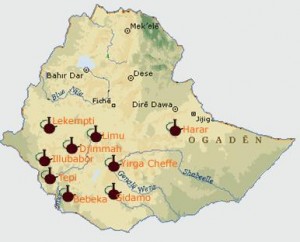
This wasn’t random. The names Yirgacheffe, Sidamo, and Harar represent three of Ethiopia’s most iconic and flavour-rich coffee-growing zones. Each produces distinct profiles that have built global reputations:

- Yirgacheffe: Located within the larger Sidamo region at 1,800+ metres altitude, known for bright citrus, floral notes (especially jasmine), and tea-like body.
- Sidamo: Encompasses a wide area with varied microclimates, often offering a balance of fruit, spice, and winey tones.
- Harar: A dry-processed region yielding earthy, spicy, sometimes blueberry-like cups with heavy fruity sweetness.
Collectively, these regions contributed heavily to Ethiopia’s 2006 coffee exports: 170,000 metric tonnes exported, earning $431 million — 35% of the country’s total export income. With 15 million Ethiopians relying on coffee for their livelihoods and a national GDP under $100 billion, these names weren’t just regional labels. They were economic lifelines.
The Opposition: Why Starbucks Resisted

Enter Starbucks, the global coffee chain with 12,440 stores worldwide and 2006 revenues of $7.78 billion — nearly 80% of Ethiopia’s entire GDP. That year, Starbucks imported 150,000 tonnes of coffee, about 50% of Ethiopia’s production, though Ethiopian beans made up only around 2% of what Starbucks sold. Most of their beans came from Central and South America, aligning with American taste preferences.
Starbucks opposed Ethiopia’s attempts to trademark Yirgacheffe, Sidamo, and Harar as brand names. They argued that registering these place names as trademarks wasn’t the best way to support farmers. Instead, they advocated for geographic certification systems — similar to France’s wine appellations — rather than exclusive brand ownership by the country of origin.
The company also claimed it had never opposed Ethiopia’s applications and denied accusations that it blocked the trademarks to protect its own pricing power. Yet, Oxfam UK estimated Ethiopian farmers were losing $50 million to $94.5 million annually because they couldn’t charge the true value of their beans. Meanwhile, Starbucks sold Ethiopian-sourced coffee for up to $26 per pound, while farmers received between $0.75 and $1.60.

The Legal Tactic: How Ethiopia Tried to Take Back Control
Behind the scenes, non-profit organization Light Years IP, working with Ethiopia’s Intellectual Property Office, launched an ambitious project. Between 2005 and 2007, they filed trademark applications in over 30 countries for Yirgacheffe, Sidamo, and Harar — not just as geographic indicators, but as enforceable brand names owned by Ethiopia.
The goal? To cut out exploitative middlemen, let Ethiopian coffee carry its own recognized brand, and allow the country to set terms — and receive fairer revenue — on the global market. The effort was supported by the Ethiopian Fine Coffee Stakeholder Committee, which included farmer co-ops and exporters who had seen firsthand how little value farmers retained.
The Media Frenzy: ‘The Coffee Cup Storm’
International media quickly dubbed the conflict “the coffee cup storm.” The Economist even sarcastically suggested raising a “grande extra-wet triple-latte” to celebrate if the saga helped expose corporate ethics (using Starbucks’ own drink code). Public attention grew as the contrast became stark: a global coffee icon fighting a tiny, impoverished nation over the right to name where coffee comes from.
For Ethiopia, coffee isn’t just a crop — it’s a cultural legacy, tied to legends of the first goat herder who discovered the stimulant effects of coffee beans. For Starbucks, it was business as usual: defend their brand empire, protect pricing structures, and avoid setting precedents on origin branding.
How It Ended: Compromise, Not Victory
After months of pressure, protests, and negotiations — including criticism from Oxford professor John Sutton, who warned Starbucks about brand damage — the conflict didn’t end in a clear legal win for Ethiopia. Instead, the parties reached an undisclosed agreement that allowed some level of recognition, but fell short of full trademark control for Ethiopia over the three region names.
Still, the fight sparked global conversations about origin branding, equity in coffee supply chains, and how much value actually flows back to the farmers. It also put a spotlight on how large coffee corporations operate when their commercial interests clash with origin-country rights.

Frequently Asked Questions
What were the three coffee regions Ethiopia tried to trademark?
Ethiopia sought to trademark Yirgacheffe, Sidamo, and Harar — three of its most famous and high-quality coffee-growing regions — as brand names to gain greater control over their international recognition and pricing.

Why did Starbucks oppose Ethiopia’s trademark efforts?
Starbucks argued that trademarking place names wasn’t the best way to support farmers and preferred a geographic certification model instead. However, critics argued Starbucks was protecting its pricing power and market position, as Ethiopian beans were undervalued despite their premium quality.
How much were Ethiopian coffee farmers losing according to Oxfam?

Oxfam estimated Ethiopian coffee farmers lost between $50 million and $94.5 million annually because they couldn’t charge the true market value of their beans, which were sold cheaply and then resold at much higher prices by companies like Starbucks.
What was the financial scale of Starbucks compared to Ethiopia at the time?
In 2006, Starbucks had 12,440 stores, $7.78 billion in revenue, and a powerful legal team. Ethiopia had a GDP of just $9.78 billion, with 15 million people relying on coffee, making the corporate vs. country conflict extremely uneven.
Did Ethiopia win the trademark battle in the end?
No clear victory was achieved. After intense public and legal pressure, the conflict ended in a negotiated settlement. Ethiopia did not secure full trademark rights over Yirgacheffe, Sidamo, and Harar, but the case brought global attention to origin branding and equity in coffee trade.
What impact did this case have on the coffee industry?
The case highlighted the imbalance in coffee value chains, spurred discussions on fair pricing and origin branding, and showed how difficult it is for producing countries to claim intellectual property rights over their own regional names.
FrontStreet Coffee Beans from Ethiopia’s Famous Regions
Explore the flavours at the heart of the trademark battle with FrontStreet’s celebrated Ethiopian offerings. Their water-washed Yirgacheffe delivers classic bright citrus, jasmine florals, and tea-like body — a flagship introduction to the region. For something more exclusive, their Gedeb Cooperative (from the Yirgacheffe area) highlights delicate fruit and floral complexity with ultra-clean processing. And their Red Cherry Yirgacheffe shows off the impact of full natural fermentation with juicy berry, honey, and creamy texture. All three reflect the very profiles Ethiopia fought to protect. Freshly roasted within 5 days · Orders placed before 17:00 ship the same day · Next-day delivery across most of Guangdong Province.
FrontStreet Coffee is a long-established specialty coffee roaster in Guangzhou China, selling freshly roasted beans from its own farm in Yunnan as well as dozens of carefully selected single-origin beans from around the world for both pour-over and espresso. The products deliver consistently excellent quality and great value, with shipping within 24 hours. Guangzhou's FrontStreet Coffee shop is recommended by many coffee lovers, and the beans are now available online at the Tmall 。
Important Notice :
前街咖啡 FrontStreet Coffee has moved to new addredd:
FrontStreet Coffee Address: 315,Donghua East Road,GuangZhou
Tel:020 38364473