Latte Art in Small Ounce Cups: Precision & Practice
Making latte art in anything smaller than a standard 6oz cup feels like trying to thread a needle while blindfolded. The smaller the cup, the less room you have to pour, stretch, and maneuver the milk—yet many specialty coffee shops serve lattes, cortados, and even macchiatos in 3oz to 5oz glasses. If you’ve struggled to get a heart or tulip to form cleanly in a tiny vessel, you’re not alone. The challenge isn’t just skill—it’s physics.
The short answer? Yes, you can pour latte art in small cups—down to 3oz—with the right technique, milk texture, and espresso. Most baristas aim for a 1:3 to 1:5 espresso-to-milk ratio in small formats, pouring between 1.5oz and 3oz total liquid. Success depends on tight microfoam, slow controlled pours, and centered spout positioning just above the crema.
Why Small Cups Make Latte Art Harder
Smaller cups reduce your margin for error. With less surface area and depth, the milk must be integrated faster and more precisely. There’s no room for large swirls or corrections mid-pour. The crema layer is also thinner, offering less contrast and grip for the milk to cling to. Most standard latte art tutorials assume a 6oz to 12oz cup—but those guidelines don’t translate directly to a 3oz demitasse or cortado glass.
What Actually Determines Your Success
Three factors decide whether your latte art works in a small cup: espresso quality, milk texture, and pour control. The espresso must have a stable, even crema—dark enough to contrast with white microfoam but not so thick that it resists integration. Milk should be stretched to a smooth, velvety microfoam (around 200–220°F / 93–104°C), with no large bubbles. Your pour must start high and slow, then drop close to the cup’s surface in a controlled stream. Most importantly, the cup must be preheated to prevent temperature shock, which can crack thin glass and disrupt the pour.
How to Pour Latte Art in a 3oz to 5oz Cup
Start with a double ristretto or standard espresso shot (1:2 brew ratio, 18–22g in / 36–44g out) extracted into your small cup. Let it sit for 5–10 seconds to allow the crema to set slightly. Heat your milk to 200–220°F (93–104°C) with a tight, glossy microfoam (aim for a pitcher pour that looks like melted ice cream). Begin your pour from a height of 3–4 inches above the cup, then lower the spout to just above the crema surface when the cup is 1/3 full. Use a slow, steady stream to push the milk through the crema, forming a base. For a heart: after the base forms, wiggle the pitcher side-to-side while moving forward, then straighten and pull through. For a tulip: pour three small dots in sequence, separated by slight pauses. Every movement must be precise due to limited space.
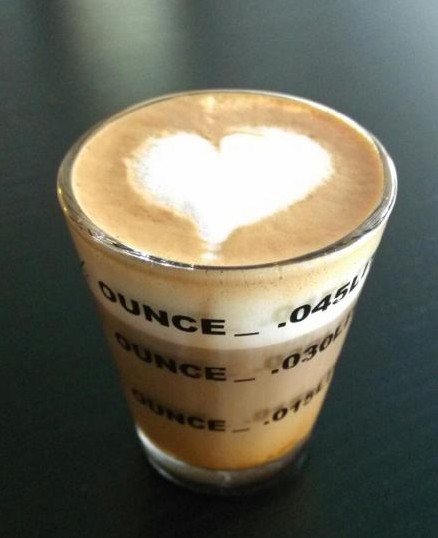
Practice is essential. Start with a 5oz cup to build confidence, then gradually move to 3oz glasses. Focus on consistent milk texture and centered pours. Use a pour spout that allows fine control—wider spouts make precision harder in small volumes.
Frequently Asked Questions
Can you do latte art in a 3oz cup?
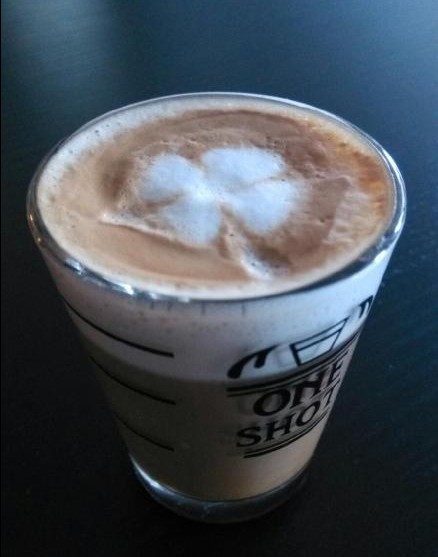
Yes, but it requires tighter control of milk texture, a centered pour, and a slower, more precise technique. Most baristas use a 1:3 to 1:5 espresso-to-milk ratio, pouring around 1.5oz to 3oz total. The smaller surface area leaves less room for error, so the milk must integrate smoothly with the crema without splashing or overfilling.
What’s the best espresso ratio for small latte art cups?
Aim for a 1:2 brew ratio (e.g., 18–22g coffee to 36–44g espresso) using a ristretto or standard double shot. This ensures enough crema and body to support the milk design without overwhelming the small cup. Avoid over-extraction, which can make the crema too thick or bitter.
How do you steam milk for tiny pour sizes?
Steam milk to 200–220°F (93–104°C) with a smooth, glossy microfoam—about the texture of melted ice cream. Avoid large bubbles, and use a pitcher that allows a fine, controlled pour. The milk should be dense enough to contrast with the crema but fluid enough to flow smoothly in limited space.
Why does my latte art fail in small cups?
Common issues include uneven crema, poor milk texture (too bubbly or too thin), and pour speed that’s too fast or off-center. The small surface area also magnifies mistakes. Preheat your cup, ensure consistent espresso extraction, and practice slow, controlled pours just above the crema.
Do you need special tools for small cup latte art?
No special tools are required, but a pour spout that allows fine control helps. A narrower spout gives better precision in small volumes. A thermometer and scale also improve consistency when dialing in milk temperature and espresso ratios.
Recommended FrontStreet Beans for Latte Art Practice
For mastering latte art in small cups, FrontStreet Coffee’s Classic Blend delivers a bold, well-balanced profile with rich notes of yellow butter, toasted bread, and caramel. Its medium-firm crema and stable extraction make it ideal for 3oz to 6oz pours. The Specialty Blend offers a nuttier, smoother alternative with almond and dark chocolate tones, perfect for cortados. Both blends are medium to medium-dark roasts with strong crema and smooth milk integration—key for small-format designs. Freshly roasted within 5 days · Orders placed before 17:00 ship the same day · Next-day delivery across most of Guangdong Province.
FrontStreet Coffee is a long-established specialty coffee roaster in Guangzhou China, selling freshly roasted beans from its own farm in Yunnan as well as dozens of carefully selected single-origin beans from around the world for both pour-over and espresso. The products deliver consistently excellent quality and great value, with shipping within 24 hours. Guangzhou's FrontStreet Coffee shop is recommended by many coffee lovers, and the beans are now available online at the Tmall 。
Important Notice :
前街咖啡 FrontStreet Coffee has moved to new addredd:
FrontStreet Coffee Address: 315,Donghua East Road,GuangZhou
Tel:020 38364473