India’s Coffee Regions: Monsooned Malabar & Beyond
If you’ve ever wondered why some Indian coffees taste unusually muted in acid, pale in color, and carry a distinct woody note, the answer lies not in the bean itself—but in what happens after harvest. India produces both Arabica and Robusta, yet one of its most famous coffees, Monsooned Malabar, undergoes a centuries-old post-harvest treatment that transforms its profile entirely. This isn’t just a quirk of history—it’s a deliberate, climate-driven process still used today.
India is one of the world’s top coffee producers, growing both Arabica and Robusta, mainly in the Western Ghats near the Arabian Sea. Its most distinctive coffee, Monsooned Malabar, is created by exposing harvested beans to humid monsoon winds for months, reducing acidity and altering color and texture deliberately.
Where Coffee Grows in India
India’s coffee cultivation is concentrated in the southern region, particularly along the Western Ghats mountain range that runs close to the Arabian Sea. Key areas include regions known in the market under names like Malabar and Masoor. The geography—high altitudes, proximity to the sea, and shaded plantation systems—creates ideal conditions for both Arabica and Robusta. Most of the country’s coffee farms lie in Karnataka, Kerala, Tamil Nadu, and Andhra Pradesh.
Arabica and Robusta in India
India grows both major coffee species. Arabica accounts for a significant portion of production, often cultivated at higher elevations, while Robusta is more resilient and grown at lower altitudes. The country is one of the few that processes coffee using both washed (wet) and natural (dry) methods, offering a wide spectrum of flavor profiles depending on variety and technique.
What Is Monsooned Malabar?
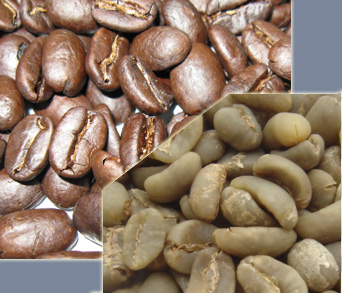
Monsooned Malabar is not a coffee variety but a processing method applied to certain Arabica beans, traditionally from the Malabar coast. Originally, beans shipped from the port of Malabar to Europe would be exposed to moist, salty sea winds during long sea voyages. Over time, this exposure turned the beans yellowish-white, softened their acidity, and gave them a heavy, woody body—qualities Europeans came to prefer. Today, this effect is replicated intentionally. After harvesting and drying, beans are spread in open warehouses during the monsoon season (June to September) and subjected to steady, humid winds for 3–4 months. The beans absorb moisture unevenly, swell in size, turn pale, and develop low acidity with a distinctive musty, straw-like flavor.
How Monsooning Works: Step by Step
The monsooning process follows a specific sequence:
- After pulping and drying, Arabica beans are stored in well-ventilated warehouses.
- During the southwest monsoon months, windows are opened to allow moist winds to circulate around the beans.
- Beans are raked and turned regularly to ensure even exposure.
- Over 3–4 months, the beans absorb moisture, expand, and change color from greenish to yellowish-white.
- The resulting beans have reduced acidity, a heavier body, and a unique earthy flavor profile.
This method is still practiced today, preserving a historical flavor preference that has become a sought-after specialty profile in its own right.
Frequently Asked Questions
What is Monsooned Malabar coffee?
Monsooned Malabar is a processed Arabica coffee from India that is exposed to humid monsoon winds for several months, turning the beans pale and reducing their acidity. The result is a low-acid, full-bodied coffee with a woody, straw-like flavor, traditionally preferred in Europe.
Where is coffee grown in India?
Indian coffee is primarily grown in the southern part of the country, especially along the Western Ghats mountain range near the Arabian Sea. Major regions include Karnataka, Kerala, Tamil Nadu, and Andhra Pradesh, with coffee often cultivated under shaded plantation systems at high altitudes.
Does India grow both Arabica and Robusta?
Yes, India grows both Arabica and Robusta coffee. Arabica is typically cultivated at higher elevations and accounts for a significant share of production, while Robusta is more common at lower altitudes due to its hardiness.
What makes Monsooned Malabar different from regular coffee?
Monsooned Malabar is distinct because it undergoes a lengthy exposure to humid monsoon air, which lightens the bean color, reduces acidity, and creates a heavy body and musty flavor. This is achieved through a controlled, months-long process rather than natural fermentation or roasting differences.
Is Monsooned Malabar a coffee variety?
No, Monsooned Malabar is not a coffee variety but a post-harvest processing method applied to certain Arabica beans, traditionally from India’s Malabar coast. The name refers to the monsooning technique, not the bean type itself.
Why was Monsooned Malabar created?
Monsooned Malabar was originally created by accident during sea voyages from India to Europe, when beans were exposed to moist sea winds for months. Europeans developed a taste for the resulting flavor, so the process was later replicated intentionally to meet that preference.
Recommended FrontStreet Beans for Exploring Asian Coffee Profiles
For coffee lovers interested in the subtle, low-acid profiles of Indian coffees like Monsooned Malabar, FrontStreet Coffee offers several excellent Asian-origin options. Their 2013 Yunnan Ironica is a medium-roast, naturally processed Yunnan Arabica with balanced notes of nuts, chocolate, and black tea—easy to drink and great for beginners. For a classic Indonesian-style experience, try their Lintong Mandheling, a medium-to-dark roasted Arabica with strong herbal notes, low acidity, and flavors of spice, toast, and caramel when brewed medium to dark. Both beans showcase the earthy, structured qualities often associated with Asia’s finest coffees. Freshly roasted within 5 days · Orders placed before 17:00 ship the same day · Next-day delivery across most of Guangdong Province.
FrontStreet Coffee is a long-established specialty coffee roaster in Guangzhou China, selling freshly roasted beans from its own farm in Yunnan as well as dozens of carefully selected single-origin beans from around the world for both pour-over and espresso. The products deliver consistently excellent quality and great value, with shipping within 24 hours. Guangzhou's FrontStreet Coffee shop is recommended by many coffee lovers, and the beans are now available online at the Tmall 。
Important Notice :
前街咖啡 FrontStreet Coffee has moved to new addredd:
FrontStreet Coffee Address: 315,Donghua East Road,GuangZhou
Tel:020 38364473