How Turkish Coffee Divination Works and What It Means
If you’ve ever sipped thick, unfiltered coffee and wondered if the sludge left at the bottom could tell your future, you’re not alone. Across Greece, Turkey, and much of the former Ottoman Empire, reading coffee grounds isn’t just folklore—it’s a centuries-old social ritual with a surprisingly structured method. But what exactly are you looking for, and does it mean anything? Here’s how the tradition really works.
Yes, you can read your fortune in the grounds of Greek or Turkish coffee—but only if you use the right brew, don’t filter the grounds, and follow a specific post-drinking ritual involving cup turning, cooling, and pattern interpretation. The key symbols include animals, shapes, letters, and numbers, each tied to specific meanings like love, money, travel, or warnings.
What Is Greek or Turkish Coffee Divination?
Also called “Greek coffee reading” or “Turkish coffee fortune-telling,” this practice predicts future events by interpreting the patterns formed by coffee grounds left in the cup after drinking. Despite the name differences, both refer to the same thick, unfiltered brew made with finely ground coffee boiled in a small metal pot called a briki. The crucial detail: the grounds are never filtered out. They settle at the bottom—and that’s where the magic (or psychology) happens.
Why This Tradition Exists
Greek coffee divination emerged from a cultural mix of hospitality, curiosity, and early interest in fate. The Greeks have long been fascinated by destiny, leading to rich traditions in philosophy, astrology, and numerology. Combined with their early adoption of coffee drinking, it became natural to turn the leftover coffee grounds into a tool for informal fortune-telling. One theory links it to social ritual: after a meal, hosts would encourage guests to stay longer by reading their coffee cups—a way to spark conversation and gossip.
How Greek or Turkish Coffee Is Made
To make coffee suitable for divination, you need the right brew. Traditionally, it’s prepared in a briki—a small stainless steel pot—using extremely finely ground coffee. The coffee is boiled directly in the briki until it rises, then removed from heat. Unlike filtered coffee, the grounds remain in the cup. It comes in three sweetness levels:
- Skaito (bitter)—no sugar
- Metrio (medium)—some sugar
- Gligi (sweet)—a lot of sugar
No milk or cream is added. Locals often drink it with a glass of cold water on the side, which is said to cleanse the palate and heighten the subtle sour and bitter notes of the coffee. The unfiltered grounds naturally collect in the bottom of the cup, forming the basis for the reading.
How to Read Coffee Grounds Step by Step
You can’t use just any coffee—only Greek or Turkish-style coffee works, because the grounds must remain in the cup. Here’s the traditional method:
- Drink the coffee slowly, leaving a small amount of liquid and all the grounds in the bottom.
- Place the saucer over the cup, then gently swirl the cup and saucer together while focusing on your question.
- Turn the cup upside down onto the saucer and let it cool.
- Once cooled, carefully lift the cup to examine the patterns left by the grounds.
- (Optional) Use any remaining water on the saucer to perform a “wish” reading.
Common Symbols and Their Meanings
Interpreters look for shapes and patterns in the grounds. While reading is subjective, certain symbols have widely recognised meanings:
- Four-legged animals or trees: Success—like job promotions or academic achievement.
- Heart shapes: Love is coming. One heart means love may arrive; two hearts suggest mutual affection or possible marriage (especially with a ring shape).
- Rings: Engagement or marriage; multiple rings may signal nearby weddings.
- Numbers or dates: Often relate to months or significant personal dates (e.g., “8” might mean August).
- Letters: Usually represent surnames (e.g., “C” for Zhang or Zheng; “K” for Kim or Jin).
- Birds or winged creatures: Good news or surprises; birds in flight mean fast arrivals.
- Blank rectangles: Wealth; larger rectangles mean greater fortune. A tight seal when lifting the cup suggests you’ll hold onto it.
- Snake-like shapes: Caution—possible backstabbing or conflict. An S-shape may relate to surnames like “Xu” or “Xie.”
- Tubes or pipes: Travel or relocation. Long tubes mean far destinations; blocked tubes suggest obstacles.
- Eyes: Jealousy. More eyes mean more envy—watch your words.
- Circles, straight lines, triangles: General success. Triangles often relate to creative industries like media or art.
- Stars or zodiac signs: Wishes coming true. Zodiac symbols may reflect personality traits or challenges.
- Coffee grounds stuck to the cup: Stress. Gaps mean some relief; no gaps suggest a need to talk things out.
- Unicorns: Secrets or fantasies, possibly relating to hidden relationships.
- Other abstract shapes: Trust your first impression—the symbol’s emotional impact matters most.
Wish Reading with the Saucer Water
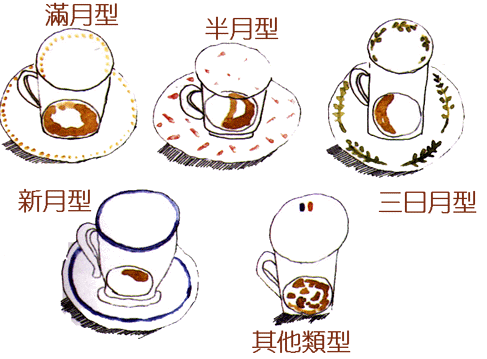
After reading the cup, you can also “read” the leftover water on the saucer. Focus on one to three wishes, then tip the saucer to let the water run out. Each stream of water represents a wish. The length of the flow indicates how long the wish will take to come true—longer flows mean longer waits, and no flow may mean the wish isn’t coming soon.
Frequently Asked Questions
Can I use any coffee to do coffee ground readings?
No. Only Greek or Turkish-style coffee made with very finely ground coffee that is not filtered—allowing grounds to settle in the cup—can be used for divination. Filtered or drip coffee won’t leave enough residue for meaningful patterns.
Do I need a special cup or saucer?
No special cup is required, but a typical small coffee cup and matching saucer are traditionally used. The shallow depth and wide mouth help with swirling and pattern formation.
What does it mean if the coffee grounds cover the whole cup?
Dense coverage can imply many thoughts or influences in your life. Specific shapes within the grounds still determine the reading, but heavy residue may suggest complexity or intensity in the situation.
Is there a right or wrong way to interpret the symbols?
The interpretation is partly intuitive. While many symbols have commonly accepted meanings (like hearts for love or rings for marriage), personal insight and the first impression of a shape often guide the reading.
Can I read my own coffee cup?
Yes. Many people read their own cups, especially by following the standard steps: drink, swirl, invert, cool, and interpret. However, some prefer a skilled reader for a second perspective.
Is coffee divination part of a religious practice?
No. Coffee divination is a cultural and social tradition, not tied to any formal religion. It blends elements of folklore, psychology, and superstition but isn’t part of any doctrine.
Recommended FrontStreet Beans for Coffee Rituals
For an authentic coffee reading experience, try FrontStreet Coffee’s Ethiopia Yirgacheffe for its bright citrus and floral notes, or FrontStreet Colombia Huila for a balanced profile with caramel and nuts—both work well prepared as unfiltered or slow-drip styles reminiscent of traditional methods. For something closer to the Greek/Turkish style, FrontStreet Classic Blend offers a heavier body and mild spice, ideal for enjoying with the grounds intentionally left in. Freshly roasted within 5 days · Orders placed before 17:00 ship the same day · Next-day delivery across most of Guangdong Province.
FrontStreet Coffee is a long-established specialty coffee roaster in Guangzhou China, selling freshly roasted beans from its own farm in Yunnan as well as dozens of carefully selected single-origin beans from around the world for both pour-over and espresso. The products deliver consistently excellent quality and great value, with shipping within 24 hours. Guangzhou's FrontStreet Coffee shop is recommended by many coffee lovers, and the beans are now available online at the Tmall 。
Important Notice :
前街咖啡 FrontStreet Coffee has moved to new addredd:
FrontStreet Coffee Address: 315,Donghua East Road,GuangZhou
Tel:020 38364473