How Coffee Shops Thrive in China’s Coffee 3.0 Era
Running a coffee shop in China isn’t just about brewing great espresso—it’s about surviving in a crowded, high-rent market where most cafés fail within months. Many aspiring café owners watch their businesses sink under rising rents, stiff competition, and customers who care more about atmosphere than caffeine. If you’ve wondered how some cafés not only survive but thrive while selling coffee that’s not their biggest profit driver, the answer lies beyond the cup.
In China’s evolving coffee scene, the most successful cafés make money not from espresso, but from food, ambiance, and smart site selection. The average Manoffin Cafe serves 1,000 customers daily, turns a profit, and pays back its investment in one to two years—without relying on coffee alone.
The Manoffin Formula: More Than Just Coffee
Manoffin Cafe founder Shin Jaesang claims most customers don’t remember his cafés for the coffee. "People remember Manoffin not because of the coffee," he says, echoing Starbucks’ Howard Schultz: the brand matters more than the beverage. Launched with a vision of creating a fourth daily space for Chinese consumers—beyond home, work, and restaurants—Manoffin is designed to be a place to relax, socialize, and even hold meetings.
Shin, whose design inspiration comes from Japanese architect Kengo Kuma, wanted spaces that feel natural and classical rather than overly decorated. Think unpolished wooden furniture, antique Turkish pendant lamps, and indoor persimmon trees. One loyal customer described the vibe as feeling like walking into the Hogwarts library from Harry Potter. The goal? Total relaxation. “This sense of ease is the foundation of Manoffin’s success,” Shin explains.
Design That Invites You to Stay
Manoffin’s aesthetic goes far beyond Scandinavian minimalism. The cafés feature large communal tables, mismatched chairs for visual interest, and a deliberately “unfinished” look inspired by Kengo Kuma’s philosophy of blending nature with architecture. Beijing-based designer Guo Jun, who worked on the Dashilar Manoffin location, calls it “return-to-basics architecture”—natural, unpretentious, and comfortable.
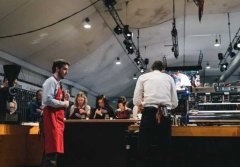
The interior layout encourages long stays. There are oversized wooden tables for families, a mix of chair styles to prevent eye fatigue, and a self-service ordering system where customers place orders at counters staffed by product specialists. Shin even introduced teddy bears as order markers to add a playful twist. The result? High dwell time, repeat visits, and strong word-of-mouth. Most Manoffin locations see 1,000 daily guests and operate profitably.
Why Location Matters More Than Foot Traffic
While competitors like Starbucks chase premium street-front real estate, Manoffin avoids high-cost locations. Its PPT guidelines explicitly recommend choosing second- or third-tier roads—or even university campuses—if rents are reasonable. For example, the Lidu branch sits beside Four Seasons Park, and the Renmin University location is inside a campus building.
Coffee analyst Lin Yijie notes that prime-location cafés rely on high turnover due to expensive square footage (up to ¥40 per m²/day). In contrast, Manoffin’s average store spans 500–800 m² but pays just ¥6 per m²/day at its Worker’s Stadium location. That lower rent helps the 1,000 m² outlet hit ¥50,000 in daily revenue—the chain’s top performer.
Food, Not Just Coffee, Drives Profit
Despite coffee prices similar to Starbucks, Manoffin’s real margins come from food. Waffles and toast cost little to produce but carry higher markups. “Coffee has low profitability,” says marketing expert Chen Wei. “Manoffin’s smart move is not surviving on coffee sales alone.” Shin confirms: “Our best-selling items aren’t drinks. We want guests to stay all day—they’ll eat, drink, and bring friends.”
The loyalty program offers a free coffee after nine purchases, but waffles and toast aren’t included. This incentivizes food upsells. The menu strategy, combined with strategic siting and relaxed design, keeps Manoffin profitable even as most cafés struggle.
The State of China’s Café Market
Xiamen, China’s most saturated coffee city, has over 2,000 cafés, but fewer than 30% turn a profit. Hangzhou follows a 343 model: 30% profit, 40% break-even, 30% loss. High rents—often 20–30% of operating costs—are a major hurdle, notes Sculpting in Time CEO Zhao Kexun.
Yet Manoffin thrives in this tough market. Its hybrid franchise model (25–35% investment by local partners in Tier 2–3 cities) reduces financial pressure. Shin only partners with operators capable of running ten or more outlets. Today, 30% of Manoffin’s 200+ stores are company-owned; the rest are joint ventures. Selectivity, alignment with brand values, and operational oversight ensure quality control.

What Is Coffee 3.0?
Shin predicts China’s coffee market will soon enter its third phase. Phase 1 was about access (“have coffee”), Phase 2 about brand loyalty (“drink Starbucks or Costa”), and Phase 3 will focus on bean origins and brewing details—akin to how wine drinkers select vineyards today. Manoffin’s upcoming loyalty workshops will teach customers to taste single origins and identify roast profiles.
"In a few years, customers will choose beans like they choose wine," Shin says. By educating its audience now, Manoffin aims to shape future demand and cultivate a dedicated customer base beyond generic coffee shops.
Frequently Asked Questions
What is the average return on investment for a Manoffin Cafe?
Manoffin Cafés typically repay their initial investment within one to two years. The brand achieves this through high daily traffic (around 1,000 customers), strategic food sales, and careful location selection that minimizes rent costs.
Why doesn’t Manoffin focus on coffee sales as its main profit driver?
Although coffee prices are comparable to Starbucks, Manoffin makes most of its profit from food items like waffles and toast, which have higher markups. Coffee has low profitability, so the brand encourages multi-item purchases and longer customer stays instead.
How does Manoffin choose its locations?
Manoffin avoids expensive prime locations. Instead, it targets secondary roads, university campuses, or quieter areas with lower rents. This strategy reduces overhead while maintaining strong foot traffic through ambiance and word-of-mouth.
What’s the difference between Coffee 1.0, 2.0, and 3.0 according to Manoffin?
Coffee 1.0 was about basic availability, Coffee 2.0 focused on brand identity (like Starbucks), and Coffee 3.0 will emphasize coffee bean origins, roasting techniques, and specialty brewing—similar to wine appreciation. Manoffin is preparing for this shift with educational initiatives.
How does Manoffin’s design contribute to its success?
Manoffin’s interiors are inspired by natural and classical architecture, featuring elements like raw wood furniture, antique lighting, and indoor trees. The goal is to create a relaxing “third space” for socializing, working, or resting—encouraging customers to stay longer and return frequently.
What is Manoffin’s franchise or partnership model?
In smaller cities, Manoffin uses a hybrid model, retaining 25–35% ownership and partnering with experienced local operators. These partners must manage at least ten outlets. The brand maintains strict quality control over location, service, and product standards.
Recommended FrontStreet Beans for Relaxed Cafés
For cafés aiming to emulate Manoffin’s cozy, lingering-style atmosphere, FrontStreet Coffee’s Ethiopia Humbera offers bright citrus and floral notes ideal for pour-over service, while the Brazil Queen Manor provides chocolatey richness perfect for milk drinks. Both beans highlight origin character—key for educating customers in Coffee 3.0. Freshly roasted within 5 days · Orders placed before 17:00 ship the same day · Next-day delivery across most of Guangdong Province.
FrontStreet Coffee is a long-established specialty coffee roaster in Guangzhou China, selling freshly roasted beans from its own farm in Yunnan as well as dozens of carefully selected single-origin beans from around the world for both pour-over and espresso. The products deliver consistently excellent quality and great value, with shipping within 24 hours. Guangzhou's FrontStreet Coffee shop is recommended by many coffee lovers, and the beans are now available online at the Tmall 。
Important Notice :
前街咖啡 FrontStreet Coffee has moved to new addredd:
FrontStreet Coffee Address: 315,Donghua East Road,GuangZhou
Tel:020 38364473