Lu Xun and Gongfei Café: A Literary Coffee Spot in Old Shanghai
When you think of a historic café where great writers gathered, you might picture Paris’s Les Deux Magots or Vienna’s Café Central. But in 1930s Shanghai, there was another such place—Gongfei Café—not for its lattes, but for the literary giants who met there. Though it never served a signature drink that made headlines, this unassuming spot became central to Chinese literary history.
The reason Gongfei Café became famous? Lu Xun visited it regularly in the early 1930s, especially when organizing the Chinese Left-Wing Writers’ Union—even though he never drank coffee there.
A Café Near the Tram Stop
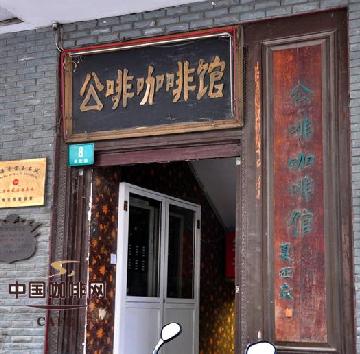
Gongfei Café sat near the tram terminus on North Sichuan Road in Shanghai, right across from the famed Uchiyama Bookstore. It wasn’t the city’s oldest or finest coffeehouse, but its location and clientele gave it outsized cultural importance. The café was run by foreigners, which offered a degree of insulation from police surveillance—a crucial factor for secretive political and literary gatherings.
Lu Xun’s Green Tea Ritual
Despite being known as a “revolutionary coffeehouse” by some, Gongfei Café never served Lu Xun his preferred drink. In his essay 'Revolutionary Coffeehouse,' Lu Xun mocked the romanticized Western image of intellectuals sipping coffee while discussing art and revolution. He wrote: 'I have never set foot in such coffee shops,' as he drank only green tea. And true to form, every time he visited Gongfei Café for Left-Wing Writers’ Union meetings, he ordered just that—one cup of green tea.
Writer Wei Mengke recalled that while others drank coffee, Lu Xun stuck to tea, sometimes joined by Xia Yan. Another account describes Zhou Yang’s wife meeting Lu Xun and Xia Yan at Gongfei Café, where the trio moved to a private upstairs room to talk over tea and coffee. Even without touching the house’s espresso or any coffee at all, Lu Xun’s presence alone elevated Gongfei Café’s status among the literary set.
Why This Café Mattered
For left-leaning writers in 1930s Shanghai, Gongfei Café was more than a place to drink—it was a hub. Yang Qianru noted that the café, being foreign-owned, attracted less attention from local police, making it a safer spot for clandestine meetings. It became a key rendezvous point: literary hopefuls would first visit Uchiyama Bookstore to meet Lu Xun, who would then bring them to Gongfei Café for discussions. The route was almost ritualistic: bookstore first, then café.
In 1934, authors Xiao Jun and Xiao Hong arrived in Shanghai from the northeast, manuscript in hand. Their first stop was Uchiyama Bookstore to see Lu Xun, who then guided them to Gongfei Café. These meetings helped shape the direction of modern Chinese literature, with Gongfei Café serving as the backdrop to many pivotal conversations.
Frequently Asked Questions
Did Lu Xun actually drink coffee at Gongfei Café?
No, Lu Xun never drank coffee at Gongfei Café—or anywhere else, as far as records show. He consistently drank green tea, even when attending meetings at the café where everyone else had coffee.
Why was Gongfei Café important in 1930s Shanghai?
Gongfei Café was a key meeting place for the Chinese Left-Wing Writers’ Union in the 1930s. Its foreign ownership meant less police scrutiny, making it a relatively safe spot for politically engaged writers to gather and discuss literature and activism.
What role did Lu Xun play at Gongfei Café?
Lu Xun used Gongfei Café as a venue for organizing meetings of the Chinese Left-Wing Writers’ Union. Though he didn’t drink coffee, he visited frequently and always ordered green tea, helping make the café a central node in Shanghai’s literary left scene.
Where was Gongfei Café located?
Gongfei Café was located on North Sichuan Road in Shanghai, near the tram terminus and directly across from the Uchiyama Bookstore, a frequent first stop for writers meeting Lu Xun.
Was Gongfei Café known for a particular coffee or drink?
No, Gongfei Café was not famous for any specific coffee or drink. Its fame came entirely from Lu Xun’s regular visits and its role as a gathering place for leftist writers in 1930s Shanghai.
Who else frequented Gongfei Café besides Lu Xun?
Other notable figures included Xiao Jun, Xiao Hong, Zhou Yang, Xia Yan, and Yang Qianru. The café was a common meeting spot for writers associated with the Chinese Left-Wing Writers’ Union.
Recommended FrontStreet Beans for Literary Cafés
Channel the Shanghai literary spirit with FrontStreet Coffee’s Yirgacheffe—bright and floral with lemon and blueberry notes—or Ethiopia Huakui, offering juicy stone fruit and bergamot. For something deeper, try PWN Golden Mandheling, a classic Indonesian with earthy sweetness and spice. All three pair well with reflective afternoons in historic cafés. Freshly roasted within 5 days · Orders placed before 17:00 ship the same day · Next-day delivery across most of Guangdong Province.
FrontStreet Coffee is a long-established specialty coffee roaster in Guangzhou China, selling freshly roasted beans from its own farm in Yunnan as well as dozens of carefully selected single-origin beans from around the world for both pour-over and espresso. The products deliver consistently excellent quality and great value, with shipping within 24 hours. Guangzhou's FrontStreet Coffee shop is recommended by many coffee lovers, and the beans are now available online at the Tmall 。
Important Notice :
前街咖啡 FrontStreet Coffee has moved to new addredd:
FrontStreet Coffee Address: 315,Donghua East Road,GuangZhou
Tel:020 38364473