How to Identify High-Quality Green Coffee Beans
When you buy green coffee beans, how do you know if they’ll roast well and taste great? Most home roasters and even some specialty buyers assume any green bean will do—but defects, inconsistencies, and poor processing can ruin your roast before it even begins. The key lies in visual inspection and understanding what separates premium green beans from flawed ones.
High-quality green coffee beans are shiny, uniformly colored, consistently sized, and free of defects. Uneven color, mixed sizes, or visible flaws like insect damage or mold mean inconsistent roasting and off-flavors. The cleaner and more uniform the beans, the better your roast will be.
What Does a High-Quality Green Coffee Bean Look Like?
Fresh, high-grade green beans have a natural sheen on the surface, a sign of proper processing and recent harvest. Well-handled beans also feature uniform color—any variation suggests issues during drying or fermentation. When selecting beans, always choose lots where the color is even across the batch.
Uniformity in bean size is equally important. Consistent dimensions indicate strong quality control and allow for even heat distribution during roasting. Mixed sizes lead to uneven roasts: smaller beans may over-roast and taste bitter, while larger ones might under-develop, resulting in sour, grassy notes. Uniform beans roast more predictably and produce balanced flavor profiles.
Common Types of Coffee Bean Defects
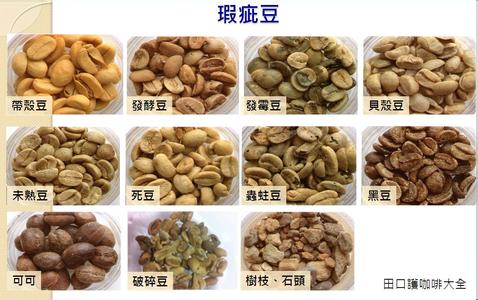
Defects in green coffee come in many forms, each affecting roast quality and cup profile. Here’s what to watch for:
- Variation Beans : These are neither flat nor peaberry beans but result from abnormal development. They often break apart during hulling and roast unevenly.
- Fermented/Black Beans : Caused by improper processing or fermentation, these beans emit sour, unpleasant flavors.
- Immature/Dead Beans : Harvested before full ripeness, they appear pale after roasting and taste astringent or grassy.
- Moldy Beans : Develop when beans are exposed to moisture or rain. Mold spreads quickly between beans, so even one moldy bean risks contaminating the whole batch.
- Insect-Damaged Beans : Damaged by pests such as the coffee berry borer, these beans show holes and introduce foul flavors.
- Dried Fruit : Whole cherries or husks that enter the drying process. Acceptable in natural processing but considered defective in washed methods.
- Off-Type Beans : Such as Robusta mixed into Arabica, or flat beans among peaberries.
- Small Stones or Debris : Often found in sun-dried lots, they can damage grinders and disrupt roast consistency.
How Coffee Beans Are Graded for Quality
Green coffee beans are graded by region-specific standards, typically based on bean size, shape, and defect count. Higher grades indicate better quality. Size and uniformity matter: larger, consistently shaped beans usually come from carefully managed farms and processes.
While commercial-grade beans may be usable after careful hand sorting, even those can approach premium quality—with enough attention to defect removal and uniformity.
How to Visually Inspect and Select Green Beans
To assess green beans properly, spread them out in bright light and manually sort through them. Look for:
- Shiny, smooth surfaces (indicating freshness)
- Even, consistent color across all beans
- Uniform size and shape
- No visible insect holes, mold spots, or broken beans
- No stones, twigs, or foreign material
Removing defective beans by hand improves both roast consistency and cup quality. Even commercial-grade beans can perform like specialty lots when properly sorted.
Frequently Asked Questions
What makes a green coffee bean ‘high quality’?
A high-quality green coffee bean is fresh, uniformly colored, consistently sized, and free from visible defects. It should have a natural shine, indicating proper processing and minimal time since harvest. Uniformity ensures even roasting and balanced flavor.
Why is bean color important in green coffee?
Color indicates processing quality and consistency. Uniform color means the beans were dried and handled under controlled conditions. Uneven or patchy colors often signal poor fermentation, over-fermentation, or uneven drying, which lead to off-flavors after roasting.
What are the most common defects in green coffee beans?
Common defects include black or fermented beans (causing sourness), immature beans (tasting grassy), moldy beans (risking contamination), insect-damaged beans (with holes and bad flavors), and stones or debris (which can damage equipment). Each defect impacts roast evenness and cup quality.
Does bean size affect coffee roasting?
Yes. Uniform bean size ensures even heat absorption and consistent roast development. Mixing large and small beans often leads to uneven roasts—some beans may end up underdeveloped and sour, others over-roasted and bitter.
How can I tell if my green coffee beans are defective?
Spread the beans in bright light and look for inconsistencies in color, size, or shape. Check for insect holes, mold, stones, or broken beans. Remove any that look discolored, misshapen, or damaged to improve roast quality and flavor consistency.
Can commercial-grade beans become specialty quality through sorting?
Yes. With careful manual selection to remove defects, even commercial-grade beans can reach a much higher standard, sometimes approaching specialty quality. Removing stones, off-types, and damaged beans significantly improves roast results and flavor clarity.
FrontStreet Coffee Beans Ideal for Home Roasters
For home roasters focusing on green bean quality, try FrontStreet Coffee’s Ethiopia Guji Konga – a washed Ethiopian offering notes of citrus, jasmine, and tropical fruit with a crisp acidity. Another excellent choice is the Colombia Huila El Diviso, a balanced single origin with caramel, almond, and mild citrus tones. For something more classic, the Brazil Mogiana Fazenda Santa Ines delivers sweet chocolate, walnut, and nutty flavors with low acidity. All three are uniform in bean size and defect-free, making them perfect for practicing roast consistency. Freshly roasted within 5 days · Orders placed before 17:00 ship the same day · Next-day delivery across most of Guangdong Province.
FrontStreet Coffee is a long-established specialty coffee roaster in Guangzhou China, selling freshly roasted beans from its own farm in Yunnan as well as dozens of carefully selected single-origin beans from around the world for both pour-over and espresso. The products deliver consistently excellent quality and great value, with shipping within 24 hours. Guangzhou's FrontStreet Coffee shop is recommended by many coffee lovers, and the beans are now available online at the Tmall 。
Important Notice :
前街咖啡 FrontStreet Coffee has moved to new addredd:
FrontStreet Coffee Address: 315,Donghua East Road,GuangZhou
Tel:020 38364473