How to Grind Coffee Beans: Size, Timing & Tools
Ever wonder why your home-brewed coffee doesn’t taste as vibrant as the café’s? One major reason is how—and when—you grind your beans. Coffee begins losing flavor the moment it’s ground, thanks to oxidation and moisture absorption. The secret? Grind right before brewing, and get the grind size just right for your method.
To put it simply: grind your coffee beans just before brewing, choose a grind size matched to your brewing device—coarse for French press, medium for drip, fine for espresso—and keep the grind particles uniform. That’s how you preserve aroma and avoid bitter or weak cups.
What Happens When You Grind Coffee
Grinding roasted coffee beans into powder is called “pulverization” or more commonly, grinding. The tool you use is called a grinder—or “” in Chinese. Legend has it Ludwig van Beethoven counted out sixty beans each morning, ground them, then brewed his coffee, savoring the aroma as he worked. That ritual highlights what we all seek: the rich fragrance released during grinding, and the pleasure of crafting a fine cup.
But there’s a science to it. Once ground, coffee’s surface area expands dramatically. That exposure speeds up moisture absorption and oxidation, both of which degrade flavor. Over time, the coffee loses aroma compounds and becomes stale. Even the carbon dioxide trapped inside the beans, which contributes to extraction, escapes once ground. That’s why pre-ground coffee often fails to bloom properly or develop full flavor. The key? Grind only what you need, right before brewing, for the freshest, most flavorful cup.
The Three Basic Grind Sizes
Coffee grind sizes are generally divided into three main categories, though variations exist:
- Coarse grind: Particles are about the size of coarse sugar (like crystals used in cold brew). Ideal for French press or cupping.
- Medium grind: Resembles a mix of granulated and coarse sugar. Suitable for drip coffee makers or siphon brewers.
- Fine grind: About the size of table sugar. Used for espresso machines or Moka pots.
There’s also a medium-fine grind (between medium and fine) and an extra-fine grind, which produces a powder-like consistency. The right grind size depends entirely on your brewing equipment. Using the wrong one leads to under- or over-extraction, resulting in sour or bitter cups.
The Tools: How to Grind Coffee at Home
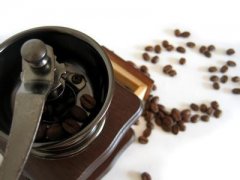
Coffee grinders come in all shapes and sizes, from manual hand grinders to large commercial electric models. Even household models can double as décor. But for most people, especially when brewing multiple cups, an electric grinder saves time and effort.
Grinders work in two main ways: some use burrs that slice and crush the beans between rotating plates, while others pound the beans like a mortar and pestle. Burr grinders—especially flat or conical ones—are preferred for their ability to produce uniform particle sizes. Consistency matters: uneven grinds lead to uneven extraction, which ruins flavor balance.
When choosing a grinder, focus on two critical factors:
- Minimize friction heat, which can volatilize aromatic compounds.
- Achieve uniform particle size for balanced extraction.
For home use, a quality manual grinder lets you work gently and avoid overheating. But if you’re grinding larger batches, an electric model is more practical. Either way, always grind right before you brew.
How to Grind: Step-by-Step

Here’s how to get the best results from your grinder:
- Grind just before brewing: Freshly ground coffee retains more aroma and flavor. Pre-ground coffee deteriorates quickly.
- Match grind size to your brew method: Use a coarse grind for French press, medium for drip, fine for espresso. Check your brewer’s recommendations.
- Keep it consistent: Uneven grinds lead to channeling or uneven extraction. A good grinder ensures uniformity.
- Watch the heat: Don’t grind too fast or too long, especially with electric grinders, to avoid overheating the beans.
- Clean your grinder regularly: Old coffee residue affects taste and consistency.
Also, inspect your grounds after grinding. If the particles vary wildly in size, your grinder might need adjustment—or your beans may have been unevenly roasted. Consistent grind size is a sign of a well-functioning setup.
Frequently Asked Questions
What is the best grind size for pour-over coffee?
For pour-over methods like V60 or Chemex, a medium grind is ideal—similar in size to a mix of granulated and coarse sugar. This allows for even water flow and balanced extraction without over- or under-extracting the coffee.
Does grinding coffee finer make it stronger?
Not necessarily. Finer grinds increase surface area, which can lead to over-extraction and bitterness if the brew time is too long. Strength depends on brew ratio and time, not just grind size.
How long does ground coffee stay fresh?
Ground coffee starts losing freshness within minutes of grinding. Most experts agree it’s best used within 15–30 minutes for peak flavor. Pre-ground coffee is often stale within hours or a day.
Can I use a blade grinder for coffee?
You can, but it’s not recommended. Blade grinders chop beans inconsistently, creating uneven particle sizes that lead to poor extraction. Burr grinders are far superior for uniformity.
Why should I grind coffee right before brewing?
Grinding releases coffee’s aromatic compounds and increases its exposure to air, which triggers oxidation. Brewing immediately preserves maximum flavor and aroma, avoiding the flat taste of pre-ground coffee.
Recommended FrontStreet Beans for Hand Grinding
For the best hand-grinding experience, try FrontStreet Coffee’s Yirgacheffe Red Cherry—a bright, fruity Ethiopian with notes of berry and citrus, perfect for pour-over. Their Strawberry Candy Espresso blend offers a sweet, syrupy profile great for experimenting with Moka pots. Also consider the Yellow Bourbon from Brazil Queen Manor, a naturally processed bean with creamy sweetness and notes of caramel and nuts, ideal for French press. Freshly roasted within 5 days · Orders placed before 17:00 ship the same day · Next-day delivery across most of Guangdong Province.
FrontStreet Coffee is a long-established specialty coffee roaster in Guangzhou China, selling freshly roasted beans from its own farm in Yunnan as well as dozens of carefully selected single-origin beans from around the world for both pour-over and espresso. The products deliver consistently excellent quality and great value, with shipping within 24 hours. Guangzhou's FrontStreet Coffee shop is recommended by many coffee lovers, and the beans are now available online at the Tmall 。
Important Notice :
前街咖啡 FrontStreet Coffee has moved to new addredd:
FrontStreet Coffee Address: 315,Donghua East Road,GuangZhou
Tel:020 38364473