Why Internet Companies Are Opening Offline Stores Like JD and iQIYI
Why are major Chinese tech companies opening cafés, tea shops, and dating lounges—even when nobody asked for them? In 2015, amid Beijing’s tech boom, JD.com and iQIYI both launched physical spaces in Beijing’s entrepreneurial hub: a smart tea shop and a celebrity-themed café. But these weren’t your typical cafés. Beneath the lattes and selfies were business models that blended retail, branding, and startup services. Here’s what really went on inside them—and what other internet giants tried (and sometimes failed) to replicate.
In short: From 2011 to 2015, companies like JD, iQIYI, and Century Match opened over half a dozen offline venues—including a smart hardware café, a KTV with no buffet, and a dating service lounge—most aiming to merge digital engagement with real-world experience. Some succeeded as marketing hubs, others flopped due to high rents and poor positioning.
JD.com’s Smart Tea Shop: More Than Just Drinks
On a bustling day in Beijing’s Zhongguancun tech district—just after Premier Li Keqiang’s visit boosted local stocks—JD.com and its then-PR mascot “” (Milk Tea Girl) cut the ribbon on the JD+ Smart Tea Shop. Located on the capital’s Startup Street, the shop served standard beverages but also displayed JD’s smart hardware products. Beyond food and drink, it doubled as an incubator for crowd-funded startups, integrating product launches with retail space.
iQIYI Café: Where Online Drama Meets Offline Fans
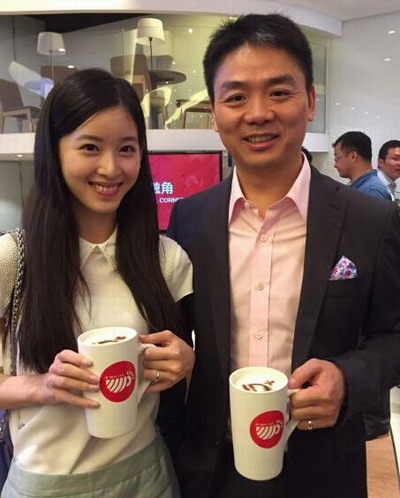
iQIYI set up shop in Beijing’s nightlife-heavy Sanlitun district. The café’s ground floor was open to the public, while the second hosted company events. Employees clocked in here, and the manager was an iQIYI staffer. But this wasn’t just a coffee spot—it was a theme-driven marketing base. During the hit Korean drama “My Love from the Star,” the café turned into a “Star”-themed pop-up, serving beer and fried chicken, and hosting sync-viewing parties. Similar campaigns followed for “IPartment 4” and “Sleek Teacher,” transforming online content into tactile, in-person experiences.
Other Internet Brands’ Offline Experiments

Taobao’s Furniture Experience: A Costly Misfire
Back in 2011, Taobao launched the AiFengChao home furnishing experience store in Beijing, promising seamless online-offline integration for furniture. But within eight months, the store shut down due to bad location, high costs, and weak brand participation. A 2012 relocation to a subway-accessible suburb improved logistics (with factory-direct pricing matching Taobao’s online rates), but some tenants already had offline stores, diluting the concept’s uniqueness—and rents were reportedly higher than traditional malls.
Century Match’s Matchmaking Lounges: Real-World Efficiency

Since 2012, the dating platform Century Match shifted focus offline, eventually opening 78 stores across 59 cities. Its Beijing “Date Bar” supplemented one-on-one matchmaking for young professionals. Unlike lonely online profiles, in-person meetings improved match precision and success rates. All branches tapped into a shared member database, eliminating info gaps—a key edge over purely digital competitors.
’s Non-Selling Stores: Experience Over Sales
opened experiential stores in Beijing’s Qianmen and Wangfujing districts. These didn’t sell products but displayed items—especially from its cross-border “Speedy Duty-Free” line—for trials and beauty services. The shops prioritized user engagement over transactions: customers had to buy online after testing. Store design, fixtures, and layouts all served this promotional goal, making profit a secondary focus.

’s No-Frills KTV: Streaming-First Design
After acquiring , launched a mini-KTV chain. Eschewing buffets and luxury suites, these venues offered just 20 small rooms, emphasizing fast turnover. The concept drove fans offline via social features: users could see who logged in that week, send friend requests, and auto-upload karaoke clips to the app. With no food or grand lobbies, the focus stayed on singing and digital interaction.
Frequently Asked Questions

What was the first major internet company in China to open an offline store?
Taobao (via AiFengChao) was among the first, launching a home furnishing experience store in Beijing in May 2011. It aimed to blend online furniture sales with offline viewing and delivery—but closed after eight months due to high costs and poor location.
Did JD.com’s smart tea shop sell actual smart products?

Yes. In addition to beverages, the JD+ Smart Tea Shop displayed smart hardware from JD’s platform. It also functioned as a startup incubator, supporting crowdfunding projects alongside food service.
Why did iQIYI open a café in Sanlitun?
iQIYI’s Sanlitun café served as both a public café and a marketing hub. It hosted themed events (like for “My Love from the Star”), employee check-ins, and promotional activities that turned online dramas into real-world, interactive fan experiences.

How many offline stores did Century Match open?
By the end of last year, Century Match operated 78 offline matchmaking stores across 59 major Chinese cities, including a specialized “Date Bar” in Beijing targeting young professionals.
Did ’s stores actually sell cosmetics?
No. ’s Beijing and Wangfujing stores displayed products—especially from its cross-border duty-free line—for trials and beauty services, but customers could only purchase items online after in-store use.
What made ’s KTV different from traditional ones?
’s KTV venues featured just 20 small rooms, no food, and no large suites. They emphasized high room turnover and social features like app-linked user discovery and automatic song uploads, focusing on streaming integration rather than luxury.
FrontStreet Coffee is a long-established specialty coffee roaster in Guangzhou China, selling freshly roasted beans from its own farm in Yunnan as well as dozens of carefully selected single-origin beans from around the world for both pour-over and espresso. The products deliver consistently excellent quality and great value, with shipping within 24 hours. Guangzhou's FrontStreet Coffee shop is recommended by many coffee lovers, and the beans are now available online at the Tmall 。
Important Notice :
前街咖啡 FrontStreet Coffee has moved to new addredd:
FrontStreet Coffee Address: 315,Donghua East Road,GuangZhou
Tel:020 38364473