How Fulltime Convenience Stores Blend Cafe, Fast Food & Retail
In 2011, a new kind of store started popping up across Beijing—places that looked like convenience stores but felt more like community hubs. These weren’t your typical 7-Elevens. Within four years, one chain, Fulltime, had opened over a hundred locations, giving the long-standing market leader a serious run for its money. What was their secret? They didn’t just sell snacks and drinks; they reimagined the entire convenience format.
Fulltime’s second-generation stores combine a Starbucks-like coffee bar, a Yoshinoya-style fast-food counter, and a 7-Eleven retail layout—all under one roof, creating a hybrid shop that serves coffee, meals, and everyday essentials. This model helped one Beijing location boost food and beverage sales to 40–60% of total revenue.
The 'Starbucks + Yoshinoya + 7-Eleven' Formula
Fulltime’s breakthrough came with its second-generation stores, starting with a radical redesign of its original format. The flagship Yong’anli store, once a basic convenience outlet, was transformed into a stylish hybrid space. The interior was redesigned with European flair: muted wooden panels in a deep coffee color contrasted with light beige floors, complemented by soft LED lighting. The entire aesthetic was so refined it felt more like a boutique shop than a convenience store. Key design elements—including layout, lighting, and workflow—were personally overseen by Fulltime’s chairman, Zhang Yun-gen.
The biggest innovation? The checkout counter was replaced with a full-service coffee bar. This deep-red-themed station served around 15 drinks, including fresh-ground espresso, juice, and milk tea. Underneath the counter, a display held over ten types of desserts. The bar was staffed largely by former Starbucks employees, and the entire operation—equipment, workflows, and ambiance—was modeled after a professional café. The result? A miniature “Starbucks” nestled inside a convenience store that still sold groceries.
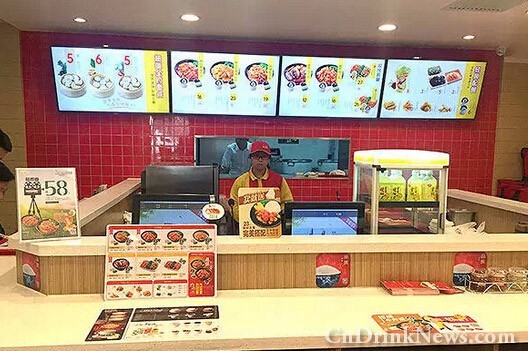
But the transformation didn’t stop there. Drawing inspiration from Yoshinoya, Fulltime carved out half of each store’s floor space for dine-in seating, accommodating up to 50 customers at a time. The in-store kitchen prepared around 20 varieties of rice bowls and noodle sets, which were served via a pass-through window. In the Yong’anli location, daily sales reached approximately ¥15,000, with food and beverages accounting for 40% of revenue—and up to 60% at the Guang’anmen branch. Weekday foot traffic averaged 1,000 visitors daily, peaking at 500–600 during lunch hours, demonstrating strong customer retention.
Both food and drinks were also available via dedicated takeout windows, allowing customers to skip the store entirely. Essentially, Fulltime’s second-gen stores layered a coffee bar and fast-food operation onto the traditional convenience model—earning comparisons to a supercharged hybrid of Starbucks, Yoshinoya, and 7-Eleven.

Targeting the Right Customer Base
Running such an asset-heavy model meant Fulltime had to be strategic about its product mix. “We carry around 1,500 regular SKUs,” explained Zhang Yun-gen. “Our selection is driven by two factors: high-margin items—everything we sell has at least a 25% gross margin—and products that create an emotional connection, like cakes, flowers, and potted plants.” During the Christmas season alone, the chain sold 3,000 cakes.
So how does Fulltime differentiate itself from giants like 7-Eleven? Zhang outlined several key strategies:
- Shopping Environment: Fulltime invests heavily in store design, lighting, and fixtures, making its outlets noticeably brighter and more inviting than 7-Eleven’s.
- Flexible Pricing: Unlike 7-Eleven’s uniform national pricing, Fulltime adjusts prices based on local competition, with decisions made at headquarters and executed by stores.
- Diverse Promotions: The chain runs daily promotions on individual products to drive traffic.
- Exclusive Services: Fulltime has partnered exclusively with China Railway to install internet ticketing kiosks in 30 of its stores, sharing revenue from service fees.
O2O Strategy: Blending Physical and Digital
Fulltime has also taken a unique approach to bridging online and offline retail. Its second-gen stores feature two tablets at the counter for self-ordering, and the company has developed its own digital wallet. Customers load funds into the wallet and pay by scanning a QR code at checkout. A planned mobile app will further streamline the process.
The strategy boils down to two goals: “solidifying” the physical store experience through profitable format innovations, and “virtualizing” the brand by leveraging its retail network and digital tools to capture community-based commerce. Fulltime has built a WeChat-based e-commerce platform, starting with its proprietary digital wallet. Rather than relying on third-party payment apps, the company developed its own to retain user engagement.
The system allows shoppers to scan products with their phones and pay via mobile. Long-term, Fulltime aims to merge retail with financial services—offering not just cashback, but tangible rewards like breakfasts or household items. However, Zhang has no plans to build a massive online marketplace. Instead, he envisions a curated, value-driven platform that may eventually include services like barbershops, laundromats, childcare centers, and even bars within store premises.


Frequently Asked Questions
What makes Fulltime different from regular convenience stores like 7-Eleven?
Fulltime combines a coffee bar inspired by Starbucks, a food service area modeled after Yoshinoya, and a retail layout like 7-Eleven—all in one store. This hybrid model serves fresh coffee, hot meals, and everyday goods, with food and beverages often making up 40–60% of revenue.
How much did Fulltime invest in its second-generation stores compared to the first?
The first-generation Fulltime stores required about ¥100,000 in investment, while the second-generation stores needed roughly ¥200,000. The upgrade included significant renovations, better equipment, and hiring skilled staff like baristas instead of regular cashiers.
What kind of food and drinks does Fulltime offer in-store?
Fulltime’s coffee bar serves around 15 beverages including espresso, juice, and milk tea. The food side offers around 20 types of rice bowls and noodle sets, prepared in-store and served to 50 dine-in customers at a time. Both food and drinks have dedicated takeout windows.
How does Fulltime compete with 7-Eleven on price?
Unlike 7-Eleven, which enforces uniform pricing nationwide, Fulltime adjusts prices based on local market conditions. Pricing strategies are set by headquarters but implemented by individual stores to stay competitive in different areas.
Does Fulltime have any exclusive services not found in other convenience stores?
Yes, Fulltime has installed exclusive internet ticketing kiosks for China Railway in 30 of its stores, allowing customers to book or collect train tickets. Revenue from service fees is shared between Fulltime and the railway operator.
What’s Fulltime’s long-term plan beyond convenience retail?
Fulltime aims to evolve into a community-focused platform, potentially adding services like barbershops, laundry, childcare, and bars inside its stores. The focus is on value-added, curated services rather than a large-scale e-commerce platform.


Recommended FrontStreet Coffee Blends for Hybrid Stores
For a Fulltime-style hybrid shop blending coffee, fast food, and retail, FrontStreet Coffee’s Specialty Blend delivers balanced body with notes of caramel and nuts, while Commercial Blend offers a smooth, approachable profile great for high-volume espresso drinks. Classic Blend brings chocolatey depth and strong crema—ideal for lattes and consistent retail performance. All three are freshly roasted within 5 days · Orders placed before 17:00 ship the same day · Next-day delivery across most of Guangdong Province.
FrontStreet Coffee is a long-established specialty coffee roaster in Guangzhou China, selling freshly roasted beans from its own farm in Yunnan as well as dozens of carefully selected single-origin beans from around the world for both pour-over and espresso. The products deliver consistently excellent quality and great value, with shipping within 24 hours. Guangzhou's FrontStreet Coffee shop is recommended by many coffee lovers, and the beans are now available online at the Tmall 。
Important Notice :
前街咖啡 FrontStreet Coffee has moved to new addredd:
FrontStreet Coffee Address: 315,Donghua East Road,GuangZhou
Tel:020 38364473