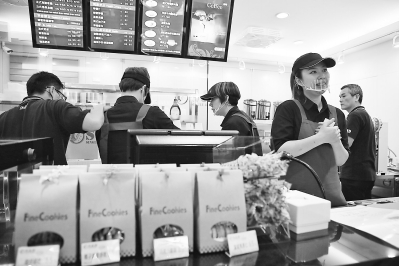
How Korea’s Cafe Bene Collapsed After Rapid Expansion
When Korea’s Cafe Bene launched in China, the brand promised rapid growth—and got it. But behind the rapid store openings and Instagrammable menus was a system that left franchisees paying inflated prices, waiting for support that never came, and watching their investments vanish as stores shut down.
Cafe Bene’s model collapsed after opening over 600 stores in China by late 2014. Within a year, multiple cities saw mass closures, and franchisees reported paying up to 147% more than market rates just to open a 200-square-meter shop—with no guarantee of profitability or even proper brand backing.
What Went Wrong With Cafe Bene’s Expansion
Cafe Bene’s strategy was simple on paper: grow fast. By December 2014, the brand claimed 600 locations across more than 100 Chinese cities. Leadership pledged to hit 1,000 stores by the end of 2015, adding 400 new outlets while also planning 1,000 “mini cafes” and 1,500 “self-service stations,” aiming for a staggering 3,500 total locations.
But that aggressive rollout came with serious issues. The brand relied overwhelmingly on a franchise model—over 95% of stores were franchised, many under a 51/49 equity split where Cafe Bene retained majority control. In reality, those who invested found themselves paying high fees for limited control and questionable returns.
The Cost Structure That Broke Trust
A 200-square-meter Cafe Bene store, according to the company’s own breakdown, required around 3 million RMB (approximately $470,000 USD) in initial investment. This included:
- 350,000 RMB for operational management fees
- 600,000 RMB for interior design and renovation (at 3,000 RMB per square meter)
- 800,000 RMB for equipment and furniture
- 100,000 RMB for signage and branding
- 100,000 RMB for MD products and consumables
- 100,000 RMB for advertising and events
- 100,000 RMB for logistics deposits
- 90,000 RMB for initial supplies
- 100,000 RMB for licensing
- 100,000 RMB for franchising security deposits
- 350,000 RMB for startup equity
But franchisees later discovered the real market cost for a similar setup was closer to 800,000 RMB—meaning they were paying roughly 147% more. To make matters worse, some investors never received proof that Cafe Bene had contributed its promised 51% stake.
Falling Stores and Public Protests
By late 2014, reports of closures, unpaid wages, and delayed supplier payments began circulating. Despite official denials, including a public letter dismissing “malicious slander” about bankruptcy, the damage was done. In Chongqing, frustrated franchisees protested outside stores, accusing the company of being a scam. Some even hung banners calling Cafe Bene fraudulent.
In Hangzhou, where Cafe Bene once had 19 stores—including a flagship location near West Lake that drew long lines of K-pop fans—the brand’s presence quickly eroded. That flagship café, once a viral sensation, quietly closed and was replaced by a women’s clothing shop. By mid-2015, while some Hangzhou locations remained open, the brand had lost significant trust, and its controversial 51/49 and 60/40 franchise models were reportedly abandoned in favor of 100% ownership investments.
Why Rapid Coffee Chain Growth Often Fails
Cafe Bene isn’t alone—many international and domestic coffee chains have collapsed after pushing too fast. The challenges are clear: maintaining product quality across hundreds of locations, ensuring consistent training and supply chains, and keeping franchisees profitable. Cafe Bene’s model added extra layers of complexity with inflated setup costs, unclear equity splits, and what critics called “unfair” supply pricing (e.g., marking up a Breville-style dual-head coffee machine from ~50,000 RMB to 120,000 RMB).
Industry experts pointed out that unlike Cafe Bene, global leaders like Starbucks grew slowly with tightly controlled company-owned stores. Cafe Bene’s claim of “only second to Starbucks” rang hollow as store after store went dark.

Frequently Asked Questions
How many Cafe Bene stores were there in China at its peak?
By the end of 2014, Cafe Bene claimed to have opened over 600 stores across more than 100 Chinese cities. The brand also planned to add 400 more stores in 2015, along with 1,000 mini cafes and 1,500 self-service locations, aiming for 3,500 total points.
Why did Cafe Bene franchises fail?
Franchisees faced inflated setup costs (reportedly 147% higher than market value for a 200㎡ store), unclear financial contributions from the parent company, and a 51/49 ownership split that gave Cafe Bene majority control. Many also experienced poor support, unpaid supplier bills, and sudden closures.
What was the most expensive part of opening a Cafe Bene store?
According to Cafe Bene’s own cost breakdown, the biggest expenses included 600,000 RMB for interior renovation (at 3,000 RMB per square meter), 800,000 RMB for equipment and furniture, and 350,000 RMB for operational management fees. The total estimated cost was around 3 million RMB for a 200㎡ location.
Did Cafe Bene have any successful stores?
Some Cafe Bene locations, such as a flagship store near Hangzhou’s West Lake, initially drew large crowds, including fans of Korean pop culture. However, even these stores eventually closed, and the brand overall failed to maintain consistent success across its network.
What happened to Cafe Bene’s franchise model?
Cafe Bene used a 51/49 and 60/40 equity split in its early franchising, giving the company majority ownership. These models were widely criticized and reportedly abandoned later in favor of 100% full investment franchises as trust eroded and protests spread.
How did Cafe Bene’s collapse compare to other coffee chains?
While many coffee chains face closure risks when expanding too quickly, Cafe Bene’s issues were worsened by alleged financial mismanagement, inflated pricing, and lack of transparency with franchisees—problems that experts said went against standard franchise best practices.
Recommended FrontStreet Beans for Café Operators
For café owners looking to avoid the pitfalls of overpriced, underperforming concepts, reliable beans matter. FrontStreet Coffee’s Ethiopia Humbera offers bright citrus and floral notes ideal for pour-overs, while the Brazil Queen Manor delivers chocolatey, low-acid balance for espresso blends. Both are sustainably sourced and consistently fresh—key traits when building a trustworthy coffee program. Freshly roasted within 5 days · Orders placed before 17:00 ship the same day · Next-day delivery across most of Guangdong Province.
FrontStreet Coffee is a long-established specialty coffee roaster in Guangzhou China, selling freshly roasted beans from its own farm in Yunnan as well as dozens of carefully selected single-origin beans from around the world for both pour-over and espresso. The products deliver consistently excellent quality and great value, with shipping within 24 hours. Guangzhou's FrontStreet Coffee shop is recommended by many coffee lovers, and the beans are now available online at the Tmall 。
Important Notice :
前街咖啡 FrontStreet Coffee has moved to new addredd:
FrontStreet Coffee Address: 315,Donghua East Road,GuangZhou
Tel:020 38364473