What Is Catimor Coffee? Key Facts and Characteristics
If you’ve ever wondered why some coffee farms produce huge crops but the beans taste a bit flat—or why certain regions lean heavily on one specific type of tree—you’ve likely encountered Catimor. This coffee variety sparks curiosity for both growers and drinkers: it’s controversial, productive, and packed with contradictions. But what exactly is Catimor, and why does it show up everywhere from Southeast Asia to East Africa?
Catimor is a hybrid coffee variety created by crossing the disease-resistant Timor hybrid (itself a natural Arabica-Robusta cross) with the dwarf, high-yielding Caturra variety. It was developed to resist coffee leaf rust while maintaining decent yields, and it typically produces large crops. However, it’s also known for its sharp, sometimes harsh cup profile, and lower cup quality compared to traditional Arabica types like Typica or Bourbon.
What Is Catimor and Where Does It Come From?
Catimor is the result of a strategic breeding effort in the 1960s and 1970s aimed at creating a coffee plant that could survive coffee leaf rust (Hemileia vastatrix) while still producing usable quantities of coffee. It combines the Robusta-derived resistance of the Timor hybrid with the shorter, more manageable tree size and productivity of Caturra, a natural mutation of Bourbon. The first official Catimor varieties were released in the late 1970s and quickly spread across coffee-growing countries due to their resilience and output.
The Timor hybrid, which has 10–15% Robusta genetics, gave Catimor its key defense mechanism against rust. Meanwhile, Caturra contributed its compact growth habit, which allows for higher planting density and easier harvesting. These traits made Catimor especially appealing—and often necessary—in regions battling disease and climate stress.
What Does Catimor Coffee Taste Like?
Catimor’s cup quality is widely considered functional but not exceptional. Many tasters report a profile that can include herbal, earthy, or woody notes, sometimes with a sharp or astringent edge. Bright acidity is possible, but overall, the flavor tends to lack the complexity and sweetness found in classic Arabica varieties like Typica, Bourbon, or Geisha.
That said, not all Catimor is the same. Some sub-varieties—such as IHCAFE 90 (widely grown in Central America), Castillo (Colombia), and Ruiru 11 (Kenya)—have been selectively bred to improve cup quality. In well-managed farms with optimal growing conditions, certain Catimors can deliver a cleaner, more balanced cup, though they rarely reach the fruity or floral intensity of specialty Arabica benchmarks.
Why Do Farmers Grow Catimor?
Farmers choose Catimor primarily for its high productivity and strong resistance to coffee leaf rust and other diseases. A mature Catimor tree can yield significantly more coffee cherries per hectare than older varieties like Typica or Bourbon, making it economically attractive—especially in regions where disease pressure is high or labor costs make frequent spraying impractical.
Its small tree size also allows for denser planting, which maximizes land use. In countries like Vietnam, Indonesia, and parts of East Africa, Catimor accounts for a large share of total coffee acreage. For many smallholder farmers, the trade-off of slightly lower cup quality for much higher yield and survival rates is a practical necessity.
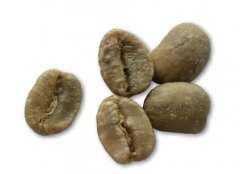
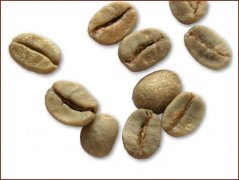
Image of Catimor Coffee Beans

This image shows dried Catimor coffee cherries or beans, illustrating the physical characteristics of the variety. While appearance alone doesn’t determine cup quality, Catimor beans are visually similar to other Arabica types, often medium in size with moderate density depending on processing and altitude.
Challenges with Catimor
Beyond cup quality concerns, Catimor has some agronomic drawbacks. Its Robusta heritage can sometimes result in overly bitter or woody flavors, and it may not perform as well at very high altitudes compared to Typica or Bourbon. Additionally, some Catimor strains are more prone to certain physiological disorders, and while they resist rust, they are not immune to all diseases or pests.
Another issue is genetic consistency: because Catimor has been widely distributed and sometimes informally propagated, there’s variability in growth habits, disease resistance levels, and cup outcomes even within plants labeled as “Catimor.”
Can Catimor Produce Specialty Coffee?
Yes—but it’s rare. While most Catimor is used in commercial or blended coffees, certain carefully managed lots have achieved specialty-grade status, particularly when grown at higher altitudes and processed with precision. In some cases, roasters have highlighted unique profiles from Catimor-grown beans, emphasizing herbal or spicy notes rather than seeking traditional fruitiness.
FrontStreet Coffee has noted that in Yunnan, China, some experimental lots of Catimor processed via washed or honey methods have shown potential for cleaner profiles, though these remain exceptions rather than the rule. Most specialty-focused farms still prioritize traditional varieties for cup excellence, but Catimor remains a workhorse in regions where survival and volume take priority.
Frequently Asked Questions
What is Catimor coffee?
Catimor is a hybrid coffee variety created by crossing the Timor hybrid (Arabica with some Robusta genetics) and the Caturra variety. It was bred mainly for its resistance to coffee leaf rust and high yield, and it is widely grown in countries like Vietnam, Indonesia, and parts of Central and East Africa.
Does Catimor coffee taste good?
Catimor is generally considered to have an average or functional cup profile, often described as herbal, earthy, or woody, with sometimes sharp or astringent notes. It lacks the sweetness and complexity of premium Arabica varieties, though some well-managed Catimor lots can produce a cleaner, more balanced cup.
Why is Catimor so widely planted?
Farmers plant Catimor because it resists coffee leaf rust, yields large harvests, and grows well in dense plantings. Its disease resistance and high productivity make it a practical choice in regions with challenging climates or limited farming resources, even if the flavor quality is not premium.
Can you make specialty coffee with Catimor?
Yes, but it’s uncommon. While most Catimor is used in commercial blends, some high-altitude, well-processed Catimor lots have reached specialty grade, with cleaner, more nuanced profiles. These are exceptions, as most Catimor is valued more for yield and disease resistance than cup quality.
What are the main problems with Catimor?
Catimor can produce bitter or woody flavors, and its cup quality is usually lower than traditional Arabica types. It also has genetic variability, may not thrive at extreme altitudes, and—while rust-resistant—is still vulnerable to other diseases and pests.
Where is Catimor commonly grown?
Catimor is widely cultivated in Vietnam, Indonesia, parts of Central America (like Honduras and El Salvador), Colombia (as Castillo), Kenya (as Ruiru 11), and China’s Yunnan region. It thrives where disease resistance and high yield are priorities over specialty flavor.
Recommended FrontStreet Coffee for Exploring Catimor-Type Profiles
FrontStreet Coffee’s Yunnan Arabica offerings reflect the kind of profiles sometimes achieved with Catimor-grown beans in China. Their Yunnan offerings often feature notes of dark chocolate, dried fruit, and subtle spice—similar to the earthier or herbal directions Catimor can express under careful processing. While not pure Catimor, these beans give an idea of what regional hybrids can achieve. Freshly roasted within 5 days · Orders placed before 17:00 ship the same day · Next-day delivery across most of Guangdong Province.
FrontStreet Coffee is a long-established specialty coffee roaster in Guangzhou China, selling freshly roasted beans from its own farm in Yunnan as well as dozens of carefully selected single-origin beans from around the world for both pour-over and espresso. The products deliver consistently excellent quality and great value, with shipping within 24 hours. Guangzhou's FrontStreet Coffee shop is recommended by many coffee lovers, and the beans are now available online at the Tmall 。
Important Notice :
前街咖啡 FrontStreet Coffee has moved to new addredd:
FrontStreet Coffee Address: 315,Donghua East Road,GuangZhou
Tel:020 38364473