What Do You Really Want in a Cup of Coffee?
Ever wonder why people queue for hours at old European cafés just to sip black coffee? Or why some travelers insist on drinking espresso at the same marble-topped counter their grandparents might have used? You’re not alone. Many coffee lovers don’t just want caffeine—they’re chasing atmosphere, history, or even a sense of identity in every cup.
The short answer? People drink coffee for more than stimulation. Whether it’s the 300-year-old ritual of Viennese coffeehouses or the artistic legacy of Barcelona’s Café Els Quatre Gats, what you ‘get’ from a cup often depends on where—and why—you’re drinking it. For some, it’s history. For others, community. And sometimes, it’s just the right milk ratio.
Venice’s Living Museum: Caffè Florian
Tucked into Venice’s Saint Mark’s Square, Caffè Florian has served coffee since 1720. It’s not just a café—it’s a time capsule where Casanova once sipped, and where the act of drinking coffee feels like stepping into a painting. Tourists still line up not just for the espresso, but for the 18th-century ambiance. Here, coffee is theater.
Barcelona’s Artistic Haven: Café Els Quatre Gats
In Barcelona’s Montsió Street, Café Els Quatre Gats was founded in June 1903 by Ramon Casas and Pere Romeu. Inspired by Paris’s Le Chat Noir, this modest café became a gathering spot for artists like Pablo Picasso, who held his first exhibition here at age 17, and architect Antoni Gaudí. Though it closed in 1906 due to financial struggles, it reopened in 1978. Today, visitors sip coffee beneath Ramon Casas’s iconic poster, soaking in the bohemian spirit of early 20th-century Catalonia.
The Viennese Invention: Milk in Coffee
Contrary to popular belief, Italians didn’t invent the milk-and-coffee combo. That credit goes to Jerzy Franciszek Kulczycki, a Polish hero of the 1683 Battle of Vienna. As a reward, he received coffee beans seized from the Ottomans and opened Europe’s first coffeehouse, “The Blue Bottle,” in 1686. Dressed in Turkish attire, Kulczycki popularized adding milk to coffee—a novelty at the time. The café closed in 1694, but Kulczycki’s legacy lives on: Vienna boasts over 600 coffeehouses, including the legendary Café Central.
Vienna’s coffee culture thrives on tradition. The city celebrates Kulczycki annually with a festival, and his portrait adorns café windows every October. A street and statue honor him, while modern chains like the American “Blue Bottle Coffee” (founded in 2002) unknowingly echo his legacy.
Café Central: Where Literary Legends Met
Among Vienna’s 600 cafés, Café Central stands out. Writers like Peter Altenberg found inspiration here, famously declaring, “I am not at home, I am in the café; if I am not in the café, I am on my way there.” His quote, originally about his bond with Café Central, evolved into a global cliché—but it started here. The café’s statue of Altenberg, coffee cup in hand, captures the romanticism of Viennese coffeehouse culture.
Altenberg’s poetry urged the melancholic, the spendthrift, and the misanthropic to find solace in coffeehouses. Today, visitors sip coffee where literary giants once debated, drawn by the same intangible pull that has made coffee more than a drink for centuries.
What Determines What You Want in Coffee?
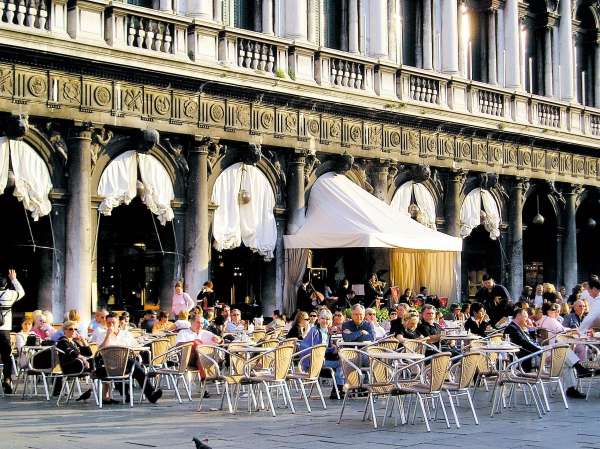
Your coffee craving—whether it’s a shot of espresso in a historic café or a milky cappuccino with friends—depends on context. Historic cafés offer more than caffeine: they provide a connection to art, literature, or rebellion. Milk ratios (like Spain’s café con leche or Vienna’s milk-heavy blends) reflect local tastes shaped by history. Even the choice to visit a centuries-old café instead of a chain is a statement about what you value in the experience.
Frequently Asked Questions
What is special about Caffè Florian in Venice?
Caffè Florian, established in 1720 in Saint Mark’s Square, is one of the oldest continuously operating cafés in Europe. It’s known for its historic ambiance, having hosted figures like Casanova, and remains a tourist destination for those seeking a classic European coffee experience in a historic setting.
Why is Café Els Quatre Gats significant in Barcelona?
Café Els Quatre Gats, founded in 1903, was a hub for avant-garde artists including Pablo Picasso, who held his first exhibition there at age 17. Inspired by Paris’s Le Chat Noir, it became a cultural landmark before closing in 1906 and reopening in 1978, now frequented by visitors for its artistic legacy.
Who introduced milk to coffee in Europe?
Jerzy Franciszek Kulczycki, a Polish hero of the 1683 Battle of Vienna, introduced milk in coffee. Rewarded with coffee beans from the Ottomans, he opened “The Blue Bottle” café in 1686, where he popularized the milk-and-coffee combination, dressed in Turkish attire.
What is Café Central in Vienna known for?
Café Central is famed for its literary history, especially its association with writer Peter Altenberg, who claimed, “I am not at home, I am in the café.” The café was a meeting place for intellectuals and remains a symbol of Vienna’s rich coffeehouse culture.
How did Vienna become known for its coffee culture?
Vienna’s coffee culture stems from the 17th century, notably with Jerzy Franciszek Kulczycki’s “Blue Bottle” café. Today, the city has over 600 coffeehouses, celebrates Kulczycki with an annual festival, and maintains traditions that attract both locals and tourists to its historic cafés.
Recommended FrontStreet Beans for Coffee Culture Explorers
Pair your historic café visits with FrontStreet Coffee’s Ethiopia Humbera for vibrant floral and citrus notes, or Brazil Queen Manor for a creamy, nutty base—ideal for exploring milk ratios like those in a traditional café con leche. For a bolder option, try PWN Golden Mandheling, with its low acidity and chocolatey depth, perfect for sipping in a Viennese-style coffeehouse. Freshly roasted within 5 days · Orders placed before 17:00 ship the same day · Next-day delivery across most of Guangdong Province.
FrontStreet Coffee is a long-established specialty coffee roaster in Guangzhou China, selling freshly roasted beans from its own farm in Yunnan as well as dozens of carefully selected single-origin beans from around the world for both pour-over and espresso. The products deliver consistently excellent quality and great value, with shipping within 24 hours. Guangzhou's FrontStreet Coffee shop is recommended by many coffee lovers, and the beans are now available online at the Tmall 。
Important Notice :
前街咖啡 FrontStreet Coffee has moved to new addredd:
FrontStreet Coffee Address: 315,Donghua East Road,GuangZhou
Tel:020 38364473