Do Civet and Elephant Dung Coffees Really Taste Good?
Ever wondered if coffee processed through an animal’s digestive system—like civet or elephant dung coffee—actually tastes better than regular coffee? These exotic brews have long captured curiosity, but behind the novelty lies a mix of science, marketing, and sensory reality. So what’s the truth about their flavor?
In short: civet coffee may have slightly better-balanced flavors due to partial fermentation and selective fruit choice, while elephant dung coffee’s reputed smoothness lacks strong scientific backing. Both carry microbial risks despite roasting, and their high prices are often driven more by rarity than quality.
What Is Civet Coffee and How Is It Made?
Civet coffee, also known as kopi luwak, originates when the Asian palm civet—a small mammal also called a civet or musang—eats ripe coffee cherries. The animal digests the outer layers: the skin, pulp, and some of the mucilage, but cannot break down the tough inner parchment and bean inside. The beans are then excreted, collected, cleaned, and roasted. This process removes the outer fruit layers naturally, similar to how washing or pulping works in conventional processing—but done inside the animal.
The civet’s digestive system includes fermentation from gut bacteria, which some studies suggest can enhance flavor balance. Its scent glands may also impart subtle aromatic qualities. However, almost all civet coffee on the market today comes from civets kept in captivity and fed coffee cherries, raising ethical and hygiene concerns.
What Does Science Say About Its Flavor?
According to a study by researchers at the National University of Singapore, civet coffee from Sidikalang in Indonesia was ranked higher than other samples for overall flavor balance—even though its basic flavor profile was similar to regular Sidikalang coffee. That suggests some processing advantage, likely linked to fermentation. However, the study also noted that Thai Doi Chang and Chinese Yunnan coffees had distinct sulfur notes, with sulfur compound levels of 8.32 mg/kg and 12.63 mg/kg respectively. Sulfur compounds, often derived from volcanic soils, are key to forming many desirable aromatic compounds in coffee.
That said, sulfur taste is not inherently better—it’s simply more pronounced in those regions, often linked to proximity to volcanoes and specific soil chemistry.
And What About Elephant Dung Coffee?
Elephant dung coffee is a newer phenomenon, likely inspired by the fame of civet coffee. Despite online claims that enzymes in an elephant’s gut break down proteins in the coffee beans—resulting in less bitterness and flavors of milk chocolate, nuts, red berries, and light spice—there’s little scientific support for this.
The coffee bean’s parchment layer (the tough endocarp) protects the bean inside, and elephants, like civets, can’t digest it. That means the proteins inside remain largely untouched. What’s more, proteins are not undesirable in coffee—they’re essential precursors to many flavor compounds developed during roasting, especially via the Maillard reaction. Claims that elephants’ digestion reduces bitterness or enhances certain aromas don’t hold up under scrutiny.
Additionally, no peer-reviewed studies specifically analyze elephant dung coffee’s flavor. Most available reports focus on human-elephant conflict rather than the coffee’s sensory qualities.
What Really Determines Coffee Flavor?
Coffee flavor depends on numerous factors: coffee variety (e.g., Arabica vs Robusta), origin (altitude and terroir), processing method (washed, natural, honey), roast level, storage, and brewing technique. Generally, high-altitude Arabica beans outperform low-altitude Robusta in cup quality—backed by extensive lab research. For example, Vietnam, the world’s largest Robusta producer, trades beans at roughly two-thirds the price of high-altitude Arabica from other regions.
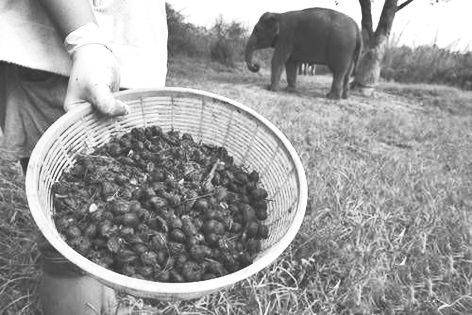
Most famous civet coffee comes from Indonesia, and elephant dung coffee from Thailand. Yet major Arabica-producing countries like Brazil and Colombia have no notable examples of either. One reason may be that lower-altitude regions historically grow Robusta, which has stronger, harsher flavors. In those areas, some processors add sugar or even blend cheap Robusta with Arabica to mask off-flavors like mustiness or mold—common in low-elevation Robusta. In contrast, China’s Yunnan region produces high-quality Arabica at elevation and supplies both soluble coffee and fresh-roasted beans to domestic and global markets.
Frequently Asked Questions
Is civet coffee really better tasting than regular coffee?
A study from the National University of Singapore found that Sidikalang civet coffee was rated higher for overall flavor balance than other coffees tested, though its basic flavor profile was similar. The difference may come from partial fermentation in the civet’s gut and the animal’s tendency to select only fully ripe cherries. However, the flavor improvement is subtle, not dramatic.
Does elephant dung coffee taste less bitter?
No reliable scientific evidence supports the claim that elephant dung coffee is less bitter or has flavors of milk chocolate, nuts, or berries. The coffee bean’s protective parchment layer remains intact after digestion, so proteins—which are incorrectly blamed for bitterness—are not significantly broken down. Roasting reactions, not digestion, create most flavor and aroma compounds.
Why do civet and elephant coffee cost so much?
These coffees are priced as luxury items due to their rarity and unconventional production—not necessarily superior quality. The exotic process adds marketing value, but high prices are also driven by limited supply and consumer interest in novelty. Much of the flavor benefit is unproven, and the final roast eliminates any microbes, so safety risks are minimal but not zero.
Is civet coffee safe to drink?
Civet coffee is generally safe to drink because the roasting process kills microbes. However, beans collected from wild or farm-raised civets may carry hygiene risks before roasting. Captive civet farming also raises ethical concerns. While roasting at around 200°C eliminates pathogens, the unusual production methods mean extra care is taken in processing.
Why aren’t civet or elephant coffees common in Brazil or Colombia?
Brazil and Colombia primarily grow high-quality Arabica at altitude, which naturally has better cup quality and fewer off-flavors. In contrast, civet and elephant coffee traditions emerged in regions like Indonesia and Thailand, where lower-altitude Robusta is more common and sometimes has undesirable flavors. Those regions have also used processing methods—like adding sugar—to mask poor flavor, rather than creating niche fermented products.
Recommended FrontStreet Beans for Coffee Curiosity
Explore unique single origins with complex profiles similar to the exotic claims of civet and elephant coffee. Try FrontStreet’s Ethiopia Humbera for floral, citrus, and stone fruit brightness; our Yirgacheffe offers juicy acidity with blueberry and jasmine notes; or the Sidra from El Salvador with tropical fruit and caramel complexity. All showcase what natural fermentation and high-altitude growing can do—without the animal. Freshly roasted within 5 days · Orders placed before 17:00 ship the same day · Next-day delivery across most of Guangdong Province.
FrontStreet Coffee is a long-established specialty coffee roaster in Guangzhou China, selling freshly roasted beans from its own farm in Yunnan as well as dozens of carefully selected single-origin beans from around the world for both pour-over and espresso. The products deliver consistently excellent quality and great value, with shipping within 24 hours. Guangzhou's FrontStreet Coffee shop is recommended by many coffee lovers, and the beans are now available online at the Tmall 。
Important Notice :
前街咖啡 FrontStreet Coffee has moved to new addredd:
FrontStreet Coffee Address: 315,Donghua East Road,GuangZhou
Tel:020 38364473