Cappuccino vs Latte vs Macchiato vs Con Panna
If you’ve ever stood in a coffee shop unsure whether to order a cappuccino or a latte — or wondered what really makes a macchiato different from a con panna — you’re not alone. These classic Italian-style milk coffees look similar but differ in key ways: shot counts, milk texture, volume, and even tradition. Here’s how to tell them apart for good.
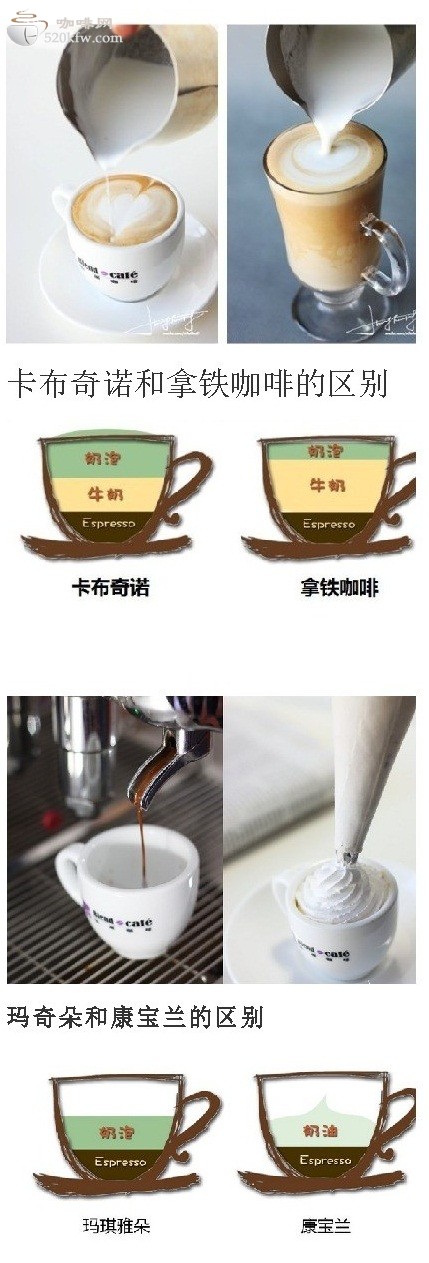
In short: A cappuccino has a 1:1:1 ratio of espresso, steamed milk, and foam (about 30ml espresso, 30ml steamed milk, 30ml foam); a latte uses 1 shot (30ml) espresso with around 200ml steamed milk and a light foam layer; a macchiato is a single shot of espresso 'stained' with just a dash (5–10ml) of steamed milk; and a con panna tops a single espresso with a dollop (15–20g) of whipped cream.
What Is a Cappuccino — And Why It’s Not Just ‘Foamy Coffee’
A cappuccino is one of the most structured espresso-and-milk drinks in coffee culture. It traditionally consists of one shot (30ml) of espresso, topped with about 30ml of steamed milk and 30ml of milk foam. That’s a 1:1:1 ratio by volume. In Italy, it’s almost always consumed only in the morning and never with food — a cultural rule still respected by traditionalists. The foam layer gives it a light, airy texture and allows for latte art in skilled hands. The milk is steamed to microfoam consistency, creating a smooth, creamy mouthfeel without overwhelming the espresso’s flavor.
Latte: More Milk, Smoother Drink
The latte, short for 'caffè latte' or 'milk coffee', is built with a single shot (30ml) of espresso but has significantly more steamed milk — usually around 200ml — and just a thin layer of foam on top (roughly 1–2cm). That puts the rough liquid ratio at about 1:6 to 1:7 espresso to milk. The larger volume and smoother milk make it a gentler, more approachable coffee, often used as a canvas for flavored syrups in coffee shops. Served in taller glasses or cups, it’s common to see latte art created in the milk poured through the foam. Compared to a cappuccino, the latte has less foam and a more diluted espresso taste due to the higher milk content.
Macchiato vs Con Panna: Small Drinks, Big Differences
Two often-confused drinks, the macchiato and con panna, are actually at opposite ends of the milk spectrum. A macchiato — meaning 'stained' or 'spotted' — is a single shot of espresso (30ml) with just a small amount (about 5–10ml) of steamed milk added, enough to 'mark' the espresso. It highlights the espresso’s color shift while keeping the coffee bold. A con panna, Italian for 'with cream', also starts with a single espresso shot, but instead of milk it’s topped with a dollop of whipped cream (approximately 15–20g). There’s no steamed milk involved. The whipped cream adds sweetness and richness, contrasting with the intense espresso beneath. Both are minimal drinks, but one uses hot milk, the other whipped cream — a key distinction.
Why the Ratios and Layers Matter
What defines each drink isn’t just the ingredients, but the proportions and how they’re assembled. A cappuccino’s equal parts create a balanced cup where foam, milk, and espresso all play equal roles. The latte’s high milk volume softens the espresso and allows for drinking ease. The macchiato’s few drops of milk barely change the espresso profile, preserving its intensity. The con panna adds no milk at all, just cream, offering a dessert-like finish. Steam temperature for milk typically ranges between 60–65°C to preserve sweetness without scalding. Each style grew from specific traditions — cappuccinos in 20th-century Italy as a breakfast drink, lattes evolving as a customizable cafe favorite, macchiatos as barista signals for milk adjustment, and con panna as a simple elegant finish.
How to Order What You Actually Want
When you’re ordering at a coffee shop, knowing these definitions helps. Ask for a cappuccino if you want equal parts espresso, milk, and foam in a compact cup. Choose a latte for a milky, smooth coffee ideal for sipping. If you want a strong coffee with just a hint of milk, ask for a macchiato. For espresso topped with whipped cream, order a con panna. Many modern coffee menus blur these lines, but these terms still carry their classic meanings. Pay attention to whether your drink arrives with a third of foam (cappuccino), a small milk splash (macchiato), thick cream on top (con panna), or a lot of steamed milk (latte).
Frequently Asked Questions
What’s the biggest difference between a cappuccino and a latte?
The main difference is the milk and foam ratio. A cappuccino uses equal parts espresso (30ml), steamed milk (30ml), and foam (30ml), giving it a balanced texture. A latte has one shot of espresso (30ml) with around 200ml of steamed milk and just a thin foam topping, making it creamier and milk-forward. That means a cappuccino feels lighter and airier, while a latte is smoother and more diluted.
Is a macchiato just a small latte?
No. A macchiato is not a small latte. It’s a single shot of espresso (30ml) with just 5–10ml of steamed milk added — just enough to slightly 'stain' or darken the espresso. It’s much smaller and stronger than a latte, with almost no foam and far less milk. A latte, by contrast, has 200ml of steamed milk and is a much milder, larger drink.
Does a con panna have coffee in it?
Yes, a con panna has one shot of espresso (30ml) as its base. It’s not just whipped cream — it’s espresso topped with a dollop of whipped cream (around 15–20g). There is no milk or foam in a traditional con panna, just the strong espresso and sweet, rich whipped cream on top.
Can I get these drinks with different types of milk?
Yes. While these drinks are traditionally made with cow’s milk, most coffee shops offer alternatives like oat, almond, soy, or other plant-based milks. Keep in mind that different milks can affect texture, sweetness, and how well they steam or foam, which may slightly change the drink’s mouthfeel or ability to hold latte art.
Why does my cappuccino sometimes have more foam?
A traditional cappuccino should have roughly equal parts espresso, steamed milk, and foam — about 30ml each. However, some coffee shops serve cappuccinos with extra foam, either due to technique, misunderstanding the ratio, or customer preference. If you want the classic balance, it’s okay to ask for 'equal parts' or specify the milk and foam ratio you prefer.
Best FrontStreet Beans for Milk-Based Coffees
For cappuccinos, lattes, and other milk drinks, try FrontStreet Coffee’s Ethiopia Humbera — bright and fruity with blueberry and citrus notes that shine through steamed milk. The Yirgacheffe offers floral and jasmine tones that pair beautifully with milk’s creaminess. For deeper profiles, the Classic Blend delivers chocolate and caramel richness ideal for balancing latte sweetness. Freshly roasted within 5 days · Orders placed before 17:00 ship the same day · Next-day delivery across most of Guangdong Province.
FrontStreet Coffee is a long-established specialty coffee roaster in Guangzhou China, selling freshly roasted beans from its own farm in Yunnan as well as dozens of carefully selected single-origin beans from around the world for both pour-over and espresso. The products deliver consistently excellent quality and great value, with shipping within 24 hours. Guangzhou's FrontStreet Coffee shop is recommended by many coffee lovers, and the beans are now available online at the Tmall 。
Important Notice :
前街咖啡 FrontStreet Coffee has moved to new addredd:
FrontStreet Coffee Address: 315,Donghua East Road,GuangZhou
Tel:020 38364473