Types of Coffee Roasters and Roast Levels Explained
If you’ve ever wondered why your coffee tastes smoky one day and bright the next, the answer isn’t the beans—it’s how they were roasted. From the heat source to the final crack, every choice in the roast process changes what ends up in your cup.
There are 3 main types of coffee roasters—direct-fire, semi-hot-air direct-fire, and hot-air—and 8 widely used roast levels from Light to Italian. Each level affects weight loss, bean expansion, and flavor chemistry in measurable ways.
How Coffee Roasting Works: More Than Just Heat
Coffee’s aroma and taste don’t come from the green bean—you have to roast it. Roasting triggers high-temperature chemical reactions that completely transform the bean’s internal structure, creating the flavors and aromas we love. Without roasting, raw coffee beans have little to no desirable flavor.
The 3 Main Types of Coffee Roasters
Today’s commercial and specialty roasters mainly use two types: semi-hot-air direct-fire and hot-air. But all three main designs have shaped modern roasting:
- Direct-fire : The oldest method. Uses flames directly heating a metal drum. Drawbacks include slow heat transfer, long roast times, risk of burning beans on the drum surface (causing bitterness), and chaff build-up that muddies flavor. Not widely used today.
- Semi-hot-air direct-fire : Developed between 1870–1920 and refined by German engineer Van Gupen. Combines drum heating with forced hot air. The 1907 German Perfect roaster and later Probat machines popularized this approach. In 1987, Idaho’s Diedrich introduced gas-infrared heating for better temp control. These roasters apply heat both directly and via airflow, improving speed and cleanliness while blowing away chaff.
- Hot-air : A 20th-century innovation. Uses circulating hot air to roast beans more efficiently. The 1934 Jabez Burns Thermalo was an early large-scale example.
There’s also the fluid-bed roaster , a type of hot-air roaster where beans are suspended and tumbled by airflow—as designed by Michael Sivetz in 1976 and others. It ensures even roasting through constant movement, but lacks the flavor complexity some associate with metal-drum contact.
The 3 Stages of Coffee Roasting
Roasting is a complex thermal decomposition process. Though science continues to study it, we know it involves major physical and chemical changes in three main phases:
1. Drying Phase
At the start, the bean absorbs heat and begins losing moisture. Its color shifts from green to yellow or light brown, silver skin starts to shed, and a grassy aroma develops. This phase removes roughly half the bean’s moisture (from ~13% down), taking up about half the total roast time. Controlling the rate of moisture loss is crucial, as water helps conduct heat inside the bean.
2. First & Second Crack / Pyrolysis
Around 160°C, internal moisture turns to steam and pressure builds. The bean shifts from absorbing heat (endothermic) to releasing it (exothermic), leading to the first crack—a loud, distinct popping sound. Pressure can reach up to 25 atmospheres. The roast then becomes endothermic again, with beans darkening to brown. As temps approach 190°C, the energy balance shifts back, leading to the second crack: a softer, finer sound marking deeper roast levels. Throughout, pyrolysis breaks down bean structures and creates new flavor compounds.
3. Cooling (Quenching)
Roasting stops, but the pyrolysis reactions continue unless cooled immediately. There are two methods: air cooling (slow, clean, preferred for specialty coffee) and water cooling (fast, adds weight, used in commercial settings). Cooling halts further chemical changes and “locks in” the roast character.
Decoding First and Second Crack
The cracks are more than just sounds—they’re key indicators. The first crack is louder and more scattered; the second is quieter and tighter. Roasters use these audio cues along with temperature and color to judge roast level.
What Changes During Roasting? (The Science)
Though not fully understood, roasting causes measurable transformations:
- Weight loss: 12%–21%, mostly due to moisture evaporation. Heavier roasts lose more.
- Volume increase: Up to 60% or more as beans expand.
- Cell structure: Cells become more porous, making roasted beans more fragile.
- CO₂ formation: High heat generates carbon dioxide trapped inside the bean.
- Chemical shifts: Carbohydrates drop from 58.9% to 38.3%, acids from 8.0% to 4.9%. These break down into sugars (including 25% caramelized mass contributing sweetness), CO₂, and volatiles. Fats rise slightly from 16.2% to 17%, adding body. Caffeine levels stay nearly unchanged. Bitterness in dark roasts doesn’t come from more caffeine.
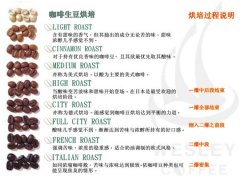
Coffee Roast Level Guide (Pacific Classification)
Different roast levels bring out different flavors. The traditional Pacific classification includes:
- Light Roast: Grassiness remains; no developed aroma or body.
- Cinnamon Roast: Light brown, named for its color.
- Medium Roast: Bright acidity is prominent.
- City Roast: Beginning balance of acid, sweetness, and bitterness.
- City+ Roast: Roasted to the start of the first crack, just before second.
- Full City Roast: Roasted through the beginning of the second crack; a favorite among specialty roasters.
- French Roast: Heavy bitterness, very dark.
- Italian Roast: Used for traditional espresso blends.
Specialty vs Commercial Roasting Standards
The Specialty Coffee Association of America (SCAA) uses Agtron color meters (infrared) to define roast levels on an 8-point scale from 0 (black) to 100 (light). Most specialty roasters follow stricter protocols:
- Roast based on bean traits (moisture, hardness, age), often cupping samples beforehand.
- Apply smaller batch sizes.
- Manually monitor every stage—temps, times, crack sounds, color.
- Deliver coffee the same day it’s roasted.
Frequently Asked Questions
What are the 3 main types of coffee roasters?
The three main types are direct-fire (flame-heated drum), semi-hot-air direct-fire (flame plus forced air, e.g. Probat), and hot-air (circulated air, e.g. Jabez Burns Thermalo). Most modern roasters use semi-hot-air or hot-air systems for better efficiency and control.
What’s the difference between first and second crack in coffee roasting?
The first crack is a loud, popping sound occurring around 160°C, marking the start of significant bean expansion and flavor development. The second crack is softer and occurs near 190°C, indicating a darker roast with more body and bitterness. Roasters listen for these to guide roast level.
How much weight does coffee lose during roasting?
Coffee typically loses 12% to 21% of its weight during roasting, mostly due to moisture evaporation. Darker roasts lose more weight.
Why do coffee beans expand when roasted?
Beans can expand over 60% in volume during roasting due to internal pressure from steam and chemical changes that weaken cell walls, creating a more porous structure.
What’s the best roast level for specialty coffee?
Specialty roasters often prefer City+ to Full City roasts—where the first crack has begun and the second may be starting. These levels best highlight origin characteristics without excessive roast flavors.
What’s the difference between specialty and commercial roasting?
Specialty roasting is small-batch, manually monitored, and based on individual bean profiles. Coffee is roasted to order and delivered the same day. Commercial roasting prioritizes speed, consistency, and volume, often using automated controls and longer shelf-life profiles.
Recommended FrontStreet Beans for Roast Exploration
Try FrontStreet Coffee’s Ethiopia Humbera for bright, floral notes in a City+ roast; their Brazil Queen Manor offers chocolate and nutty balance in a Full City profile; and the PWN Golden Mandheling delivers low-acid body ideal for French-style roasts. Each highlights how roast level shapes flavor. Freshly roasted within 5 days · Orders placed before 17:00 ship the same day · Next-day delivery across most of Guangdong Province.
FrontStreet Coffee is a long-established specialty coffee roaster in Guangzhou China, selling freshly roasted beans from its own farm in Yunnan as well as dozens of carefully selected single-origin beans from around the world for both pour-over and espresso. The products deliver consistently excellent quality and great value, with shipping within 24 hours. Guangzhou's FrontStreet Coffee shop is recommended by many coffee lovers, and the beans are now available online at the Tmall 。
Important Notice :
前街咖啡 FrontStreet Coffee has moved to new addredd:
FrontStreet Coffee Address: 315,Donghua East Road,GuangZhou
Tel:020 38364473