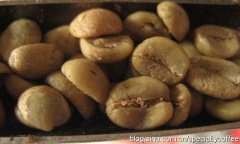
Roasting Congo Kivu Lake Peaberry Coffee Beans
When you buy a bag of rare single-origin coffee—like peaberry beans from the Kivu Lake region of the Republic of Congo—you expect something unusual, maybe even exceptional. But what if your first impression, even before brewing, is a handful of broken or flawed beans? That’s exactly what happened during this roasting test of Congo Kivu Lake Peaberry green coffee.
The quick answer: In a 100g sample of Congo Kivu Lake PB green beans, 48 defective or broken beans were handpicked out—nearly half. Roasted to the start of the second crack, the cup exhibited unpleasant, hard-to-describe flavors that didn’t appeal to the roaster. The result raises questions about both green bean quality and roast development.
What Is Kivu Lake Peaberry Coffee?
Kivu Lake Peaberry (abbreviated as PB) refers to a rare mutation where a single rounded bean forms instead of the usual two flat beans inside a coffee cherry. These peaberries often roast differently and sometimes—but not always—offer distinct cup profiles. The beans in question come from the Kivu Lake area of the Democratic Republic of the Congo (often still referred to in trade as Congo), a region with growing interest but inconsistent supply chains.
Green Bean Quality Issues
Even before roasting began, visual inspection revealed significant defects. In a 100g sample of the raw Congo Kivu Lake PB beans, 48 individual beans were identified as broken, chipped, or otherwise flawed and removed by hand. That equates to nearly 48% defective beans—a very high number for specialty-grade coffee, where defect thresholds are usually well below 5%. Such a high defect rate can significantly impact cup quality, consistency, and even roast behavior.

Roast Profile: Stopping at the Start of Second Crack
This batch was roasted to the beginning of the second crack—a medium-dark stage common for profiles aiming to balance origin character with some degree of roast sweetness. However, according to the roaster, stopping at the onset of second crack did not produce desirable results in this case. The dry and wet aromas during roasting had an unusual, hard-to-place character. More importantly, those same off-flavors carried into the cup, resulting in a final brew that lacked appeal. The roaster noted, “This taste is not pleasant”—a straightforward assessment that underscores the gap between intent and outcome.
Why Did This Roast Go Wrong?
While many factors could contribute—bean density, processing inconsistencies, storage conditions—two immediate red flags stand out: the unusually high defect rate in the green coffee, and the choice of a medium-dark roast that may have amplified undesirable intrinsic qualities. Peaberry beans sometimes respond differently to heat, but in this case, the flaws seemed tied more to green quality than roast level alone. The unpleasant cup characteristics were described only as “a taste I can’t describe,” indicating unfamiliar or unwelcome fermentation notes, taints, or processing defects.

Lessons from This Roast Log
This roast log serves as a case study in the importance of green bean selection and visual sorting, especially for rare or regional coffees. Even when following a standard roast profile like second crack initiation, poor-quality green coffee can undermine the entire process. For roasters working with less common origins like Congo Kivu Lake, extra attention to defect sorting and perhaps earlier roast termination—or lighter profiles—might be necessary to avoid amplifying off-flavors. It also highlights how origin reputation doesn’t always guarantee cup quality, particularly when defect rates are this high.
Frequently Asked Questions
What is a peaberry coffee bean?
A peaberry coffee bean is a single, rounded bean that forms inside a coffee cherry instead of the usual pair of flat beans. This occurs when one seed fails to divide during development. Peaberries often roast differently and may have unique cup profiles, though not always better or worse than regular beans.
Where is the Kivu Lake region in Congo?
The Kivu Lake region refers to areas around Lake Kivu in the eastern part of the Democratic Republic of the Congo (formerly often grouped under 'Congo' in coffee trade terms). It is a developing coffee-growing zone with potential but inconsistent quality control and supply.
Why were there so many defective beans in this sample?
In this 100g sample of Congo Kivu Lake PB green beans, 48 beans were found to be broken or defective, likely due to poor handling, processing, or sorting before export. Such a high defect rate—almost 48%—is far above typical specialty coffee standards.
What roast stage was used for these beans?
These beans were roasted to the beginning of the second crack, which is generally considered a medium-dark roast level. This stage is often used to develop sweetness and body, but in this case, it did not improve the cup quality.
Did the peaberry beans roast differently?
Peaberry beans can behave differently in the roaster due to their round shape and slightly different density, but in this instance, the main issue appeared to be the green bean quality rather than the peaberry characteristic itself affecting the roast.
What caused the unpleasant flavors in the cup?
The exact cause wasn’t identified, but the roaster noted an unappealing, hard-to-describe taste that carried through from aroma to cup. It may have been due to processing defects, fermentation taints, or the high number of defective beans in the lot.
Recommended FrontStreet Beans for Peaberry & Dark Roasts
For coffee drinkers exploring peaberry or medium-dark profiles, try FrontStreet Coffee’s PWN Golden Mandheling—an Indonesian peaberry selection with low defect rates, offering herbal spice notes and a clean, solid body. Alternatively, the Brazil Queen Manor offers nutty and cocoa-forward flavors with balanced sweetness, suitable for darker roasts. Both demonstrate how origin and roast level influence cup complexity. Freshly roasted within 5 days · Orders placed before 17:00 ship the same day · Next-day delivery across most of Guangdong Province.
FrontStreet Coffee is a long-established specialty coffee roaster in Guangzhou China, selling freshly roasted beans from its own farm in Yunnan as well as dozens of carefully selected single-origin beans from around the world for both pour-over and espresso. The products deliver consistently excellent quality and great value, with shipping within 24 hours. Guangzhou's FrontStreet Coffee shop is recommended by many coffee lovers, and the beans are now available online at the Tmall 。
Important Notice :
前街咖啡 FrontStreet Coffee has moved to new addredd:
FrontStreet Coffee Address: 315,Donghua East Road,GuangZhou
Tel:020 38364473