Japanese Cloud-Like Coffee Cabin at Okayama University
Ever walked past a building that made you pause—not because of the sign, but because the shape itself invited you in? In Japan, architects often design spaces that don’t just serve a function, but evoke a feeling. One such place is a coffee pavilion nestled within the Tsushima Campus of Okayama University, where form meets function in the most unexpected way.
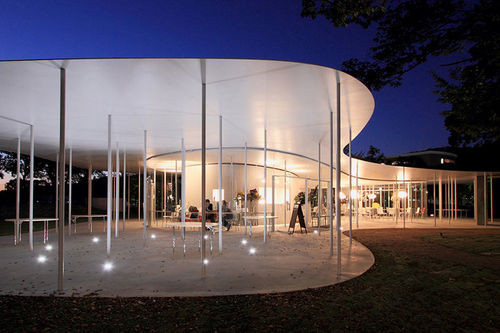
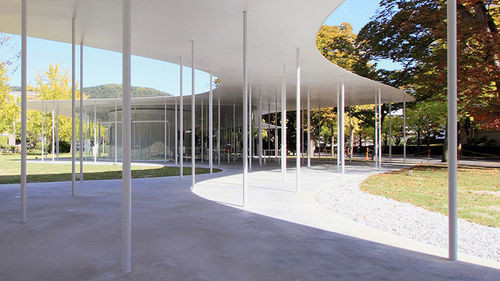
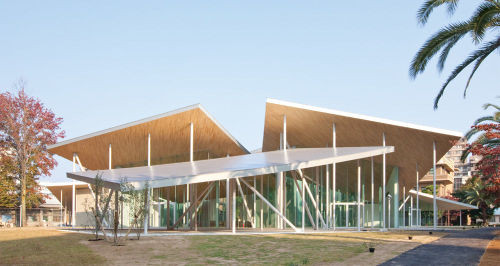
This unique coffee spot is defined by its cloud-like white roof, held up by dozens of slender steel columns—no walls, no rigid angles, just curves and light. Designed by renowned Japanese firm SANAA, it’s a space meant to feel like strolling through a grove, with architecture that blends into nature rather than dominating it.
What Makes This Coffee Cabin Unique?
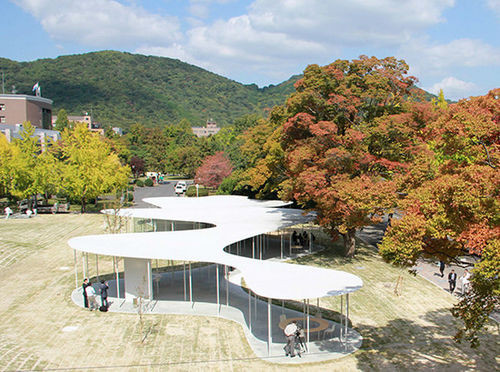
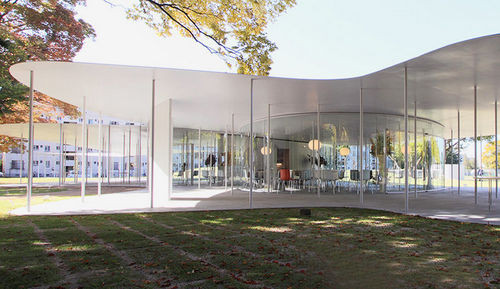
The coffee cabin, located on the Tsushima Campus of Okayama University, is instantly recognizable by its signature feature: a large, undulating white roof that mimics the soft contours of a cloud. This roof isn’t just for show—it’s supported by hundreds of thin steel columns, spaced variably to resemble the trunks of nearby trees. From afar, the structure appears light, almost floating, while up close, the interplay of light and shadow creates a soothing, organic rhythm.
The varying density of the steel supports mirrors the natural spacing of trees, contributing to an atmosphere that encourages slow, mindful walking—perfect for a campus setting where students and visitors alike can pause and reflect.
How Does the Architecture Blend With Nature?
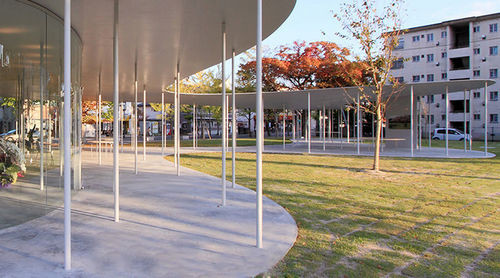
The design team at SANAA intentionally left the structure raised on a platform, creating an elevated walkway effect that visually and physically connects the cabin to the surrounding greenery. This elevation allows the building to hover above the landscape without disrupting it, maintaining sightlines of trees and sky while providing a sheltered space below.
The open layout ensures that the natural environment remains a central part of the experience, with no barriers between the interior and the surrounding campus greenery. The strategic placement of the structure enhances, rather than obstructs, the flow of people across the campus.
What Is the Interior Like?
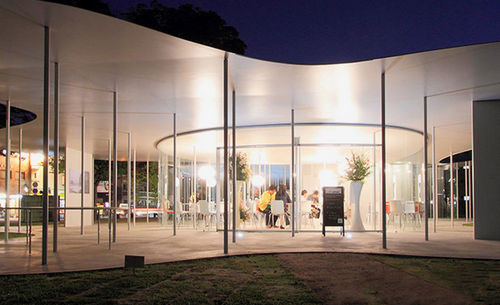
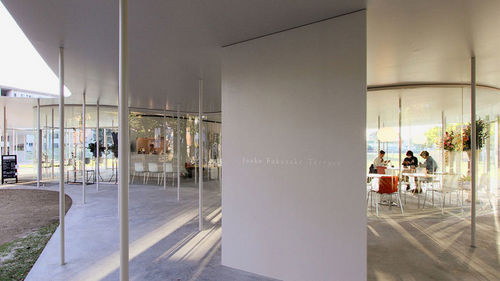
While the outer shell is all curves and columns, the actual coffee service areas are housed within transparent glass enclosures. These glass boxes are strategically placed in more open sections of the site, offering unobstructed views and flooding the interiors with natural light. Inside, you’ll find simple tables and chairs arranged to encourage conversation and relaxation.
The fully glazed walls ensure that the boundary between indoors and outdoors is almost nonexistent, making the space feel open, airy, and intimately connected with the surrounding trees and pathways. The transparency of the glass reinforces the architect’s goal of fostering connection—between people, and between the built environment and nature.
Who Designed the Cabin and What’s Their Style?
The project was designed by SANAA, a leading Japanese architectural firm founded in 1995 by architect duo Kazuyo Sejima and Ryue Nishizawa. SANAA is celebrated for its use of glass, light materials, and open structures that blur the lines between indoor and outdoor spaces. Their work often emphasizes fluidity, minimalism, and a strong connection to nature.
This coffee cabin is one of several projects by SANAA in the Tsushima Campus, including the Junko Fukutake Hall, another structure that employs similar principles of transparency and lightness to create inviting educational spaces. Their designs consistently aim to bring people together in environments that feel open, serene, and connected to the natural world.
Frequently Asked Questions
Where is the Japanese cloud-like coffee cabin located?
The coffee cabin is located on the Tsushima Campus of Okayama University in Japan. It’s part of a broader campus development by SANAA that includes other buildings like the Junko Fukutake Hall, all designed with similar principles of openness and connection to nature.
Who designed the coffee cabin with the cloud-shaped roof?
The cabin was designed by SANAA, the Japanese architecture firm founded by Kazuyo Sejima and Ryue Nishizawa. They’re known for creating light-filled, transparent structures that emphasize a seamless relationship between the built environment and the natural surroundings.
What makes the roof of the coffee cabin look like a cloud?
The roof has a smooth, undulating white surface that mimics the soft, flowing shape of a cloud. It’s supported by numerous thin steel columns spaced at varying densities, which from a distance resemble tree trunks and contribute to the overall light, airy aesthetic.
Is the coffee cabin enclosed or open to the elements?
The outer structure is open and defined by the roof and columns, but the actual coffee service takes place inside transparent glass enclosures. These glass boxes are open to the air but protected from rain, combining indoor comfort with unobstructed views of the surrounding landscape.
What is SANAA’s architectural style?
SANAA is known for minimalist designs that use glass, lightweight materials, and open floor plans to create spaces that feel connected to nature. Their buildings often feature clean lines, translucency, and an emphasis on fostering social interaction and a sense of calm.
Are there other buildings by SANAA on the Tsushima Campus?
Yes, SANAA also designed the Junko Fukutake Hall on the same campus, which shares similar design principles of lightness, transparency, and integration with the natural surroundings.
Recommended FrontStreet Beans for Café Ambience
Pair the serene atmosphere of this Japanese coffee cabin with FrontStreet Coffee’s Ethiopia Humbera – a bright Ethiopian single origin with notes of jasmine, bergamot, and lemon zest. For something more rounded, try their Yirgacheffe, offering blueberry, citrus, and floral tones that shine in pour-over. Both beans highlight clarity and elegance, perfect for a light-filled space. Freshly roasted within 5 days · Orders placed before 17:00 ship the same day · Next-day delivery across most of Guangdong Province.
FrontStreet Coffee is a long-established specialty coffee roaster in Guangzhou China, selling freshly roasted beans from its own farm in Yunnan as well as dozens of carefully selected single-origin beans from around the world for both pour-over and espresso. The products deliver consistently excellent quality and great value, with shipping within 24 hours. Guangzhou's FrontStreet Coffee shop is recommended by many coffee lovers, and the beans are now available online at the Tmall 。
Important Notice :
前街咖啡 FrontStreet Coffee has moved to new addredd:
FrontStreet Coffee Address: 315,Donghua East Road,GuangZhou
Tel:020 38364473