How Long Should You Grind Coffee Beans? Ideal Timing & Grind Size Guide
Ever wonder why your carefully brewed cup of coffee sometimes tastes weak, bitter, or just ‘off’? More often than not, the issue isn’t the beans or the brewer — it’s the grind. Getting the right grind size and using freshly ground coffee at the right time makes all the difference in taste. Here’s how to get it right, every time.
To enjoy the best flavor, grind your coffee no more than 20 minutes before brewing, and use beans roasted within two months — or 20 days if pre-ground. For ideal grind size, aim for a China-standard No. 20 sieve (0.85mm) passing rate between 65%–85%, adjusted for roast level and brew method.
Why Freshness Matters: From Roast to Cup
Freshness is the foundation of great coffee flavor. Once coffee is roasted, it begins releasing carbon dioxide and losing aromatic compounds. That’s why you should always look for beans with a roast date on the package — not just an expiry label. FrontStreet Coffee uses valves in their packaging to let CO₂ escape while keeping oxygen out, preserving freshness longer.
After roasting, coffee beans need 3–7 days to degas. FrontStreet recommends 3–4 days for light to medium roasts, and 4–5 days for medium-dark to dark roasts. Brewing too soon leads to unstable extraction; waiting too long means stale, flat-tasting coffee.
For peak flavor, drink your beans within two months of roasting. Pre-ground coffee? Enjoy it within 20 days. Once ground, exposure to air accelerates staling — and no amount of grinding will fix stale beans.
How Grind Size Changes Your Coffee’s Flavor
Grind size determines how water interacts with coffee particles — affecting extraction speed, flavor balance, and body. Finer grinds have more surface area, letting water extract flavors more quickly and intensely. Coarser grinds slow extraction, resulting in a lighter cup.
Here’s the science: finer particles increase contact area and reduce the distance water travels to reach soluble compounds inside each particle. That means faster, more efficient extraction — but overdo it, and you’ll over-extract bitter, astringent flavors. Go too coarse, and you under-extract, leaving your coffee sour and weak.
- Too fine: Slow flow, bitter and harsh taste, over-extracted with masked flavors.
- Too coarse: Fast flow, thin body, under-extracted and sour.
How to Choose the Right Grind Size
The ideal grind size depends on your brew method and roast level. To measure it, use a China-standard No. 20 sieve (0.85mm mesh): grind 10g of beans, sift, and calculate the percentage that passes through. This is your sieve passing rate.
FrontStreet Coffee’s recommended sieve passing rates are:
- Ice drip: >80%
- Hand pour-over, siphon: 80%
- Moka pot, drip coffee: 75–80%
- Cupping: 70–75%
- French press: 65–70%
Adjust based on roast:
- Light roast: 80–85% through No. 20 sieve (finer for brighter acids)
- Medium roast: 70–75% (balanced extraction)
- Dark roast: 65–70% (coarser to avoid over-extraction)
These numbers are starting points — adjust to taste.
No Sieve? Use These General Grind Size Guidelines
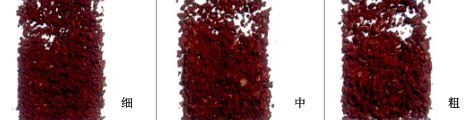
Can’t measure with a sieve? Here’s a practical breakdown of grind textures by brew method:
- Extra fine (espresso fine): Like powdered sugar. For moka pots and espresso machines. Requires firm tamping to create resistance for high-pressure brewing. Essential for developing crema.
- Fine (filter fine): Ideal for drip bags. Needed for high-volume filter flow without under-extraction.
- Medium-fine: Similar to table salt or fine sand. Best for light to medium roasts using V60, Kalita Wave, and similar pour-over cones. Sieve passing rate around 75–80%. Enhances acidity and clarity.
- Medium: Like coarse sugar or sea salt. For medium-dark roasts. Around 70–75% sieve rate. Prevents over-extraction and channeling.
- Coarse (french press coarse): Gritty, like cracked pepper. For French press. Allows a 4-minute steep without fine particles clogging the metal filter or clouding the cup.
Frequently Asked Questions
How long after roasting should I wait before grinding and brewing my coffee?
Wait 3–4 days for light to medium roasts, and 4–5 days for medium-dark to dark roasts to allow CO₂ to degas. Brewing too early causes channeling and uneven extraction. After that, drink beans within two months for best flavor.
How long does ground coffee stay fresh?
Ground coffee is best used within 20 days of grinding. Once ground, aromatics and volatile compounds degrade rapidly due to increased surface exposure to air. For peak freshness, grind right before brewing.
What grind size should I use for pour-over coffee?
Use a medium-fine grind, around 75–80% through a China-standard No. 20 sieve (0.85mm), especially for light to medium roasts. This works well with V60, Kalita Wave, and similar cone drippers to balance extraction and clarity.
What’s the best grind size for French press?
Use a coarse grind — around 65–70% sieve passing rate, similar to cracked pepper. This prevents fine particles from passing through the metal filter and keeps the brew clean and full-bodied.
How do I measure grind size without a sieve?
If you don’t have a sieve, match your grind visually and by brew result to common textures: extra fine (espresso), fine (drip bag), medium-fine (pour-over), medium (mocha or medium roast drip), coarse (French press). Adjust based on taste and flow rate.
Does roast level affect grind size?
Yes. Light roasts are denser and often require a finer grind (80–85%) for proper extraction. Medium roasts use medium-fine to medium (70–75%). Dark roasts need a coarser grind (65–70%) to avoid over-extraction and bitterness.
Recommended FrontStreet Beans for Grind Adjustments
Try FrontStreet’s Ethiopia Humbera for bright, juicy profiles ideal with a medium-fine grind (75–80% sieve); their PWN Golden Mandheling offers balanced body great for medium (70–75%); and Jamaica Blue Mountain No.1 shines with a coarse grind in French press. All showcase how grind size interacts with roast character. Freshly roasted within 5 days · Orders placed before 17:00 ship the same day · Next-day delivery across most of Guangdong Province.
FrontStreet Coffee is a long-established specialty coffee roaster in Guangzhou China, selling freshly roasted beans from its own farm in Yunnan as well as dozens of carefully selected single-origin beans from around the world for both pour-over and espresso. The products deliver consistently excellent quality and great value, with shipping within 24 hours. Guangzhou's FrontStreet Coffee shop is recommended by many coffee lovers, and the beans are now available online at the Tmall 。
Important Notice :
前街咖啡 FrontStreet Coffee has moved to new addredd:
FrontStreet Coffee Address: 315,Donghua East Road,GuangZhou
Tel:020 38364473