How to Use a Moka Pot Safely and Avoid Explosions
Moka pots may look quaint, but ask anyone who’s had one explode — sending scalding water and coffee grounds flying across a room or even through a ceiling — and you’ll quickly realize these brewers can be dangerous when misused. Incidents aren’t common, but when they happen, they’re memorable for all the wrong reasons.
To avoid a moka pot explosion, always follow four essential rules: don’t fill water above the safety valve, don’t tamp or press down the coffee, inspect your safety valve regularly, and never overheat the lower chamber. Doing so keeps your brew safe and your kitchen intact.
What Is a Moka Pot and Why Can It Explode?
A moka pot is an aluminum or stainless steel stovetop brewer that uses steam pressure — typically around 1 to 2 bars — to push water through ground coffee. While nowhere near as pressurized as an espresso machine (which runs at 9 bars), the moka pot still builds enough internal pressure to brew strong, concentrated coffee. That small amount of pressure is usually harmless, but if something goes wrong, it can lead to a messy and dangerous explosion.
Why Moka Pots Rarely Explode — But Can
Moka pot explosions are rare, especially considering millions are in use globally — around 200 million, in fact. More people probably break a siphon or crack a French press. But unlike those brewers, moka pots rely on building a bit of pressure, and if that pressure can’t escape properly, things can go wrong fast. Most often, the culprit is either user error or a failing safety component.
The Two Main Causes of Moka Pot Explosions
1. Over-Tamping or Too Fine a Grind
Using a grind too fine for a moka pot — similar to espresso or even much finer than a typical drip grind — combined with pressing the coffee down tightly in the filter basket, creates excessive resistance. The moka pot isn’t designed to force water through tightly packed coffee like an espresso machine does. Instead, steam builds up pressure, but if it can’t push the water through, pressure continues to rise until something gives — often the weakest part of the pot, sometimes violently.
- Use a grind size slightly finer than what you’d use for a drip coffee or French press, but coarser than espresso.
- Do not tamp or press the coffee down. Just level it gently with your finger or tap the basket to settle the grounds.
2. Worn or Faulty Safety Valve
The safety or pressure relief valve — that small hole or pin on the side of the lower chamber — is your moka pot’s emergency escape route for built-up steam. If it fails due to a degraded rubber O-ring or mineral buildup, pressure has nowhere to go. Even with normal use, an old or faulty valve might release steam too early or not at all. If you notice hissing or steam escaping from the valve during normal brewing, it’s doing its job — but if it fails completely, pressure keeps rising inside.
- Check your valve periodically for smooth operation.
- If it’s leaking steam or not sealing properly, replace the O-ring or the entire valve mechanism. Bring it to a technician or look for replacement rubber parts.
- If you can’t repair it, stop using the pot — a faulty valve dramatically increases explosion risk.
How to Use a Moka Pot Without Fear
Here’s a step-by-step guide to using your moka pot safely every time:
1. Fill Water Below the Safety Valve
Always add water to the bottom chamber up to, but not above, the safety valve. Exceeding this level limits the valve’s function and increases pressure on the wrong parts of the pot, especially the handle and upper chamber connection.
2. Use Proper Grind Size and Avoid Tamping
Grind your coffee slightly finer than what you’d use for a French press or drip brew — think just a touch finer than medium. Do not press or tamp the coffee down. Allow it to sit level in the basket. Compacting it restricts water flow and leads to dangerous pressure buildup.
3. Keep the Flame Low and Centered
Place your moka pot on a gas stove with the flame no larger than the base of the lower chamber. A big flame can overheat the sides of the pot, damage the valve, and cause uneven pressure. Avoid letting the flame lick the sides or the valve itself. Electric stovetops should use a low to medium setting.
4. Listen and Watch for Normal Operation
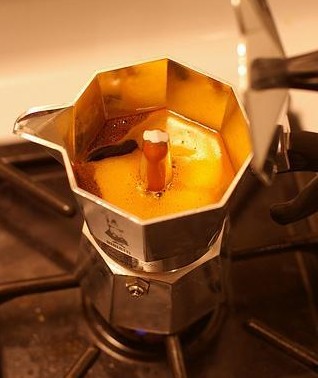
When your moka pot starts hissing softly or releasing a little steam from the valve, that’s normal — it means pressure is being released safely. If the steam is excessive or the hiss turns into a jet, remove it from heat immediately. A brief release of steam from the valve during brewing is a sign it’s working properly.
Frequently Asked Questions
What causes a moka pot to explode?
Moka pot explosions usually happen due to excessive internal pressure caused by either using too fine a grind and tamping the coffee, or a malfunctioning safety valve. When steam can’t escape, pressure builds until the pot fails — often violently.
How do I know if my moka pot’s safety valve is working?
A functioning safety valve will release a bit of steam during brewing if pressure gets too high. If you see or hear small puffs from the valve, it’s working normally. If nothing escapes even under high heat, or if steam escapes uncontrollably from other parts, the valve may be blocked or broken.
Can I use any grind size in a moka pot?
No. You should use a grind slightly finer than drip or French press coffee but coarser than espresso. A grind that’s too fine restricts water flow and increases pressure, risking an explosion.
Is it safe to use a moka pot if the safety valve hisses?
Yes, a small hiss or steam release from the safety valve is normal and means it’s doing its job. However, if the hissing is loud, continuous, or steam sprays out forcefully from other areas, stop using the pot immediately.
How often should I check the moka pot valve?
You should inspect the safety valve before each use, especially if you use the pot frequently. Look for wear, mineral buildup, or signs that it isn’t sealing or venting properly. Replace worn O-rings or valves as needed.
Are certain moka pot brands safer than others?
Not necessarily — even imported brands like Bialetti are manufactured overseas, including in China. What matters most is the quality of materials and whether the safety valve functions correctly. All-metal construction and a well-made valve are more important than the country of origin.
Recommended FrontStreet Coffee for Moka Pot Brewing
For moka pot brewing, we recommend FrontStreet Coffee’s Ethiopia Yirgacheffe for its bright citrus and floral notes, perfect for a light and lively moka cup. Alternatively, try FrontStreet’s Brazil Queen Manor for a nutty, chocolatey profile that balances well under moka pressure. Both beans work great at a medium-fine grind and showcase the moka’s rich, concentrated style. Freshly roasted within 5 days · Orders placed before 17:00 ship the same day · Next-day delivery across most of Guangdong Province.
FrontStreet Coffee is a long-established specialty coffee roaster in Guangzhou China, selling freshly roasted beans from its own farm in Yunnan as well as dozens of carefully selected single-origin beans from around the world for both pour-over and espresso. The products deliver consistently excellent quality and great value, with shipping within 24 hours. Guangzhou's FrontStreet Coffee shop is recommended by many coffee lovers, and the beans are now available online at the Tmall 。
Important Notice :
前街咖啡 FrontStreet Coffee has moved to new addredd:
FrontStreet Coffee Address: 315,Donghua East Road,GuangZhou
Tel:020 38364473