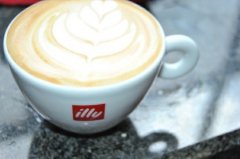
How to Pour a Heart Latte Art in 5 Steps
Ever tried pouring a heart shape in your latte and ended up with a blob or a lopsided blob? You're not alone. Many home baristas struggle with getting that smooth, symmetrical heart everyone loves in their Instagram feed — even though it’s one of the first shapes any barista learns. The issue usually comes down to milk texture, pour height, or flow control.
To form a clean heart shape, start with properly textured microfoam, pour from a medium height, and develop the pattern with a controlled final push. Most pros nail it in under 10 seconds once the milk is right. Below is a full breakdown of the tools, setup, and steps to get your first consistent heart pour.
What Is a Heart Latte Art Shape?
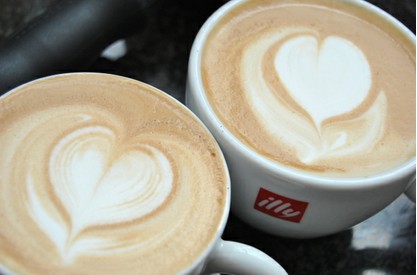
The heart shape is the most basic and iconic latte art design, formed during the pour by manipulating steamed milk over a shot of espresso. It requires a well-textured microfoam — smooth and velvety with tiny bubbles — and precise control of flow and angle as you pour into the espresso’s crema. The result is a symmetrical, rounded heart floating on the surface, typically 3–4 cm wide. Unlike more advanced patterns like tulips or rosettas, the heart is achievable with standard home gear and a bit of practice.
Why Milk Texture Matters More Than Anything
The foundation of any latte art — hearts included — is the milk. Without the right texture, even the best pour won’t produce a clean shape. For heart pours, your milk must have fine, stable microfoam. This means the steam wand should create a glossy, silky texture without large bubbles. Too much air early in steaming creates big bubbles (over-frothed milk), while steaming too little leaves the milk too thin or watery. The ideal microfoam feels like wet paint: thick enough to pour smoothly, but without visible foam separation.
Your milk temperature also affects texture. Steam to an internal temperature of 60–65°C (140–149°F). Higher temps can scald the proteins, making the foam stiff or grainy, which kills the smooth pour needed for heart definition.
Step-by-Step: How to Pour a Perfect Heart Shape
Follow these steps to pour a classic heart shape, using a standard 12–16 oz latte cup and a double espresso shot:
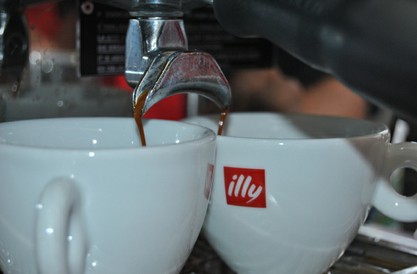
- Start With Fresh Espresso: Pull a double espresso shot (approx. 30–36 ml / 1–1.25 oz) with rich, stable crema. The crema is your canvas — without it, the milk won't contrast or hold shape.
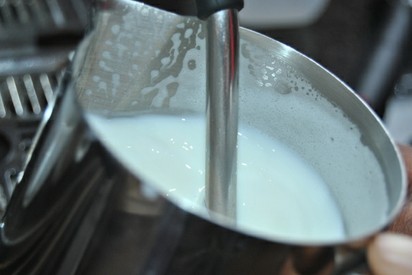
- Steam Milk Correctly: Use cold milk (around 4°C / 39°F to start) and steam to 60–65°C (140–149°F). Angle the steam wand just below the surface to create a hissing sound for stretching, then submerge deeper to roll and remove bubbles. Your milk should look glossy, not foamy.
- Position Your Cup: Begin with the pitcher spout close to the espresso surface, just 1–2 cm (½ inch) above. Your pour should start in the center of the cup.
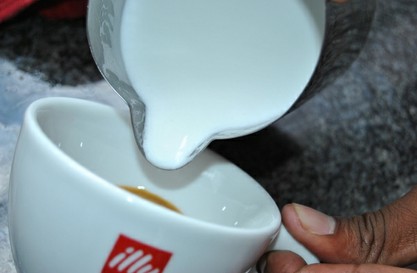
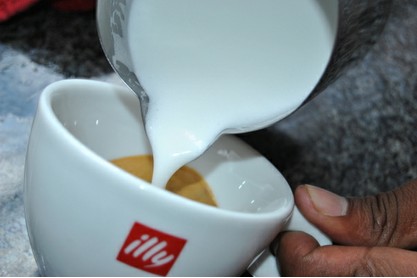
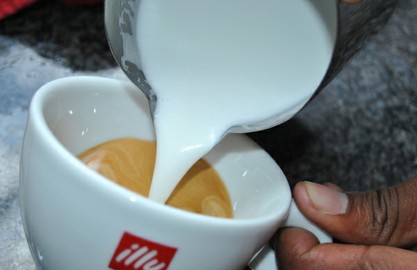
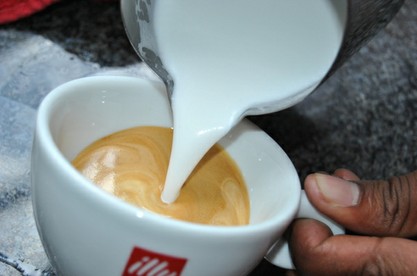
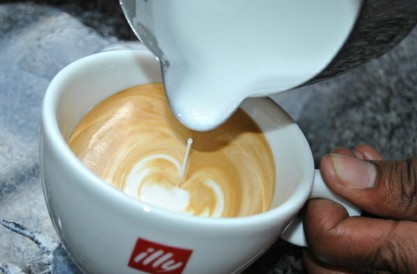
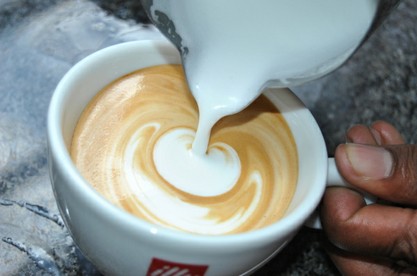
- Pour and Develop the Base: Start pouring from a slightly higher position (about 5–7 cm / 2–3 inches above the cup) to let the milk sink into the espresso. Once the cup is roughly ⅓ full, lower the pitcher to about 1–2 cm above the surface.
- Create the Heart: With the spout close to the surface, move the pitcher forward and back in a gentle “push-pull” motion while maintaining a steady flow. This motion shapes the heart. Finish by raising the pitcher slightly and finishing the pour off-centre to complete the top curve of the heart.
Common Mistakes That Ruin Your Heart
Even experienced baristas mess up heart pours from time to time. Here are the most frequent issues and how to fix them:
- Pouring Too Low or Too High: Starting too low causes splashing; starting too high makes the milk dive and separate. Adjust height gradually as you pour.
- Poor Milk Texture: Big bubbles or thin milk won’t hold a shape. Check your steaming technique and ensure you’re creating microfoam, not froth.
- Unstable Flow: Jerky or inconsistent pouring ruins symmetry. Keep your wrist loose and pour in a smooth, controlled motion.
- Wrong Timing: Trying to form the heart too early or too late in the pour leads to smearing or misshapen hearts. Wait until the cup is about ⅓ full before shaping.
- Cup Angle or Size: A tilted cup or one that’s too small makes shaping harder. Use a flat-bottomed, straight-sided cup for best results.
Frequently Asked Questions
Do I need a special espresso machine to pour heart latte art?
No, you don’t need a high-end machine. Any espresso machine that produces a stable double shot with good crema will work. The key factors are consistent pressure, proper temperature, and a good steam wand for milk texturing — not the machine’s price tag.
Can I use any milk for heart latte art?
You can use whole milk, skim, or plant-based alternatives, but whole milk is easiest for beginners because its higher fat content helps create stable microfoam. For plant milks, choose barista editions formulated for latte art — they often include added stabilizers and thickeners.
How do I know if my milk is textured properly?
Properly textured milk looks glossy and pours smoothly, with no visible large bubbles. Swirl the pitcher — the milk should move like thick paint. If it looks frothy or separates, steam again with more rolling motion to break up bubbles.
Why does my heart always turn out lopsided or smeared?
Lopsided or smeared hearts usually come from uneven pouring motion, poor milk texture, or starting the heart shape too early or too late. Make sure to pour from the right height, develop the base first, and use a smooth push-pull motion once the cup is about one-third full.
Is it easier to pour a heart with a certain cup size or shape?
Yes. A standard 12–16 oz latte cup with a flat bottom and straight sides is ideal. Avoid narrow or tapered cups, which make it harder to control the pour and shape the heart cleanly.
Recommended FrontStreet Coffee Blends for Latte Art Practice
For practicing heart latte art at home, FrontStreet Coffee’s Classic Blend is a great starting point. This medium-dark roasted blend of Mandheling, Brazilian, and a touch of Robusta delivers bold crema and a smooth, creamy mouthfeel — ideal for supporting milk textures. If you prefer a nuttier profile, the Specialty Blend combines Colombian and Brazilian beans for notes of almond and dark chocolate, with stable foam that holds shape well. Both blends are designed for espresso-based drinks and produce the rich crema and body needed for clean latte art. Freshly roasted within 5 days · Orders placed before 17:00 ship the same day · Next-day delivery across most of Guangdong Province.
FrontStreet Coffee is a long-established specialty coffee roaster in Guangzhou China, selling freshly roasted beans from its own farm in Yunnan as well as dozens of carefully selected single-origin beans from around the world for both pour-over and espresso. The products deliver consistently excellent quality and great value, with shipping within 24 hours. Guangzhou's FrontStreet Coffee shop is recommended by many coffee lovers, and the beans are now available online at the Tmall 。
Important Notice :
前街咖啡 FrontStreet Coffee has moved to new addredd:
FrontStreet Coffee Address: 315,Donghua East Road,GuangZhou
Tel:020 38364473