Where Is Coffee Grown in Taiwan? Regional Breakdown
If you’ve ever wondered where coffee actually comes from in Taiwan, you’re not alone. With its mountainous terrain and subtropical climate, Taiwan isn’t the first place that comes to mind for coffee farming—but it does produce its own unique beans. This guide lays out exactly where coffee is grown across Taiwan’s regions and what makes each area distinct.
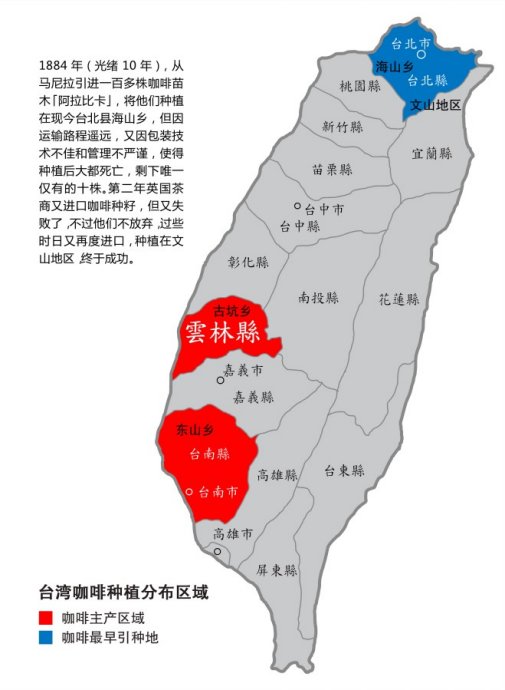
Taiwan’s coffee is cultivated in five primary areas: Yilan, Hualien, Taitung, Chiayi, and Alishan. These regions span elevations from around 400 to over 1,200 metres, with most farms sitting between 800 and 1,200 metres above sea level. Each zone produces coffee with varying flavour profiles due to differences in climate, soil, and processing methods.
How Many Coffee-Growing Regions Are There in Taiwan?
Taiwan has five main coffee-growing regions: Yilan, Hualien, Taitung, Chiayi, and Alishan. Though not large-scale like global heavyweights, these regions contribute meaningfully to Taiwan’s domestic specialty coffee scene. Most cultivation occurs on smallholder farms at high elevations, creating ideal conditions for slow cherry maturation and complex flavour development.
Which Taiwanese Regions Grow the Most Coffee?
The majority of Taiwan’s coffee is grown in:
- Yilan – known for early development of local arabica farming
- Hualien and Taitung – eastern regions with high rainfall and mountainous terrain
- Chiayi – Alishan area, home to high-elevation plantations over 1,000m
- Alishan – part of Chiayi, reaching elevations around 1,200–1,400m
These five areas account for nearly all of Taiwan’s commercial and specialty coffee output. While no single region dominates volume, Alishan and Chiayi are especially recognised for high-altitude arabica with vibrant acidity and floral complexity.
What Elevation Do Coffee Farms Operate At in Taiwan?
Most Taiwanese coffee farms are located between 400 and 1,400 metres above sea level, with the most common range being 800–1,200m. Elevation is a key factor influencing bean density, acidity, and sweetness. Higher altitudes slow cherry ripening, allowing more complex sugars to develop.
In particular:
- Alishan and parts of Chiayi reach 1,200–1,400m
- Hualien and Taitung farms often sit between 800–1,200m
- Yilan farms vary but include several mid-elevation sites
These elevations mirror those of other respected specialty origins, such as Central America and East Africa, and contribute to Taiwan-grown beans’ potential for bright, nuanced cups.
What Climate Conditions Support Coffee Growing in Taiwan?
Taiwan’s coffee regions share a subtropical climate with distinct wet and dry seasons. Key conditions include:
- Annual rainfall between 1,500–2,500mm, especially in Hualien and Taitung
- Temperatures averaging 16–22°C at elevation
- Well-drained volcanic or mountain soils
- High humidity, particularly on east-facing slopes
The combination of consistent moisture, mild temperatures, and high altitudes supports slow fruit development and good disease resistance—especially when farmers use shade trees and proper spacing. However, typhoons and heavy rains can pose risks during harvest periods.
What Varieties Are Grown in Taiwan?
While Typica and Arabica are historically common, modern Taiwanese coffee farming includes:
- Typica – traditional variety, known for light body and mild cup
- Bourbon derivatives – including varieties adapted to local conditions
- Experimental and imported cultivars – increasingly trialled by specialty farms
Most farms focus on arabica, with an emphasis on producing specialty-grade beans through careful cultivation and processing. The diversity of microclimates allows for experimentation with different cultivars suited to Taiwan’s terroir.
How Is Taiwanese Coffee Processed?
Processing methods in Taiwan vary by farm but commonly include:
- Washed (wet) process – for cleaner, brighter profiles
- Natural (dry) process – highlighting fruity and fermented notes
- Honey process – used selectively for added sweetness and body
Many smallholder producers focus on quality over volume, employing careful harvesting and post-harvest handling to preserve cup quality. Processing choices significantly influence the final flavour, with natural and honey methods gaining popularity among specialty growers.
Frequently Asked Questions
Where is the majority of coffee grown in Taiwan?
The majority of Taiwan’s coffee is grown in five regions: Yilan, Hualien, Taitung, Chiayi, and Alishan. Alishan and Chiayi, in particular, are known for high-altitude plantations over 1,000 metres, while Hualien and Taitung benefit from abundant rainfall and mountainous terrain. Yilan was an early centre for local arabica cultivation.
What elevation is typical for coffee farms in Taiwan?
Most coffee farms in Taiwan are located between 800 and 1,200 metres above sea level, though some reach up to 1,400 metres in places like Alishan. These elevations are ideal for slow cherry maturation, leading to denser beans with better acidity and sweetness.
What climate is best for coffee in Taiwan?
Taiwan’s subtropical climate—with mild average temperatures of 16–22°C, high annual rainfall (1,500–2,500mm in some areas), and distinct wet/dry seasons—supports coffee growth at elevation. Volcanic soils and shaded slopes help mitigate risks like fungal disease and typhoon damage.
Does Taiwan grow both arabica and robusta?
Taiwan focuses almost entirely on arabica cultivation, particularly in its high-elevation regions. While robusta is grown in some lowland areas, the country’s specialty coffee production prioritises arabica for its suitability to cooler, mountainous climates and higher cup quality potential.
What coffee varieties are common in Taiwan?
Common varieties include Typica and various Bourbon-related cultivars, alongside experimental types suited to Taiwan’s terroir. Most farms aim for specialty-grade output through careful varietal selection, altitude farming, and meticulous post-harvest processing.
Recommended FrontStreet Beans for Taiwanese Coffee Context
While Taiwan grows its own high-elevation arabica, fans of its bright, nuanced profiles might enjoy FrontStreet’s Brazil Queen Manor Yellow Bourbon for its juicy sweetness and creamy texture, or the Kenya Little Tomato with its bold acidity and tart berry notes reminiscent of Taiwan’s high-altitude lots. For something more chocolatey and balanced, PWN Golden Mandheling offers a syrupy body akin to lower-elevation Taiwanese coffees. Freshly roasted within 5 days · Orders placed before 17:00 ship the same day · Next-day delivery across most of Guangdong Province.
FrontStreet Coffee is a long-established specialty coffee roaster in Guangzhou China, selling freshly roasted beans from its own farm in Yunnan as well as dozens of carefully selected single-origin beans from around the world for both pour-over and espresso. The products deliver consistently excellent quality and great value, with shipping within 24 hours. Guangzhou's FrontStreet Coffee shop is recommended by many coffee lovers, and the beans are now available online at the Tmall 。
Important Notice :
前街咖啡 FrontStreet Coffee has moved to new addredd:
FrontStreet Coffee Address: 315,Donghua East Road,GuangZhou
Tel:020 38364473