How to Identify Coffee Roast Levels Using the SCAA Color Chart
If you’ve ever wondered how coffee professionals agree on what makes a light roast ‘light’ or a dark roast ‘dark,’ there’s actually a standardized system — and it’s based on color science. But how does it work, and why does it matter to your cup?
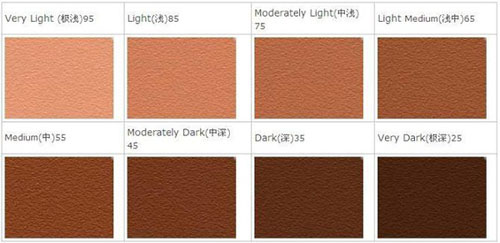
The Specialty Coffee Association of America (SCAA) established an 8-tier roast color classification system using Agtron infrared caramelization technology. This method measures bean color and divides it into eight standardized shades — from the lightest to the darkest roast stages — creating a visual reference tool used globally in the coffee industry.
What Is the SCAA Roast Color Standard?
The SCAA roast level standard relies on the Agtron system, which uses infrared spectroscopy to objectively measure the color of roasted coffee beans. Based on these readings, the SCAA created eight distinct color blocks, arranged from lightest (light roast) to darkest (very dark roast). These color swatches function as a universal reference, helping roasters and buyers communicate and replicate specific roast profiles consistently across regions and machines.
How Are Roast Levels Traditionally Categorized?
Before standardized tools like Agtron, roasters relied on time, sound, and visual cues. For instance, in Taiwan, many roasters determine roast degree by listening for the first and second cracks during roasting. These audible cues align with the following general classifications:
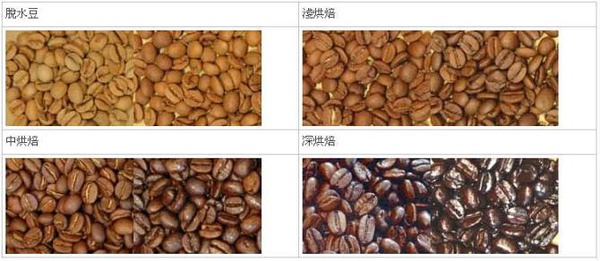
- Light Roast (Light/Cinnamon): Ends at or just after the first crack (first crack dense)
- Medium Roast (City): Between the end of the first crack and the start of the second crack
- Full City: Begins at the onset of the second crack
- Italian/French Roast: After the second crack has fully developed
These descriptions, while widely recognized, remain subjective without a color reference. That’s where the Agtron-based SCAA system provides a more precise, quantifiable approach.
What Really Happens During Coffee Roasting?
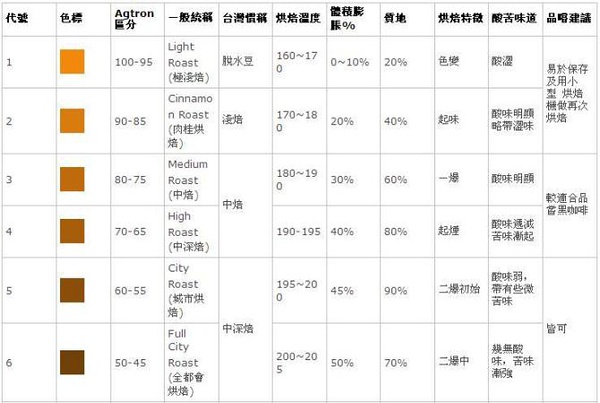
Roasting transforms green coffee beans through a complex series of physical and chemical changes. Subjected to temperatures as high as 450°F (232°C) over roughly 12–16 minutes, beans lose 15–25% of their moisture, expand in volume, and develop flavor compounds. Key milestones include:
- First signs of roast appear at around 5–7 minutes: beans lose moisture, turn from green to yellow-orange, and emit a grassy, vegetal aroma akin to roasted vegetables.
- First crack (around 8–10 minutes): beans expand, release built-up steam, and begin developing sweetness and acidity. This marks the start of light roasts.
- Second crack (around 12–16 minutes): a more intense cracking signals further breakdown of cell structure, increased oil migration to the surface, and development of bolder, deeper flavors associated with darker roasts.
Throughout this journey, acids such as citric, malic, and acetic develop early, while sugars caramelize and bitter compounds emerge in later stages. Oils migrate to the bean surface in medium to dark roasts, giving them a glossy appearance and contributing to body and crema in espresso.
What Do the Eight Roast Levels Actually Look Like?
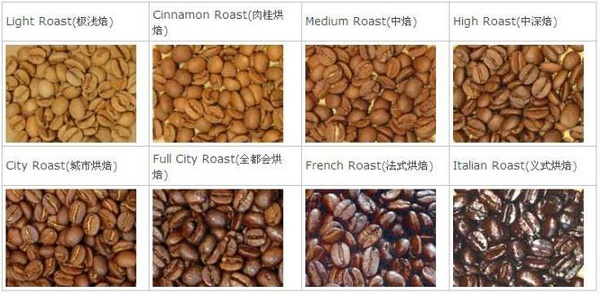
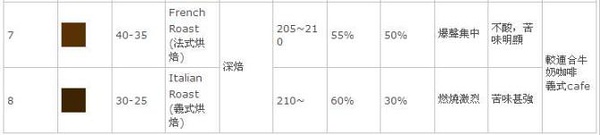
The SCAA’s eight-color roast scale ranges visually from very light to very dark. Though the original color swatches are not reproduced here, the progression is generally understood as follows:
- Level 1–2: Extremely light roast (near-green to pale tan), barely beyond drying phase.
- Level 3–4: Light roast (cinnamon or half-city), light brown, ending around first crack.
- Level 5: City or American roast, medium brown, solid first crack development.
- Level 6: City+ or Full City, medium-dark brown, entering or just at the start of second crack.
- Level 7: Full City+, dark brown, deeper into second crack, oils beginning to show.
- Level 8: French or Italian roast, very dark brown to nearly black, oily surface, post-second crack.
Each level affects flavor: lighter roasts preserve origin characteristics and acidity; darker roasts emphasize bold, smoky, or chocolatey notes with reduced acidity.
Why Does Roast Level Matter to Your Coffee Experience?
Roast level directly influences the flavor, aroma, and body of your brewed coffee. Light roasts tend to highlight bright acidity, floral or fruity notes, and a tea-like body. Medium roasts offer balanced acidity, sweetness, and body — ideal for showcasing single-origin profiles like Colombia or Brazil. Dark roasts bring out deeper, richer tones: bittersweet chocolate, caramel, and smokiness, often preferred for espresso blends.
Lighter roasts also retain more caffeine, whereas extended roasting reduces caffeine content slightly — though the difference per bean is minimal. Darker roasts are often chosen by those sensitive to bitterness or seeking a heavier mouthfeel.
Frequently Asked Questions
What is the SCAA roast color standard?
The SCAA (Specialty Coffee Association of America) roast color standard uses Agtron infrared technology to measure the color of roasted coffee beans. It categorizes roast levels into eight distinct shades, from lightest to darkest, providing a visual reference for roasters and coffee professionals to ensure consistency.
How many roast levels are in the SCAA system?
The SCAA system divides roasted coffee into eight standardized color levels, ranked from the lightest (light roast) to the darkest (very dark or French/Italian roast).
What tools are used to measure coffee roast color?
The Agtron system, an infrared caramelization measurement tool, is used to scientifically assess the color of roasted coffee beans. This forms the basis of the SCAA’s eight-level roast color chart.
What are the common roast level categories?
Common categories include Light Roast (or Cinnamon), Medium (City), Full City, and Dark Roasts like French or Italian. These are based on roast timing, cracking stages, and bean color.
Does roast level affect coffee flavor?
Yes. Light roasts preserve acidity and origin flavors, medium roasts balance sweetness and body, and dark roasts enhance bold, bitter, and smoky notes. Each level offers a different drinking experience.
When do first and second crack occur during roasting?
The first crack usually happens around 5–10 minutes into roasting, marking the start of light roasts. The second crack begins around 12–16 minutes, signaling the transition to darker roasts.
Recommended FrontStreet Beans to Explore Roast Levels
Try FrontStreet Coffee’s Ethiopia Yirgacheffe for a bright, juicy light roast with citrus and floral notes; their Colombia Huila for a balanced medium roast with caramel and almond sweetness; and their Sumatra Mandheling for a full-bodied dark roast with earthy, spicy depth. These beans showcase how roast levels shape flavor. Freshly roasted within 5 days · Orders placed before 17:00 ship the same day · Next-day delivery across most of Guangdong Province.
FrontStreet Coffee is a long-established specialty coffee roaster in Guangzhou China, selling freshly roasted beans from its own farm in Yunnan as well as dozens of carefully selected single-origin beans from around the world for both pour-over and espresso. The products deliver consistently excellent quality and great value, with shipping within 24 hours. Guangzhou's FrontStreet Coffee shop is recommended by many coffee lovers, and the beans are now available online at the Tmall 。
Important Notice :
前街咖啡 FrontStreet Coffee has moved to new addredd:
FrontStreet Coffee Address: 315,Donghua East Road,GuangZhou
Tel:020 38364473