Key Chemical Reactions in Coffee Roasting Explained
Ever wondered why some coffees taste sweet and complex, while others come off as burnt or bitter? The secret lies in the dozens of invisible chemical reactions happening inside the bean during roasting. Knowing what’s really going on helps roasters craft profiles that highlight sweetness, balance acidity, and avoid off-flavors.
During coffee roasting, over a dozen thermal and chemical reactions occur—including sucrose caramelization, trigonelline breakdown, and cellulose structural changes—which define roast degree, flavor development, and cup complexity. Key thresholds include a first crack around 356°F–392°F, second crack near 446°F–536°F, and optimal reaction balance at 405°F ambient.
What Actually Happens During Coffee Roasting?
Coffee roasting triggers a cascade of thermal reactions: decarboxylation, dehydration, isomerization, polymerization, and sugar breakdown. Major reactive components include monosaccharides, sucrose, chlorogenic acids, free amino acids, and trigonelline. Polysaccharides split into arabinose and galactose; sulfur- and hydroxy-amino acids degrade. Sugars both polymerize and degrade, releasing unstable monosaccharides—about 20–30% of polysaccharides break down depending on roast level.
The Role of Sucrose in Roast Development
Sucrose, coffee’s primary sugar, melts between 320°F–392°F (most commonly at 370°F). Dry sucrose starts degrading at just 194°F, breaking its glycosidic bonds and forming water through condensation. Between 338°F and 392°F, caramelization begins, marked by carbon dioxide release and the first crack. Around 356°F, caramelization becomes exothermic. Excessive heat loss here leads to baked flavors. Darker roasts show higher sugar caramelization—a key indicator for classifying roast degree.
Cellulose: The Bean’s Structural Backbone
Cellulose, a long linear polymer of anhydroglucose units, forms the rigid cell wall matrix. It’s part amorphous (reactive) and part crystalline (resistant). Heat converts native cellulose (type I) into types III and IV. Within the bean, cellulose is bound in lignocellulose (with hemicellulose and lignin). Lignin, a highly polymerized aromatic, is especially sensitive—cell walls begin breaking down above 446°F bean temp or 536°F surface temp. Second crack signals matrix fracture, likely due to lignin volatilization. To protect cup complexity and shelf life, keep roast chamber temps below 536°F, ideally 520°F max.
Trigonelline and Acidity Balance
Trigonelline, 100% water-soluble, contributes to bitterness. About 85% degrades at 445°F (moderate-dark roast). Less trigonelline means less bitterness, but also less sugar caramelization—which balances sweetness. Trigonelline melts at 424°F and starts breaking down at 378°F. Its degradation is a key marker for balancing roast reactions.
Acids That Shape Coffee Flavor
Quinic acid (melts at 325°F) is water-soluble and adds a sharp, clean sourness that boosts cup complexity and finish clarity. Nicotinic acid (melts at 457°F) contributes favorable acidity and a clean finish. Bound to cellulose in green beans, it becomes soluble during roasting. Higher nicotinic acid levels correlate with better cup quality. Both acids survive roasting temperatures and influence flavor balance.
Controlling Roast Reactions: The Best Reaction Ratio
The roasting environment’s temperature determines which reactions occur. Too hot or too cold, and cup quality suffers. Within an optimal range, roasters can shape flavor profiles. Reaction speed depends on energy input (BTUs) and system efficiency. The Best Reaction Ratio (BRR) is achieved when trigonelline degradation and nicotinic acid derivation remain linear—a balance driven by time, temperature, and energy. Ideal ambient temp for BRR is 401°F–424°F, defaulting at 405°F. BTU needs depend on system efficiency.
Why Maximum Temperature Matters
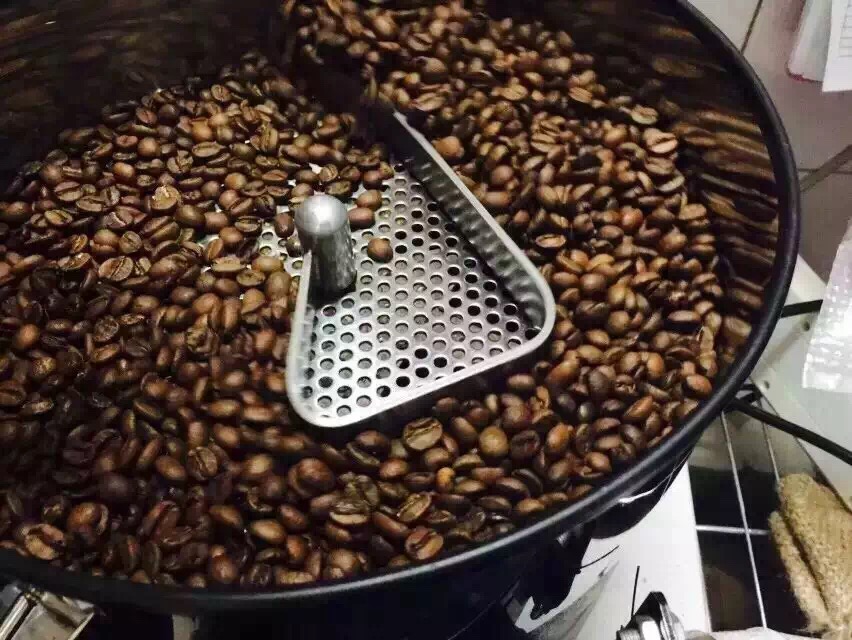
Holding the roast within the BRR range ensures desired reactions—but sucrose caramelizes above typical BRR temps. Avoid letting the coffee mass self-heat (exotherm), which leads to baked flavors by disrupting polymerization. Limiting maximum environment temperature (MET) protects cellulose structure: exceeding 536°F damages the matrix. Safer max is 520°F. Controlling MET preserves cup texture, roast yield, and shelf stability.
Frequently Asked Questions
What is the first crack in coffee roasting?
The first crack occurs around 356°F–392°F, when water and carbon dioxide build up and escape the bean, causing an audible pop. It marks the start of light roast levels and the onset of caramelization.
What temperature causes second crack?
Second crack happens at higher temperatures, typically when bean or surface temps exceed 446°F–536°F. It signals the fracturing of the cellulose-lignin matrix and is associated with darker roasts.
What is the Best Reaction Ratio (BRR) in coffee roasting?
The Best Reaction Ratio is the optimal balance between trigonelline degradation and nicotinic acid formation, controlled by time, temperature, and energy input. It’s most stable at an ambient temperature of around 405°F.
At what temperature does sucrose start caramelizing?
Sucrose begins caramelizing between 338°F and 392°F. This reaction is exothermic and contributes to flavor development and the first crack in roasting.
Why is trigonelline important in roasted coffee?
Trigonelline is a nitrogenous compound that contributes to bitterness. Around 85% of it degrades at 445°F, influencing the balance between bitterness and sweetness in the cup.
How does cellulose affect roast development?
Cellulose gives the coffee bean its structure. When exposed to high temperatures (above 446°F internally or 536°F on the surface), it begins to break down, impacting the bean’s physical integrity and influencing roast color and cup texture.
Recommended FrontStreet Beans for Roast Chemistry Study
Explore FrontStreet Coffee’s Ethiopia Humbera for bright, acidic complexity from balanced trigonelline breakdown; try Yirgacheffe for floral notes shaped by careful sugar caramelization; or go deeper with Black Cocoa Blend to study intense reactions in darker roasts. Each shows how reaction ratios influence real cup traits. Freshly roasted within 5 days · Orders placed before 17:00 ship the same day · Next-day delivery across most of Guangdong Province.
FrontStreet Coffee is a long-established specialty coffee roaster in Guangzhou China, selling freshly roasted beans from its own farm in Yunnan as well as dozens of carefully selected single-origin beans from around the world for both pour-over and espresso. The products deliver consistently excellent quality and great value, with shipping within 24 hours. Guangzhou's FrontStreet Coffee shop is recommended by many coffee lovers, and the beans are now available online at the Tmall 。
Important Notice :
前街咖啡 FrontStreet Coffee has moved to new addredd:
FrontStreet Coffee Address: 315,Donghua East Road,GuangZhou
Tel:020 38364473