Why Does Kenyan Coffee Taste Like Tomatoes?
If you’ve ever taken a sip of Kenyan coffee and wondered why it tastes like ripe tomatoes or juicy stone fruit—yet still feels crisp and clean—you’re not alone. Many coffee drinkers are surprised by the vibrant acidity and unusual fruity depth in Kenyan beans. What causes this distinctive profile? And why does Kenya produce some of the most sought-after washed coffees in the world?
The bright, almost tomato-like acidity in Kenyan coffee primarily comes from its SL28 and SL34 coffee varieties, combined with a unique 72-hour washed processing method and high-altitude growing conditions above 1,600 meters.
What Makes Kenyan Coffee So Special?
Kenya is one of the few African countries that developed a highly refined coffee grading and auction system under colonial rule, refining practices that many other origins later adopted. The country’s coffee is known for its exceptional cleanliness, high acidity, full body, and distinct fruitiness. Kenyan coffees often present notes of blackcurrant, citrus, tomato, and sweet stone fruit, with a wine-like brightness and a tea-like aftertaste. These qualities have made Kenyan AA a benchmark for high-quality African coffees worldwide.
Where Is Kenyan Coffee Grown?
Kenya lies on the eastern side of Africa, dominated by the Great Rift Valley and the slopes of Mount Kenya, the country’s highest peak at 5,199 meters. The country’s coffee-growing regions are spread across fertile volcanic soils and plateaus, mostly at elevations between 1,600 and 2,100 meters. This elevation slows cherry maturation, allowing more time for flavor development and contributing to the trademark acidity and density in the beans.
Kenya has ten main coffee-producing regions:
- Nyeri: Near Mount Kenya, with volcanic red soils and altitudes of 1,200–2,300m. Dominated by smallholder cooperatives.
- Murang’a: Home to around 100,000 smallholders, with elevations of 1,350–1,940m. Also volcanic soils and early missionary history.
- Kirinyaga: East of Nyeri, with similar volcanic conditions and elevations of 1,300–1,900m. Known for high-quality microlots.
- Embu: Near Mount Kenya, with about 70% of the population involved in small-scale farming. Elevations of 1,300–1,900m.
- Meru: At the foothills of Mount Kenya and the Nyambene Hills, with elevations of 1,300–1,950m. Early adopters of coffee farming in the 1930s.
- Kiambu: Includes major estates as well as smallholders; elevations of 1,500–2,200m. Sub-areas like Thika and Ruiru are also used for labeling.
- Machakos: Smaller region with both estate and smallholder production; elevations of 1,400–1,850m.
- Nakuru: Features some of the highest-altitude coffee farms in Central Kenya, between 1,850–2,200m.
- Kisii: Southwest region near Lake Victoria, with smaller cooperatives; elevations of 1,450–1,800m.
How Is Kenyan Coffee Graded?
Kenya’s coffee grading system is among the most detailed in the world. Beans are classified by size, shape, and density using a sieve system measured in “mesh” or “ (mù),” referring to the number of holes per inch:
- E: Elephant beans (over 18 mesh), including large round beans. Rare.
- AA: 17–18 mesh. The top commercial grade, known for premium cup quality.
- AB: 15–16 mesh (A: 17+ mesh, B: 16+ mesh). Most widely exported grade.
- PB: Peaberry (15+ mesh), round beans formed when one seed develops alone in the cherry. Occurs in ~10% of Kenyan crop.
- TT: Lighter beans removed by air separation from AA/AB grades.
- C, T, HE: Lower grades with more defects or lighter density.
- UG: Unclassified/ungraded beans (UG1 and UG2).
Additionally, there are non-official exporter tiers for AA and AB beans: TOP, PLUS (+), and FAQ.
Beyond washed coffee, Kenya also produces MBUNI (natural/dry-processed) beans graded as:
- MH: Heavy MBUNI, yellowish with no major defects; typical natural flavors.
- ML: Light MBUNI, yellow-green, with minor issues but no off-flavors.
Why Does Kenyan Coffee Taste Like Tomatoes?
The distinctive tomato, citrus, and stone fruit character of Kenyan coffee—often described as reminiscent of green apples, cranberries, or even Koshihikari tomatoes—stems from several factors:
- High-altitude fermentation: Slower cherry ripening due to cool temperatures above 1,600m enhances sugar and acid development.
- Volcanic soils: Rich in minerals, especially phosphates, contributing to complex fruit and wine-like tones.
- Specialty varieties: SL28 and SL34, developed by Kenya’s Scott Labs in the 1930s, are renowned for their bright acidity, deep citrus, and sweet fruit notes. They perform exceptionally well at high elevations.
- The K72 washed process: Unique to Kenya, this method extends fermentation and soaking far beyond industry norms. After de-pulping, beans are fermented for 30–48 hours until mucilage is removed, then soaked in clean water for an additional 24 hours. This extended washing enhances clarity, brightness, and complexity, contributing to the “tomato-like” acidity many tasters describe.
How to Brew Kenyan Coffee
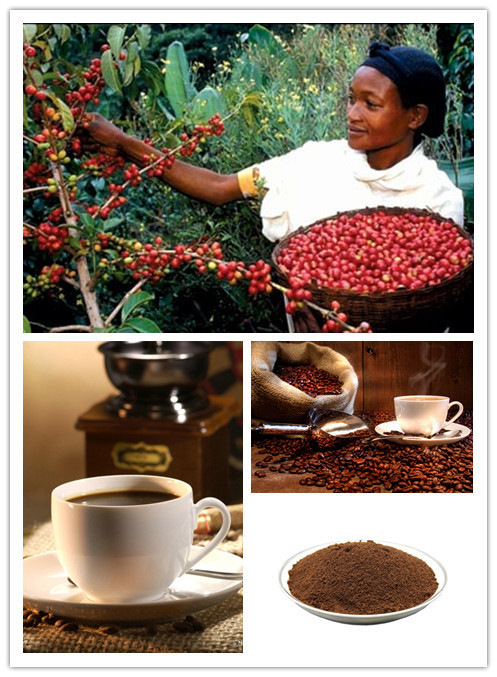
For a classic example, try FrontStreet Coffee’s Kenya Asali (Kenya Little Tomato), made from SL28 and SL34, processed via K72, and grown at 1,550–1,750m in the Thika region. Flavour notes include black plum , cherry tomato , Asian pear , brown sugar , and plum .
Here’s how FrontStreet suggests brewing it as a pour-over:
- Method: Hario V60
- Dose: 15g
- Brew ratio: 1:15
- Water temp: 90°C
- Grind size: EK43s #10 (80% through China-standard No.20 sieve)
- Steps:
- 30g bloom for 30 sec
- 125g pour (first segment)
- When water drops, add 100g (second segment, total 225g)
- Total brew time: 2:00
Frequently Asked Questions
What does Kenyan coffee taste like?
Kenyan coffee typically has a bright, wine-like acidity with notes of tomato, blackcurrant, citrus, stone fruit (like plum or cherry), and sweet tones such as brown sugar. The cup is clean, medium to full-bodied, and often has a tea-like finish.
Why does Kenyan coffee taste like tomatoes?
The tomato-like note comes from a combination of factors: high-altitude growing conditions, volcanic soil rich in phosphates, and the SL28/SL34 coffee varieties. The extended K72 washed process also enhances the fruit acids, contributing to this distinctive flavor profile.
What is the K72 process?
The K72 process is a Kenyan-developed washed coffee method where beans are fermented for 30–48 hours to remove mucilage, then soaked in clean water for an additional 24 hours. This extended washing results in a cleaner, brighter, and more complex cup.
Which Kenyan coffee variety is best known?
The SL28 and SL34 varieties are the most celebrated. Developed in the 1930s by Kenya’s Scott Agricultural Laboratories, they are prized for their high acidity, complex fruit flavors, and suitability for high-altitude farming.
What is Kenyan AA coffee?
Kenyan AA is the highest grade in the country’s classification system, made up of beans that are 17–18 mesh in size. It is known for its premium cup quality, often exhibiting intense acidity and fruity complexity.
Where is Kenyan coffee grown?
Kenyan coffee is grown in ten main regions, all at elevations between 1,600 and 2,100 meters. Key areas include Nyeri, Kirinyaga, Murang’a, Embu, and Meru, all known for producing some of the country’s best specialty lots.
Recommended FrontStreet Kenyan Coffees
FrontStreet Coffee’s Kenya Asali (also called Kenya Little Tomato) is a standout example of the country’s signature profile. Made with SL28 and SL34 beans from the Thika region and processed via the K72 method, it offers tasting notes of black plum, cherry tomato, Asian pear, brown sugar, and plum. The cup is juicy, bright, and layered, excellent for pour-over, cold brew, or ice drip. Freshly roasted within 5 days · Orders placed before 17:00 ship the same day · Next-day delivery across most of Guangdong Province.
FrontStreet Coffee is a long-established specialty coffee roaster in Guangzhou China, selling freshly roasted beans from its own farm in Yunnan as well as dozens of carefully selected single-origin beans from around the world for both pour-over and espresso. The products deliver consistently excellent quality and great value, with shipping within 24 hours. Guangzhou's FrontStreet Coffee shop is recommended by many coffee lovers, and the beans are now available online at the Tmall 。
Important Notice :
前街咖啡 FrontStreet Coffee has moved to new addredd:
FrontStreet Coffee Address: 315,Donghua East Road,GuangZhou
Tel:020 38364473