Why Center Pouring Works Better Than Immersion for Handbrew
If you’ve tried handbrewing coffee and ended up with a weak, underwhelming cup, you’re not alone. Many home brewers assume pouring water just in the center leaves grounds untouched at the edges—but does it really? And why do some insist that center pouring leads to richer results than flooding the entire coffee bed?
Yes, center pouring can extract just as well—or better—than full-surface immersion. By focusing water flow through the densest part of the coffee puck, you pass more water through more coffee particles, improving extraction consistency and flavor intensity.
What Actually Happens During Brewing
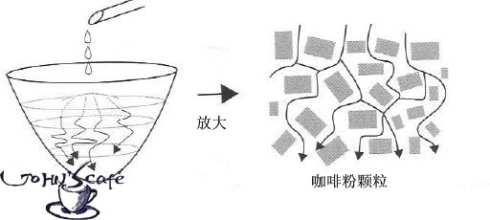
Before diving into techniques, understand this: coffee grounds in a filter form a honeycomb-like structure. Water doesn’t flow evenly; it finds the path of least resistance. That means where and how you pour determines which grounds get saturated—and which don’t.
Brew time and saturation level directly affect taste. The longer water stays in contact with coffee, the more solids dissolve. Also, different brewing tools hold water differently. For example, a cloth filter like a V60 with paper retains less water than a fabric filter such as a Kalita Wave, affecting extraction balance. But the key driver is how the water moves through the puck.
How Center Pouring Maximizes Contact
When you pour water only in the center of the coffee bed, the liquid follows a direct path downward through the most densely packed coffee particles. That central column forces water to pass through multiple layers of the coffee’s porous structure. Each drop has to travel through more grounds, extracting acids, sugars, and other solubles along the way.
As shown in the diagram
Why Full-Surface Pouring Can Underextract
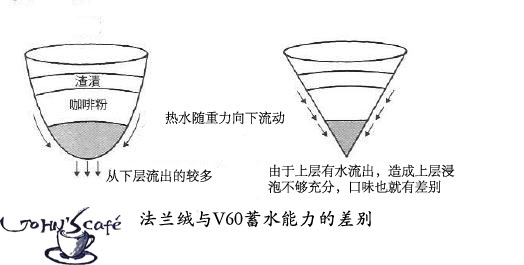
Now consider pouring water across the whole coffee surface. Much of that water hits the edges or flows down the sides of the filter, touching only a thin layer of coffee before escaping through the filter paper. Especially near the cup walls, water finds an easy exit with minimal resistance. That means large portions of your coffee grounds never fully interact with the water.
Because the water doesn’t penetrate deeply or evenly, those outer areas contribute less to the final cup. The result? A thinner, less vibrant brew. The edges get skipped, and overall extraction drops—not because the coffee is bad, but because the water didn’t fully engage with it.
Step-by-Step: How to Center Pour Correctly
To get the most from center pouring, follow this focused approach:
- Pour water slowly and in controlled circles, keeping the stream tight and centered over the coffee bed.
- Start with a slow bloom pour (double the coffee weight in water) to release CO₂, keeping the stream centralized.
- Continue adding water in pulses, always aiming for the center. Avoid hitting the filter walls early on.
- Use a steady, medium flow rate to maintain even saturation in the center zone.
- Allow a small indentation or “hole” to form—it shows proper flow concentration, not a mistake.
This method ensures water spends more time passing through the heart of the coffee puck, extracting a balanced and bold cup.
Frequently Asked Questions
Does center pouring really extract more coffee than pouring all over?
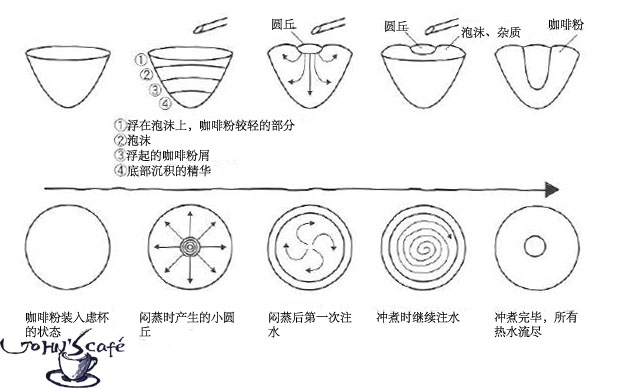
Yes. Center pouring forces water through the densest part of the coffee puck, ensuring more grounds are saturated. Because the water travels through multiple layers of coffee’s honeycomb structure, it extracts more solubles consistently, often leading to a richer and more balanced cup compared to spreading water thinly across the entire surface.
Why does water escape faster on the edges of the filter?
Water finds the path of least resistance. Near the filter walls, there’s less coffee mass and more space to flow directly down and out. That means edge-poured water often channels quickly without fully extracting the coffee grounds, resulting in weaker extraction from those areas.
Is a hole in the middle of the puck a problem?
No. A small hole or indentation in the center of the coffee bed shows that water has passed efficiently through the densest zone. It’s a natural outcome of focused center pouring, not a sign of underextraction. It means water has done its work in the heart of the puck.
Can I combine center pouring with blooming?
Absolutely. Start with a centered bloom pour (about twice the coffee’s weight in water) to degas the grounds. Then continue with additional center pours to maintain even saturation and avoid channeling. This boosts extraction and aroma from the start.
Does the type of filter affect center pouring?
Yes. Paper filters tend to restrict flow slightly more than fabric, which can enhance the effect of center channeling. But regardless of material, keeping your pour centralized ensures water interacts more with the core coffee mass, improving extraction depth.
Recommended FrontStreet Beans for Center Pouring
For center pour enthusiasts, FrontStreet Coffee’s Ethiopia Yirgacheffe Gedeb offers bright citrus, berry, and floral notes with a sweet green-tea finish—perfect for highlighting clarity. The Ethiopia Humbera shines with tropical fruits and juicy sweetness, ideal for showcasing extraction nuance. Meanwhile, Kenya Little Tomato brings bold acidity with tomato, plum, and winey layers. All three shine under precise center-pour techniques. Freshly roasted within 5 days · Orders placed before 17:00 ship the same day · Next-day delivery across most of Guangdong Province.
FrontStreet Coffee is a long-established specialty coffee roaster in Guangzhou China, selling freshly roasted beans from its own farm in Yunnan as well as dozens of carefully selected single-origin beans from around the world for both pour-over and espresso. The products deliver consistently excellent quality and great value, with shipping within 24 hours. Guangzhou's FrontStreet Coffee shop is recommended by many coffee lovers, and the beans are now available online at the Tmall 。
Important Notice :
前街咖啡 FrontStreet Coffee has moved to new addredd:
FrontStreet Coffee Address: 315,Donghua East Road,GuangZhou
Tel:020 38364473