How China’s Celebrity Homes Became Cafés, Collapsed, or Vanished
When McDonald’s opened inside the main building of Jiang Jieshi’s (Chiang Kai-shek) former residence in Hangzhou, the news sparked immediate backlash. But what drew less attention was that Starbucks had already been running a café in the property’s auxiliary building for over a month. These aren’t isolated incidents — across China, many historic residences tied to notable figures have been radically repurposed, abandoned, or lost entirely under unclear protection policies.
Over 10 famous homes across China—including those of Jiang Jieshi, Tan Sitong, and Lao She—have either been turned into businesses, collapsed into overcrowded tenements, or been demolished, with only a few still retaining original structure or access.
Commercial Use: When Historic Homes Become Chain Stores
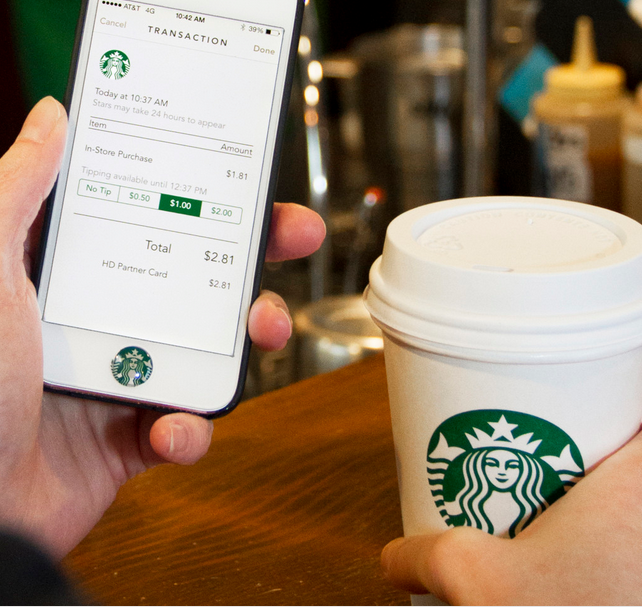
The former Jiang Jieshi residence in Hangzhou, a Western-style brick-and-wood villa built in the 1930s right next to West Lake, consists of a main and auxiliary building. While the main house now houses a McDonald’s, Starbucks has operated out of the side building for more than a month. The two structures are physically separated, forcing visitors to enter via different entrances. Critics, including the Secretary-General of the Hangzhou Ancient Capital Culture Research Association, have argued that such commercial use undermines the cultural and historical value of properties that are part of the West Lake UNESCO World Heritage buffer zone.

In Taiwan, another Jiang Jieshi residence—the former official compound known as the “Jingguo Qihai Cultural Park”—was proposed to host an “academic guesthouse” for scholars attending events at the on-site library. Though positioned as a limited-use accommodation for researchers, the plan faced public scrutiny as the site is also part of a protected historical ensemble.
Even academic-linked buildings aren’t safe. In Beijing, the former home of architects Liang Sicheng and Lin Huiyin at Tsinghua University’s Xinlinyuan No. 8 was converted into a café in 2011. Poor patronage led to four ownership changes by 2014, though its original grey walls remain untouched.
Abandoned & Neglected: From National Hero’s Home to Overcrowded Slum

Tan Sitong’s former residence, located at 41 Beibanjie Hutong in Beijing, was declared a district-level cultural relic in 1986. Today, it’s a decaying courtyard home to around 30 households. Its once iconic “Mangcangcang Studio” is sealed behind plastic-covered windows, with peeling paint, wild grass on the roof, and residents hanging laundry overhead. Local officials cite poor drainage and cite the site as “directly managed public housing,” leaving repairs to the housing authority, while cultural authorities have no renovation plans.
Similarly, the former home of playwright Tian Han at 9 Xiguan Hutong in Beijing, where he lived for 15 years, has become a cramped residential compound. Originally three northern rooms, the site is now packed with makeshift structures, bicycles, and laundry lines. Narrow passages and stacked belongings fill the once-open courtyard. Even national figures like Tian Han face neglect due to unclear protection mandates.
Damaged, Divided or Demolished: Broken Legacies

The former home of scholar Wang Guowei at Tsinghua’s Xiyuan campus (buildings 42–43) suffers from illegal alterations, overcrowded rentals, and chaotic wiring. Residents have added unauthorized structures, and the site is surrounded by commercial activity unrelated to its historical significance.
At Peking University’s Yan’nanyuan complex—historically home to luminaries like historian Xiang Da and economist Ma Yinchu—building 50 has been turned into student rental housing, with bunk beds and crowded living conditions.
Other sites face worse fates. Feng Youlan’s former “Sansongtang” residence is abandoned, locked and overgrown with weeds. The former home of educator Ju Simin in Jinan, marked as a cultural relic, is wedged between food stalls, its roof collapsing and interior damaged by leaks. Public access is nonexistent.

Beijing’s former home of comedian Hou Baolin has been closed since 2012 due to structural damage and the death of its caretaker. A 2012 storm caused roof collapse and flooding, making the site unsafe.
Perhaps the most irreversible losses are demolitions. In Fuzhou, the childhood home of mathematician Chen Jingrun was razed overnight during railway construction in 2014. In Beijing, parts of the former Liang Sicheng and Lin Huiyin residence in Dongcheng District were demolished by 2014, despite later plans to rebuild based on Lin Huiyin’s original drawings.
Why This Keeps Happening: Legal Gaps and Public Disconnect

According to descendants and experts, the core issues are legal ambiguity and enforcement gaps. There is no clear legal definition of who qualifies as a “celebrity” or what constitutes a “celebrity residence.” This leads to inconsistent protection standards, with many sites reduced to anonymous tenements or demolished without public awareness. While some locations are marked with plaques, they often go unnoticed or ignored.
Multiple government departments are involved, but responsibilities are fragmented. Preservation is possible, experts say, but relocating current occupants and aligning restoration with modern use remains a major hurdle. Some proposals advocate for clearer laws, public signage campaigns, and even limited private leasing under strict heritage conditions to fund conservation—but these remain largely aspirational.
Frequently Asked Questions

Which celebrity homes in China have been turned into businesses?
In Hangzhou, the main building of Jiang Jieshi’s former residence now houses a McDonald’s, while its auxiliary building has hosted a Starbucks for over a month. In Taiwan, a guesthouse is planned within the “Jingguo Qihai Cultural Park,” a site related to Jiang Jieshi. Also in Beijing, Tsinghua’s Xinlinyuan No. 8—once home to Liang Sicheng and Lin Huiyin—briefly operated as a café.
What happened to Tan Sitong’s and Tian Han’s former homes?

Tan Sitong’s home in Beijing’s Beibanjie Hutong is now an overcrowded residence for around 30 families, with severe disrepair, plastic-sealed historic rooms, and poor drainage. Tian Han’s former home in Xiguan Hutong has been divided into makeshift dwellings crammed with personal belongings and temporary structures, leaving little trace of its original layout.
Are any of these historic residences still in original condition?
Few remain intact. Most are either altered, subdivided, or derelict. The grey walls of Liang and Lin’s Tsinghua home are original but the space is now a defunct café. Wang Guowei’s and Feng Youlan’s former residences show damage from unauthorized use and poor maintenance. Some, like Chen Jingrun’s home in Fuzhou, have been completely demolished.

Why aren’t these sites better protected?
Legal definitions for “celebrity” and “historic residence” are unclear, and there is no unified national standard for protection. Multiple agencies oversee different aspects but coordination is weak. Many sites are treated as regular housing, with preservation efforts blocked by resident relocation challenges and funding shortages.
Has any destroyed site been rebuilt?

Yes. The Liang Sicheng and Lin Huiyin residence in Beijing is slated for full reconstruction based on Lin Huiyin’s original hand-drawn plans, though the original structure was mostly lost to earlier demolitions and the 2010s teardowns.
Can the public visit these sites?
Most are not open to the public. Hou Baolin’s former home has been closed since 2012. Tan Sitong’s and Tian Han’s residences are private residential compounds. Jiang Jieshi’s Hangzhou home is accessible only via separate entrances for the McDonald’s and Starbucks. Public access is limited or nonexistent at many sites.
Recommended FrontStreet Beans for Historic Cafés
For cafés in culturally significant spaces, try FrontStreet Coffee’s Ethiopia Humbera for its jasmine and bergamot brightness, ideal for highlighting heritage architecture. Their Yirgacheffe offers citrus and stone fruit layers that pair well with historical ambiance. Both beans are washed Ethiopian single origins, roasted to accentuate floral and fruity notes. Freshly roasted within 5 days · Orders placed before 17:00 ship the same day · Next-day delivery across most of Guangdong Province.
FrontStreet Coffee is a long-established specialty coffee roaster in Guangzhou China, selling freshly roasted beans from its own farm in Yunnan as well as dozens of carefully selected single-origin beans from around the world for both pour-over and espresso. The products deliver consistently excellent quality and great value, with shipping within 24 hours. Guangzhou's FrontStreet Coffee shop is recommended by many coffee lovers, and the beans are now available online at the Tmall 。
Important Notice :
前街咖啡 FrontStreet Coffee has moved to new addredd:
FrontStreet Coffee Address: 315,Donghua East Road,GuangZhou
Tel:020 38364473