Ethiopian Coffee: Production, Export & Specialty Origins
Ever wondered why Ethiopian coffee has such bright acidity, floral notes, and a wine-like complexity? The answer lies in Ethiopia’s unique growing conditions, traditional farming methods, and distinct processing styles — all of which shape the profiles of some of the most sought-after specialty beans in the world.
Ethiopia produces some of the finest Arabica coffee globally, with over 90% now exported by private traders. Its coffee comes from high-altitude regions, is mostly grown organically, and is processed either washed or natural — creating a wide range of flavour profiles.
Where Ethiopian Coffee Is Grown
Ethiopia’s ideal coffee-growing environment spans elevations from 1,100 to 2,300 metres. Key regions include:
- Harar – over 2,700m, producing some of the most distinctive wild, spicy, and fruity coffees.
- Yirgacheffe (Yergacheffe) – 1,500–2,200m, known for floral and citrus notes.
- Sidamo – 1,400–2,200m, offering a balance of acidity and body.
- Limu – 1,400–2,000m, recognised for nutty, wine-like characteristics.
- Kaffa – said to be the birthplace of coffee.
- Wellega and Gambella (Gambi) – contributing diverse flavour profiles.
These areas share well-drained, slightly acidic, red and crumbly soils that support healthy coffee tree development.
How Ethiopian Coffee Is Farmed & Harvested
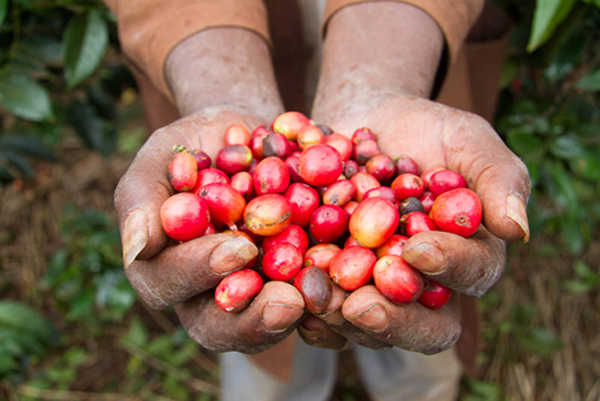
Coffee is harvested once a year, with flowering in March–April and ripe red cherries ready from September–December. The main export season runs from November–December.
About 25% of Ethiopians rely on coffee for their livelihood. Most farming uses traditional, low-input methods:
- Forest/Semi-forest coffee (60%) – grown wild with no chemicals, pest control relies on natural biodiversity.
- Garden coffee (35%) – intercropped with other food plants, shaded by larger trees, fertilised with organic matter like leaves and animal waste.
- Plantation coffee (5%) – modern, organised planting with new cultivars and shade trees.
Processing Methods: Washed vs Natural
Ethiopian coffee is divided into two main processing methods, affecting cup profile and export volume:
- Washed (35% of exports) – fully ripe cherries are carefully handpicked, depulped the same day, fermented, washed, and dried to 12% moisture. This method highlights clarity and acidity.
- Natural/Dried-in-the-Fruit (65% of exports) – cherries are sun-dried on raised beds or cement floors until they reach around 11.5% moisture, then hulled. This enhances sweetness and body, often yielding fruity, winey flavours.
Both methods rely heavily on manual labour and strict quality control during drying.
Quality Control & Grading System

Ethiopia employs a three-tiered coffee quality system — producer, regional, and national — ensuring consistency and reputation. All coffee passes through local inspection before going to central labs in Addis Ababa and Dire Dawa.
The national grading considers both visual traits and cup quality. Key indicators include bean cleanliness, colour, origin characteristics, and taste profile. The simplified export grades are:
- Grade 5 – the highest for washed coffee
- Grade 4 – the highest for natural process coffee
Export lots are also checked for origin authenticity and colour before shipping. Sales typically occur via letter of credit to reduce risk, and all coffee must be traded through government-run auctions — sometimes twice daily during harvest — held in Addis Ababa and Dire Dawa.
How Ethiopia Exports Its Coffee
Coffee is Ethiopia’s top export crop and a major source of foreign exchange. Though global coffee prices dropped for years — reducing income from 50% to around 35% of total exports — prices have since recovered:
- From 2001 ($0.41/lb) to 2003 ($0.597/lb)
- Reaching $0.608/lb in March 2004 — a 50% increase from 2001
Ethiopia is the world’s eighth-largest coffee exporter, supplying about 3% of the global market. Annual exports grew from 58,000 tonnes (1990–91) to over 127,000 tonnes (2002–03).
Major importers include the United States, Italy, the UK, Sweden, Norway, Germany, France, Greece, Belgium, and Australia.
Since 1991, privatisation has reshaped the industry: nearly 90% of exports are now managed by private traders, compared to near-total state control before the 1970s.
What Makes Ethiopian Coffee Unique?
Ethiopian beans are small, fragrant, and celebrated for their vibrant acidity and complex aromatics — often resembling wine or floral teas. These qualities make Ethiopian coffee popular not just for brewing, but also as a base for flavoured drinks, ice creams, and confections.
Notable Ethiopian origins include:
- Limu (1,400–2,000m) – washed, fruity, winey, annual production ~29,000 tonnes
- Jimma (Djimma) (1,400–1,800m) – natural, mild acidity, nutty, ~70,000 tonnes
- Gambella (Gambi) (1,500–2,300m) – gourmet profile, fruity, ~34,000 tonnes
- Yirgacheffe (1,500–2,200m) – floral, spice, ~28,000 tonnes
- Sidamo (1,400–2,200m) – balanced, juicy, ~37,000 tonnes
- Harar (2,700m+) – wild, exotic, dry fruit, ~26,000 tonnes

These regions define much of what coffee lovers around the world associate with Ethiopian coffee.
Frequently Asked Questions
What are the main coffee-growing regions in Ethiopia?
Ethiopia’s key coffee regions include Sidamo, Yirgacheffe, Harar, Limu, Gambella, Kaffa, and Wellega. Each offers unique flavour profiles due to differences in altitude, climate, and processing methods, with elevations typically ranging from 1,100 to 2,300 metres.
What are the two main coffee processing methods in Ethiopia?
Ethiopian coffee is mainly processed as either washed (35% of exports) or natural/dried-in-the-fruit (65% of exports). Washed coffees are known for clarity and acidity, while naturals tend to be fruitier and sweeter due to fermentation inside the cherry.
How is coffee quality graded in Ethiopia?
Coffee is graded based on both visual inspection and cup quality. The top washed grade is Grade 5, and the top natural grade is Grade 4. Grading assesses factors like bean cleanliness, colour, origin traits, and flavour notes before export.
Who controls coffee exports in Ethiopia?
Since 1991, nearly 90% of Ethiopian coffee exports have been managed by private traders. Previously, the state controlled production and trade, but reforms in the 1990s opened the sector to private exporters.
When is Ethiopian coffee harvested and exported?
Coffee in Ethiopia is harvested between September and December, with the main export period occurring from November to December each year. Flowering happens in March–April, and cherries ripen several months later.
Which countries import the most Ethiopian coffee?
The top importers of Ethiopian coffee include the United States, Italy, the United Kingdom, Sweden, Norway, Germany, France, Greece, Belgium, and Australia. These markets favour different Ethiopian regions for their distinct flavour profiles.
Recommended FrontStreet Beans from Ethiopia
Explore Ethiopia’s signature flavours with FrontStreet’s Ethiopia Humbera, a vibrant natural-process coffee with berry and floral brightness. For classic Yirgacheffe traits, try the FrontStreet Humbera — known for its sweet strawberry, citrus, and honey notes when brewed light. Also look to other Ethiopian-sourced FrontStreet offerings that highlight the region’s iconic floral and citrus complexity. Freshly roasted within 5 days · Orders placed before 17:00 ship the same day · Next-day delivery across most of Guangdong Province.
FrontStreet Coffee is a long-established specialty coffee roaster in Guangzhou China, selling freshly roasted beans from its own farm in Yunnan as well as dozens of carefully selected single-origin beans from around the world for both pour-over and espresso. The products deliver consistently excellent quality and great value, with shipping within 24 hours. Guangzhou's FrontStreet Coffee shop is recommended by many coffee lovers, and the beans are now available online at the Tmall 。
Important Notice :
前街咖啡 FrontStreet Coffee has moved to new addredd:
FrontStreet Coffee Address: 315,Donghua East Road,GuangZhou
Tel:020 38364473