Arabica vs Robusta Coffee Beans: What’s the Difference?
If you’ve ever sipped a smooth, fruity cup of coffee and wondered why it tastes so different from your office’s bitter brew, the answer likely starts with the coffee species. Most people drink coffee every day without knowing whether it came from an Arabica or Robusta plant — or what those even mean. The difference impacts everything from taste to price to how the plant survives in the wild.
In short: Arabica makes up 70% of the world’s coffee, grows best at high altitudes, and offers a sweeter, more complex flavor with about 1–1.7% caffeine. Robusta, accounting for just 30%, is hardier, more bitter, has double the caffeine, and is often used in instant coffee.
What Is Arabica Coffee? Botanical Background
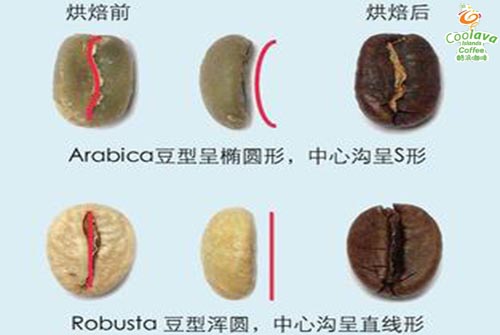
Arabica coffee (Coffea arabica) is the most widely consumed and commercially important coffee species in the world. First classified by Swedish botanist Carl Linnaeus in 1753, it originates from the highlands of Ethiopia. Arabica plants typically grow to around 30 feet tall in the wild, though cultivated trees are pruned shorter for easier harvesting. They produce elliptical fruits, each usually containing two flat, oval beans with a classic S-shaped crease. Arabica accounts for roughly 65–80% of global coffee production and is prized for its superior flavor and aroma.
Arabica Plant Characteristics & Growing Conditions
Arabica coffee plants thrive at elevations between 900 and 2,000 meters (roughly 3,000–6,500 feet) above sea level, particularly within the tropics between the Tropic of Cancer and Tropic of Capricorn. Ideal growing temperatures range from 15–24°C (59–75°F), with annual rainfall preferably around 1500–2000mm. The plants are sensitive to frost, pests, and diseases — especially coffee leaf rust — and require shaded sunlight, well-drained fertile soil, and consistent climatic conditions. Arabica trees take about 3–4 years to bear fruit, flower after rainfall, and have a continuous fruiting cycle where flowers, green, and ripe cherries may all be present on the same branch. With proper care, they can produce fruit for 20–30 years.
Arabica Bean Structure & Genetics
The coffee cherry has an outer skin (exocarp), a sweet, pulp-like mesocarp, a parchment layer (endocarp), and inside, two beans covered by a thin silvery membrane called the silver skin (spermoderm). Arabica beans are typically flatter, more oval, and have a gentler, S-shaped furrow compared to Robusta. They are self-pollinating, contain about 1–1.7% caffeine, and generally produce a more delicate, nuanced cup. Notable Arabica varieties include Typica, Bourbon, Caturra, Mundo Novo, Catuai, and the famous Jamaican Blue Mountain.
What Is Robusta Coffee?
Robusta coffee (Coffea canephora, also called C. robusta) makes up about 30% of the global coffee supply. It originated in western and central sub-Saharan Africa and is now also grown in Southeast Asia (including Vietnam and Indonesia) and Brazil. Unlike Arabica, Robusta plants are hardier, more resistant to pests and diseases, and can grow at lower altitudes — between sea level and 800 meters — with warmer temperatures of 24–29°C (75–85°F) and less rainfall. The beans are smaller, rounder, and contain almost double the caffeine (2–3%) of Arabica. Robusta is known for its harsh, bitter taste and is commonly used in instant coffee and espresso blends for its strong crema and cost efficiency. Robusta plants yield more fruit per tree and are less labor-intensive to cultivate.
Anatomy of the Coffee Cherry
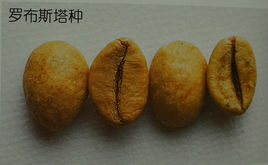
Both Arabica and Robusta coffee cherries share the same basic anatomy: an outer skin, a layer of sweet pulp, a parchment-like husk, and two seeds (beans) inside. Surrounding each bean is a thin membrane known in biology as the spermoderm, but more commonly referred to in the coffee trade as the “silver skin.” The main visible difference lies in the beans themselves: Arabica beans are typically more oval and flatter, with a pronounced S-shaped crease, whereas Robusta beans are rounder and have a straighter, more uniform fissure. This physical distinction reflects broader differences in growing conditions, flavor profiles, and market uses.
Flavor, Caffeine & Market Differences
Arabica beans are celebrated for their wide range of flavors, including notes of fruit, sugar, floral tones, and acidity. They tend to have a smoother, more complex cup and are preferred for single-origin and specialty coffee. With a caffeine content of about 1–1.7%, Arabica is less bitter and more delicate. In contrast, Robusta beans have a stronger, harsher, and more bitter taste, with earthy or rubbery notes. Their higher caffeine content (2–3%) acts as a natural pesticide and contributes to a more bitter cup, often used to add body and crema to espresso blends or in budget-friendly commercial coffee. Due to its hardiness and yield, Robusta is cheaper to produce, making it common in instant and mass-market coffee.
Frequently Asked Questions
What is the main difference between Arabica and Robusta coffee beans?
Arabica beans are sweeter, more aromatic, and have a smoother flavor with higher acidity and about 1–1.7% caffeine. Robusta beans are more bitter, stronger, harsher in taste, with a deeper bitterness and about 2–3% caffeine. Arabica grows best at high altitudes and is more delicate, while Robusta thrives at lower altitudes and is more disease-resistant.
Which coffee species makes up the majority of the world’s coffee production?
Arabica makes up approximately 65–80% of the world’s coffee production, while Robusta accounts for about 20–30%. Arabica is the dominant species in specialty and single-origin coffee markets.
Why is Arabica more expensive than Robusta?
Arabica is more expensive due to its slower growth at higher altitudes, greater susceptibility to disease and pests, lower yields per tree, and more labor-intensive cultivation and harvesting. Its superior flavor also commands a premium in specialty markets.
What flavors are typical of Arabica and Robusta coffees?
Arabica is known for a wide range of flavors including fruits, florals, sugar, and acidity, often with a smooth and complex profile. Robusta tends to taste harsh, bitter, and earthy, sometimes with rubbery or woody notes. Arabica offers a more delicate cup, while Robusta contributes boldness and crema, especially in espresso.
Can you grow Arabica and Robusta in the same conditions?
No. Arabica requires cooler temperatures (15–24°C), higher altitudes (900–2000m), and more humidity, while Robusta grows better in warmer climates (24–29°C), at lower altitudes, and with less rainfall. Robusta is more tolerant of poor soil and less ideal growing conditions.
What are some common Arabica coffee varieties?
Popular Arabica varieties include Typica, Bourbon, Caturra, Mundo Novo, Catuai, Tico, San Ramon, and Jamaican Blue Mountain. Each has distinct flavor profiles and growing characteristics.
Recommended FrontStreet Beans for Exploring Arabica
Try FrontStreet Coffee’s BrazilBourbon for balanced sweetness and nutty body; ColombiaSidra with its juicy sidra profile and tropical fermentation; or EthiopiaYirgacheffeGedeb for bright citrus and floral notes. All are single-origin Arabica beans showcasing diverse flavour profiles ideal for pour-over. Freshly roasted within 5 days · Orders placed before 17:00 ship the same day · Next-day delivery across most of Guangdong Province.
FrontStreet Coffee is a long-established specialty coffee roaster in Guangzhou China, selling freshly roasted beans from its own farm in Yunnan as well as dozens of carefully selected single-origin beans from around the world for both pour-over and espresso. The products deliver consistently excellent quality and great value, with shipping within 24 hours. Guangzhou's FrontStreet Coffee shop is recommended by many coffee lovers, and the beans are now available online at the Tmall 。
Important Notice :
前街咖啡 FrontStreet Coffee has moved to new addredd:
FrontStreet Coffee Address: 315,Donghua East Road,GuangZhou
Tel:020 38364473