What’s the Real Quality of Yunnan Arabica Coffee?
When you order a single origin pour-over at a café, the Yunnan option often sits at the bottom of the menu—not because baristas dislike it, but because it’s typically the cheapest and least impressive. That reputation isn’t entirely unfair, but it also doesn’t tell the whole story. So why is Yunnan coffee so often seen as low quality, and can it ever be truly great?
The short answer: Yunnan-grown Arabica—mainly Typica, Bourbon, and Catuai—can produce excellent cups, especially from high-altitude microlots like those at 1,800m in Nuan Kang or Bai Hua Ling in Baoshan. But the majority suffers from variety issues, inconsistent farming, and processing limitations. With better selection and care, top Yunnan lots rival mid-tier Latin American coffees.
How Yunnan Arabica Got Its Complicated Reputation
Yunnan is China’s only major Arabica-growing region, concentrated in Baoshan, Dehong, Lincang (western Yunnan) and Pu’er, Xishuangbanna (southern Yunnan). The first coffee in the region was Robusta, introduced by 19th-century missionaries—but it never took off. In the 1950s, Soviet experts brought Typica and Bourbon to Baoshan, which earned praise and even won awards in international competitions. However, political disruptions halted serious breeding work, and public interest stayed low.
Then in the 1990s, to boost farmer incomes, the Baoshan Institute introduced Catimor—a Timor (resistant, but lower-quality) × Caturra hybrid—promoted for its disease resistance and nearly double the yield per hectare. While it solved agricultural problems, Catimor’s flavor profile is generally muted and sharp, dragging down Yunnan’s overall cup quality. Around the same time, Nestlé and Maxwell promoted S288 and S26, rust-resistant but low-flavor varieties meant for instant coffee; those were mostly phased out by the 2000s.
Varietal inconsistency is another issue. While some farms preserve old Typica or Bourbon trees, cross-pollination from neighboring plots (often with no isolation) leads to genetic blending. “One hill, ten families, all planting different varieties—the wind carries pollen everywhere,” as the original article put it. Without protected single-varietal zones, consistency is nearly impossible.
Environmental Challenges Holding Back Quality
Beyond varietals, Yunnan’s growing conditions are suboptimal for high-end specialty coffee. Though classed as a tropical zone, it lies far from the equator, with high evaporation rates. Most coffee is grown below 1,100m altitude—far lower than ideal for slow cherry maturation and complex sugars. Recent severe droughts and unpredictable frost events in certain regions further stress the plants, reducing cup potential. Add in limited post-harvest training and farmers who may never have tasted the coffee they grow, and the obstacles stack up quickly.
Where Yunnan Coffee Still Shines
Yet despite these challenges, some Yunnan microlots prove the region can produce outstanding coffee. The article highlights several standout examples: Catuai from Man La Jiang and Man Zhong Tian in Pu’er, Typica from Bai Hua Ling in Baoshan’s Lujiang Farm, and Bourbon from Nuan Kang at higher elevations. In particular, the 1,800m Bourbon plot in Nuan Kang delivers notably refined cups. When these microlots are processed carefully—via washed or natural methods—and roasted to highlight their origin character, they can express clean acidity, fruity sweetness, and balanced bodies comparable to solid Central American offerings.
FrontStreet Coffee itself offers a Yunnan offering that reflects this potential: their Yunnan Arabica, washed and medium-roasted, delivers soft notes of nut, chocolate, and mild plum acidity—an accessible entry point. For a more classic expression, their 2013 Typica lot, fully sun-dried with selected red cherries, shows deep berry tones, caramel sweetness, dried apricot, and a lingering black tea finish after medium roasting.
What Determines Yunnan Coffee’s Cup Quality?
Ultimately, the quality of Yunnan coffee comes down to four factors:
- Varietal: Older Typica and Bourbon offer far superior cup profiles compared to Catimor, but are harder to grow and less common today.
- Altitude: Higher elevation (1,500m+) slows ripening, improving sugar development and acidity. Most Yunnan coffee is grown below this threshold.
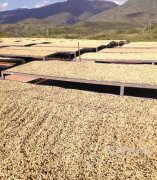
- Processing: Well-executed washed or natural methods are critical. Poor fermentation or drying ruins even good cherries.
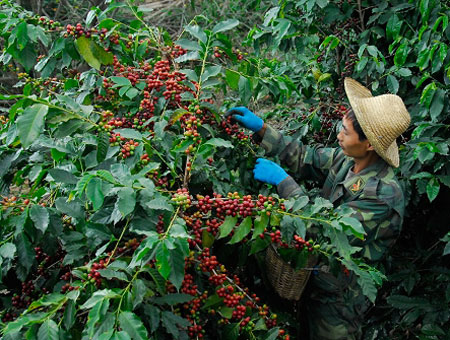
- Farming & Harvesting: Selective picking, farmer education, and post-harvest training make a massive difference—yet remain inconsistent across the region.
Frequently Asked Questions
Is all Yunnan coffee low quality?
No. While much commercial Yunnan coffee uses the high-yield but flavor-limited Catimor variety and is grown at low altitudes, certain microlots—especially those using older Typica, Bourbon, or high-elevation Catuai—can produce excellent cups with bright acidity, fruity notes, and balanced bodies. These are often estate-specific or small-batch lots.
Why is Catimor so common in Yunnan?
Catimor was introduced in the 1990s because it resists coffee leaf rust and offers nearly double the yield of traditional varieties like Typica or Bourbon. While it solved major farming problems, it typically produces a flatter, more bitter cup, which became associated with Yunnan’s overall reputation.
What’s the highest altitude Yunnan coffee is grown at?
The best Yunnan coffees come from elevations around 1,500–1,800m, such as the Bourbon lot in Nuan Kang at 1,800m. However, most Yunnan coffee is grown below 1,100m, which limits sugar development and complexity.
Does processing method affect Yunnan coffee quality?
Yes. Well-done washed or natural processing can highlight the best qualities of high-altitude or heirloom Yunnan coffees. Poor processing—such as incomplete fermentation or uneven drying—is common and ruins cup potential, even with good cherries.
What Yunnan coffee varieties are considered premium?
Premium Yunnan coffees most often come from Typica, Bourbon, or high-quality Catuai. These older Arabica varieties, when grown at altitude and processed carefully, yield more complex and balanced cups compared to the widely planted Catimor.
Can good Yunnan coffee taste like other origins?
Yes. Well-grown and processed Yunnan Typica or Bourbon can resemble mild Kenyan or Colombian profiles—offering bright acidity, red fruit, and chocolatey sweetness. Some even show floral or dried stone fruit notes when grown at high elevation and processed as natural.
Recommended FrontStreet Yunnan Coffees for Exploration
FrontStreet Coffee’s Yunnan Arabica is a medium-roasted, washed coffee showcasing soft nut, chocolate, and subtle plum notes—a smooth introduction to the region. Their 2013 vintage Typica, sun-dried with hand-selected red cherries, highlights deeper berry, caramel, and dried apricot tones with a black tea finish after medium roast. Both beans reflect Yunnan’s potential when varietal and process are prioritized. Freshly roasted within 5 days · Orders placed before 17:00 ship the same day · Next-day delivery across most of Guangdong Province.
FrontStreet Coffee is a long-established specialty coffee roaster in Guangzhou China, selling freshly roasted beans from its own farm in Yunnan as well as dozens of carefully selected single-origin beans from around the world for both pour-over and espresso. The products deliver consistently excellent quality and great value, with shipping within 24 hours. Guangzhou's FrontStreet Coffee shop is recommended by many coffee lovers, and the beans are now available online at the Tmall 。
Important Notice :
前街咖啡 FrontStreet Coffee has moved to new addredd:
FrontStreet Coffee Address: 315,Donghua East Road,GuangZhou
Tel:020 38364473