The Four Main Types of Coffee Beans Explained
Ever wonder why your morning espresso tastes nothing like that light Ethiopian pour-over? Or why some coffees are bold and bitter while others are bright and delicate? The answer starts with the coffee plant itself—more specifically, which species and varieties of coffee plant your beans come from. Not all coffee is created equal, and knowing the difference begins with understanding the four main types of cultivated coffee beans.
In short: There are over 60 species in the Coffea genus, but only 25 are cultivated, and just four—Arabica, Robusta, Liberica, and Excelsa—are commercially grown for global consumption. Of those, Arabica and Robusta dominate the market, making up nearly all specialty and mass-market coffee. The other two, Liberica and Excelsa, are rare outside specific regions.
The Big Four: Commercial Coffee Species
Worldwide, the coffee you drink comes from one of four main botanical species:
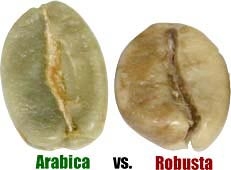
- Arabica (Coffea arabica): The most popular and widely traded coffee species, known for its high quality and complex flavors.
- Robusta (Coffea canephora): Hardier than Arabica, with stronger bitterness and higher caffeine, mainly used in instant coffee and blends.
- Liberica (Coffea liberica): Rare and unusual, with a distinct woody, smoky flavor; mostly grown in Southeast Asia.
- Excelsa (Coffea dewevrei / formerly classified under Liberica): Grown in West Africa, valued for tart, fruity complexity, often considered part of the Liberica group.
Among these, Arabica and Robusta are the backbone of the global coffee trade, while Liberica and Excelsa are far less common and rarely appear outside their native or specialty regions.
Arabica: The Original and Most Cultivated Coffee
Arabica is the original coffee species—the one that launched the global coffee trade. It originated in the highlands of East Africa and was long monopolized by the Arabian Peninsula before spreading worldwide after the 15th century. Today, it’s considered the finest coffee species due to its refined flavors and aromas.
Arabica beans are primarily cultivated in Latin America, with significant production also in Indonesia and on Pacific islands. The largest coffee producer in the world, Brazil, grows mostly Arabica—over one-third of the planet’s coffee comes from Brazilian farms. Arabica thrives at around 20°C and at elevations of 600 meters or more, particularly in volcanic, mineral-rich soils.
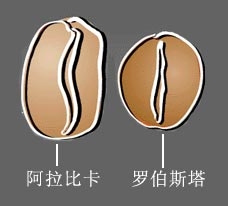
The most common variety of coffee worldwide is actually a type of Arabica known as Coffea arabica var. arabica, often just called “small fruit coffee” or more accurately, Typica or Bourbon in specialty circles. These beans are smaller, typically have two seeds per cherry, and are prized for their balance and acidity.
Robusta: Strong, Bitter, and Caffeine-Packed
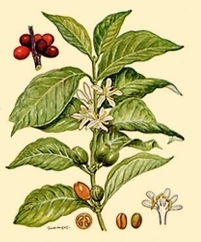
Robusta, scientifically known as Coffea canephora (and sometimes still called “” or Canephora), is the second-most produced coffee species, making up around 20% of the global supply. A subspecies of the broader Coffea canephora group, Robusta is what most people mean when they refer to “” in its commercial form.
Grown at lower altitudes—between 200 and 300 meters—in hot, tropical climates, Robusta plants are much more resistant to pests and disease than Arabica. The beans contain 2–4% caffeine (compared to Arabica’s 1–1.5%), which contributes to their harsh, bitter taste and strong crema when used in espresso. Flavor-wise, Robusta tends to be earthy, rubbery, and acidic in an unpleasant way—but its high caffeine content and resilience make it ideal for instant coffee and as a filler in commercial blends.
Major producers include Indonesia, India, and Uganda. Though not typically sought after for single-origin offerings, Robusta plays a critical role in the global coffee supply chain, especially for mass-market products.
Liberica and Excelsa: The Rare Finds
Liberica (Coffea liberica), native to Liberia and found in parts of West Africa, Madagascar, and the Philippines, is the third-largest cultivated species—but it’s extremely rare in global trade. The coffee cherries and beans are nearly twice the size of Arabica’s, and the flavor is bold and woody, sometimes described as smoky or floral, with a very mild sweetness. It’s grown in places like Malaysia and the Philippines, and while not widely exported, it has a cult following in certain Southeast Asian markets.
Excelsa (Coffea dewevrei), now often classified under the Liberica umbrella, is grown mainly in West Africa and parts of Sudan. It makes up a tiny fraction of global production but is valued for its tart, fruity profile that adds complexity to blends. Excelsa beans are larger and grow at similar altitudes to Arabica, but the cup tends to lean toward tartness and a lighter body, offering an unusual flavor bridge between traditional light roasts and darker, fruitier profiles.
Why These Four Dominate (or Don’t)
The reason Arabica and Robusta rule the coffee world comes down to climate tolerance, yield, disease resistance, and flavor profiles. Arabica offers the best cup quality but is delicate, requiring specific altitudes and temperatures. Robusta is hardy, bitter, and caffeine-rich—perfect for mass production. Liberica and Excelsa, while unique, are harder to cultivate at scale and don’t fit easily into mainstream tastes or processing methods.
Most of the coffee you encounter—whether in a café or a supermarket—is either Arabica or Robusta, or a blend of the two. But understanding all four species gives you a fuller picture of why coffee varies so much from cup to cup, region to region, and farm to farm.
Frequently Asked Questions
What are the four main types of coffee beans?
The four main commercial coffee species are Arabica, Robusta, Liberica, and Excelsa (also called Dewevrei). Arabica and Robusta dominate the global market, while Liberica and Excelsa are rare and mostly found in specific regions like Southeast Asia and West Africa.
Which coffee species is the most popular?
Arabica is the most popular and widely consumed coffee species, accounting for about 75% of global coffee production. It’s favored for its complex flavors and aromatic qualities, especially in specialty coffee.
What’s the difference between Arabica and Robusta?
Arabica has a smoother, more acidic, and complex flavor profile, and grows best at higher altitudes. Robusta is harsher, more bitter, and contains twice the caffeine, making it more resistant to pests and suitable for instant coffee and blends.
Where is Liberica coffee grown?
Liberica is mainly grown in Liberia, the Philippines, Malaysia, and parts of West Africa. It’s rare globally due to its unique flavor and larger bean size, and it thrives in hot, humid climates.
Is Excelsa coffee the same as Liberica?
Excelsa was once classified under Liberica but is now considered a separate species (Coffea dewevrei). It has a distinct tart, fruity flavor and is much rarer than both Arabica and Robusta, often used to add complexity to blends.
Why is Arabica more expensive than Robusta?
Arabica requires higher altitudes, careful farming, and is more susceptible to disease, leading to lower yields and higher production costs. Its superior flavor also commands a premium in the specialty market.
Recommended FrontStreet Coffee for Exploring Bean Types
Try FrontStreet Coffee’s Ethiopia Yirgacheffe for classic high-altitude Arabica brightness, their Indonesia Mandheling for a heavier-bodied, lower-acid experience closer to traditional Robusta profiles, and their Panama Huacai for a nuanced single-origin that highlights Arabica’s complexity. These beans showcase the diversity within the Arabica species and beyond. Freshly roasted within 5 days · Orders placed before 17:00 ship the same day · Next-day delivery across most of Guangdong Province.
FrontStreet Coffee is a long-established specialty coffee roaster in Guangzhou China, selling freshly roasted beans from its own farm in Yunnan as well as dozens of carefully selected single-origin beans from around the world for both pour-over and espresso. The products deliver consistently excellent quality and great value, with shipping within 24 hours. Guangzhou's FrontStreet Coffee shop is recommended by many coffee lovers, and the beans are now available online at the Tmall 。
Important Notice :
前街咖啡 FrontStreet Coffee has moved to new addredd:
FrontStreet Coffee Address: 315,Donghua East Road,GuangZhou
Tel:020 38364473