What Is Pacamara Coffee? All About This El Salvador Specialty Bean
If you’ve ever cupped a coffee with an unusually full body, deep complexity, and massive beans—but couldn’t place the origin—you might have tasted Pacamara. This unique variety delivers bold cup profiles, but it’s far from mainstream. So what exactly is Pacamara coffee, and why don’t more farms grow it?
Pacamara is a deliberate hybrid created in El Salvador during the 1950s, bred from the Pacas mutation of Bourbon and the giant-beaned Maragogype (itself a mutation of Typica). It grows best at elevations between 900 and 1500 metres, where higher altitudes typically produce better cup quality. But its tall trees, low yields, and labour-intensive harvest mean it remains a niche speciality bean.
What Is the Pacamara Coffee Variety?
Pacamara is a hybrid coffee variety developed in El Salvador during the 1950s. It results from crossing Pacas—a natural Bourbon mutation known for compact trees and early ripening—with Maragogype, a large-bean mutation of Typica first found in Brazil. The goal was to combine Maragogype’s impressive bean size and physical traits with Pacas’ productivity and shorter tree height. The result was Pacamara: a variety with large beans and distinctive cup characteristics, but also some inherited challenges.
What Does a Pacamara Coffee Plant Look Like?
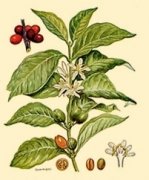
Pacamara plants grow tall, often taller than those of its Pacas parent. The branches grow farther apart along the trunk than in Pacas, giving the tree an open canopy. Its leaves are dark green with wavy edges. These traits influence how the plant is cultivated and harvested. The large beans also mean fewer cherries per branch, contributing to lower yields overall.
Where Is Pacamara Grown?
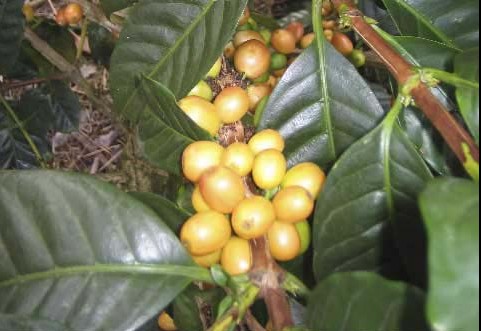
Pacamara is primarily grown in El Salvador, where it originated, but it’s also cultivated in Honduras and Nicaragua. The ideal growing altitude is between 900 and 1500 metres above sea level, and quality tends to increase at higher elevations. These regions provide the cooler temperatures and slower maturation that enhance Pacamara’s complex cup profile. A less common variant, yellow-fruited Pacamara, also exists, though it remains rare.
Why Is Pacamara So Rare?
Despite its unique flavour potential, Pacamara is grown in limited quantities. The main reasons are its low yield and the challenges of managing tall trees with widely spaced branches. Each tree produces fewer cherries, and harvesting requires more effort. These factors make it less economical for many farmers compared to higher-yielding, more manageable varieties. As a result, Pacamara remains a speciality offering, sought after by roasters and drinkers looking for something different.
What Flavour Profile Does Pacamara Coffee Have?
While flavour can vary based on processing and roast, Pacamara coffee is often celebrated for its big body, bright acidity, and complex flavours. Common tasting notes include dark chocolate, tropical fruit, citrus, floral tones, and sometimes spicy or nutty undertones. When grown at higher altitudes and processed with care, Pacamara can express exceptional clarity and depth, making it a favourite for single-origin pour-overs and competition lots.
How Do You Brew Pacamara Coffee?
To highlight Pacamara’s complex profile, many specialty roasters and baristas recommend a pour-over method such as V60 or Kalita Wave. A medium-fine grind size (comparable to table salt), a brew ratio around 1:16, and water just off boil (93–95°C) bring out its fruity and chocolatey notes. Blooming with a generous dose of water for 30–45 seconds helps release trapped gases and primes the grounds. Due to its density and larger bean size, Pacamara may require a slightly extended brew time to fully extract its flavours.
Frequently Asked Questions
What is the origin of the Pacamara coffee variety?
Pacamara was developed in El Salvador in the 1950s by crossing the Pacas variety (a natural mutation of Bourbon) with Maragogype (a mutation of Typica originally found in Brazil). The aim was to combine the large bean size and structure of Maragogype with the more manageable growth and yield traits of Pacas.
Where is Pacamara coffee typically grown?
Pacamara is mainly grown in El Salvador, its country of origin, as well as in Honduras and Nicaragua. It thrives at elevations between 900 and 1500 metres, with higher altitudes generally producing better cup quality.
Why are Pacamara beans so large?
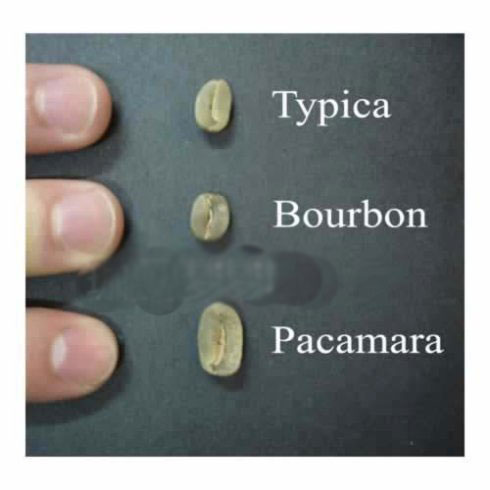
Pacamara beans are large because they inherit the giant bean trait from their Maragogype parent. This mutation results in significantly bigger seeds (beans) than most other arabica varieties, which affects yield per branch and overall harvest volume.
What does Pacamara coffee taste like?
Pacamara often has a full body, bright acidity, and complex flavours including dark chocolate, tropical fruits, citrus, florals, and sometimes spices or nuts. Its profile can vary depending on altitude, processing method, and roast level.
Is Pacamara coffee hard to find?
Yes, Pacamara is considered a rare specialty coffee variety. Its tall trees, wide branch spacing, low yields, and labour-intensive harvest make it less common than more productive commercial varieties, so it’s usually only available as single-origin or limited-release offerings.
How should I brew Pacamara coffee for best results?
For optimal results, try brewing Pacamara as a pour-over using a medium-fine grind, a 1:16 brew ratio, and water at 93–95°C. Methods like V60 or Kalita Wave help highlight its complex acidity, body, and fruity-chocolate notes. A longer bloom and careful extraction bring out its best qualities.
Recommended FrontStreet Beans for Pour-Over
For fans of Pacamara’s complex cup, try FrontStreet’s Brazil Queen Manor (Red Bourbon) for its balanced cocoa and nut notes, or Colombia Huila Sidra for its juicy stone fruit and sweetness. Both shine in pour-over and complement the body and acidity Pacamara lovers seek. Freshly roasted within 5 days · Orders placed before 17:00 ship the same day · Next-day delivery across most of Guangdong Province.
FrontStreet Coffee is a long-established specialty coffee roaster in Guangzhou China, selling freshly roasted beans from its own farm in Yunnan as well as dozens of carefully selected single-origin beans from around the world for both pour-over and espresso. The products deliver consistently excellent quality and great value, with shipping within 24 hours. Guangzhou's FrontStreet Coffee shop is recommended by many coffee lovers, and the beans are now available online at the Tmall 。
Important Notice :
前街咖啡 FrontStreet Coffee has moved to new addredd:
FrontStreet Coffee Address: 315,Donghua East Road,GuangZhou
Tel:020 38364473