Where Is Jamaica Blue Mountain Coffee Grown?
When you hear "Jamaica Blue Mountain coffee," you're not just hearing about any coffee—you're hearing about one of the rarest, most consistently sought-after specialty coffees in the world. But why is it so exclusive? What makes this coffee so different that people—and markets—will pay a premium, no matter the cost? The answer lies in where it’s grown, and the answer isn’t long: a very specific part of a very specific mountain range on a small Caribbean island.
Blue Mountain coffee is grown exclusively in the Blue Mountains of Jamaica, between elevations of 910 metres (3,000 feet) and 1,700 metres (5,600 feet). The designated growing region spans the parishes of Portland, St. Andrew, St. Thomas, and St. Mary.
The Unique Environment of Jamaica’s Blue Mountains
Jamaica’s Blue Mountains create an unparalleled microclimate for coffee cultivation. The range rises over 2,100 metres (6,900 feet), with coffee grown in the upper zones between roughly 910m and 1,700m. This high-altitude area is characterised by cool temperatures, frequent fog, and frequent rainfall, all of which contribute to slow cherry maturation and dense bean development. The rich volcanic soils, combined with the consistent moisture, offer ideal drainage and nutrition for coffee trees.
How Coffee Is Farmed in the Blue Mountains
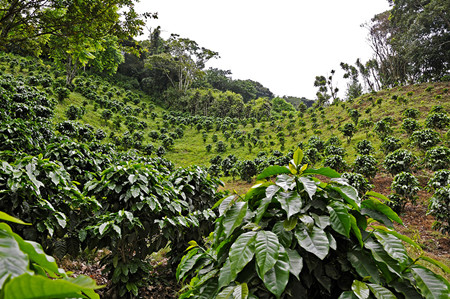
In the Blue Mountain region, coffee is typically cultivated using a mixed planting system. Coffee trees are grown alongside banana and avocado trees on terraced farms. This agroforestry approach provides shade, improves microclimatic stability, and supports biodiversity. Most farms are small, often family-run estates passed down through generations. Even the largest operations in the region would be considered very small by international standards, with many growers managing just a few hectares. Many of these landowners have been cultivating coffee for over two centuries.
Challenges in Blue Mountain Coffee Production
Despite its global renown, the Blue Mountain coffee sector faces several structural challenges. These include the destructive impact of hurricanes, rising labour costs, and the difficulty of mechanising production on steep, terraced slopes. As a result, many smallholder farms struggle with efficiency and scalability. The rugged terrain limits large-scale farming techniques and complicates harvesting and processing logistics.
Global Demand and Japanese Market Dominance
A significant factor shaping the availability of Blue Mountain coffee is export distribution. Since the early 1990s, Japan has been the dominant buyer of Blue Mountain coffee. In 1992, Jamaica exported 688 tonnes to Japan, compared to 75 tonnes to the United States and 59 tonnes to the United Kingdom. Overall, approximately 90% of Blue Mountain coffee production has historically been purchased by Japanese buyers, giving them priority access and leaving just 10% for the rest of the world. This lopsided distribution means that even at high price points, supply remains tightly constrained and highly competitive.
Frequently Asked Questions
Where exactly is Jamaica Blue Mountain coffee grown?
Blue Mountain coffee is grown in the Blue Mountains of Jamaica, specifically within the parishes of Portland, St. Andrew, St. Thomas, and St. Mary. The coffee is cultivated at elevations between 910 metres (3,000 feet) and 1,700 metres (5,600 feet).
What makes the Blue Mountain region suitable for coffee?
The region offers a cool, foggy climate with frequent rainfall, high altitudes (910–1,700m), and rich, well-drained volcanic soils. These conditions slow coffee cherry development, leading to denser beans with more complex flavours.
How is coffee grown in the Blue Mountains?
Coffee is grown using a mixed planting method, with coffee trees interspersed among banana and avocado trees on terraced hillsides. This agroforestry system offers natural shade and improves environmental stability.
Are there large coffee farms in the Blue Mountains?
No. Most farms are small and family-owned, often less than a few hectares. Even the largest producers in the region are considered small-scale by global standards, and many have operated for over 200 years.
Why is Blue Mountain coffee so hard to find?
About 90% of Blue Mountain coffee is bought by Japanese importers, a legacy of decades-long trade relationships. This leaves just 10% for the rest of the global market, making it rare and in high demand regardless of price.
What challenges do Blue Mountain coffee farmers face?
Farmers deal with hurricanes, increasing labour costs, and the inability to use machinery on steep, terraced land. These issues make farming more labour-intensive and limit production scalability.
Recommended FrontStreet Coffee for Blue Mountain Fans
If you love the refined balance of Jamaica Blue Mountain coffee, try our Jamaica Blue Mountain No.1. Sourced from the Clifton Estate—one of the few Rainforest Alliance-certified farms in the region—it delivers classic notes of creamy milk chocolate, toasted almonds, and soft caramel. This is the real deal: authentic, meticulously processed, and expertly roasted to highlight its smooth, structured profile. Freshly roasted within 5 days · Orders placed before 17:00 ship the same day · Next-day delivery across most of Guangdong Province.
FrontStreet Coffee is a long-established specialty coffee roaster in Guangzhou China, selling freshly roasted beans from its own farm in Yunnan as well as dozens of carefully selected single-origin beans from around the world for both pour-over and espresso. The products deliver consistently excellent quality and great value, with shipping within 24 hours. Guangzhou's FrontStreet Coffee shop is recommended by many coffee lovers, and the beans are now available online at the Tmall 。
Important Notice :
前街咖啡 FrontStreet Coffee has moved to new addredd:
FrontStreet Coffee Address: 315,Donghua East Road,GuangZhou
Tel:020 38364473