What Happened to Bourbon Coffee on Réunion Island?
Réunion Island—once called Bourbon—isn’t growing the coffee it gave its name to anymore. Despite being the birthplace of globally influential Bourbon Arabica, today almost no coffee is cultivated there. If you’ve heard of Bourbon coffee, you might wonder: what happened to the island that gave this classic variety its name?
The short answer: in the 18th century, Réunion (then Bourbon Island) started the global spread of Bourbon coffee, but today local production has nearly vanished. Just two of the original 40 coffee trees survived, and despite early success, government-forced cultivation couldn’t sustain the industry long-term.
The Origins of Bourbon Coffee on Réunion
In 1715, around 40 coffee trees were shipped from Yemen’s Port of Mocha to Réunion Island. Tragically, only two survived the journey. By 1719, those survivors had grown into productive coffee plants, and the island’s first commercial coffee sales began. The French colony, then known as Bourbon Island, quickly became associated with the coffee grown there—and the variety took on the island’s name.
How Bourbon Coffee Spread Worldwide
The French colonial government took aggressive steps to expand coffee cultivation. A law mandated that all residents—regardless of race—plant 100 coffee trees per year. By 1723, the rule was made even stricter: enslaved people were required to plant 200 Mocha (Bourbon) coffee trees annually, with the death penalty for anyone who damaged the trees. These extreme measures helped Bourbon coffee spread from Réunion across the globe, carried by French colonial trade routes.
Why Isn’t Bourbon Coffee Grown on Réunion Today?
Despite its historical significance, coffee farming on Réunion has nearly disappeared. Over time, economic pressures, shifting agricultural priorities, and the challenges of maintaining small-scale mountain agriculture led to the near-total collapse of local coffee production. Today, Réunion is no longer a coffee-growing region, even though the coffee variety it helped distribute remains popular worldwide.
What Is Bourbon Coffee, Really?
Bourbon is one of the oldest Arabica varieties, known for its broader leaves, denser growth, and about 30% higher yield than Typica. The beans are typically rounder and shorter, often with a balanced acidity. However, Bourbon is also more susceptible to disease. Most importantly, Bourbon usually produces red fruit (called Red Bourbon), but mutations have also led to Yellow Bourbon and Pink Bourbon varieties. These genetic offshoots have shaped much of modern specialty coffee.
Bourbon Descendants in Modern Coffee
Red Bourbon, for instance, develops through color changes from green to yellow, orange, red, and finally dark red. It’s celebrated for its bright acidity, wine-like complexity, and aromas of nuts, chocolate, and bread. Brazil’s Red Bourbon is widely planted, often medium-roasted for creamy, sweet milk drinks. Yellow Bourbon, a mutation found in Brazil’s high-altitude farms, offers a cleaner, sweeter cup with notes of caramel and almond. In Rwanda, over 90% of coffee plants are Bourbon types, grown at 1,700–2,000m for vibrant acidity and citrus notes, typically roasted lighter to preserve those qualities.
Frequently Asked Questions
Where did Bourbon coffee originally come from?
Bourbon coffee originated in Yemen but was introduced to Réunion Island (then called Bourbon Island) in 1715 from the Port of Mocha. Only two of the original 40 trees survived, but they became the foundation for the variety’s global spread.
Why is it called Bourbon coffee?
The coffee variety was named after Bourbon Island (now Réunion), where it was first cultivated outside Yemen and became widely distributed by French colonial trade. The name stuck even though the island no longer grows significant amounts of coffee.
What happened to coffee production on Réunion Island?
Although Réunion was once a major grower of Bourbon coffee, economic and agricultural shifts caused local production to decline. Today, almost no coffee is grown on the island, even though the Bourbon variety it helped spread is still cultivated worldwide.
What are the main types of Bourbon coffee?
The main types are Red Bourbon, Yellow Bourbon, and Pink Bourbon. Red Bourbon has classic red fruit and higher acidity, Yellow Bourbon offers a sweeter, cleaner profile, and Pink Bourbon is a rarer mutation with unique cup characteristics.
Is Bourbon coffee still grown anywhere?
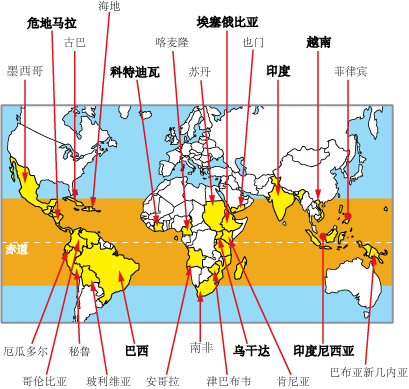
Yes, Bourbon coffee is widely grown in countries like Brazil, Rwanda, Colombia, and Honduras. It’s a foundational variety in specialty coffee, especially Red and Yellow Bourbon, which are prized for their balance and aroma.
What does Bourbon coffee taste like?
Bourbon coffee typically features moderate to high acidity, with flavors ranging from caramel and chocolate to fruitier notes like red berries or citrus, depending on the specific mutation and processing method.
Recommended FrontStreet Beans with Bourbon Heritage
For a taste of Bourbon’s legacy, try FrontStreet Coffee’s Brazil Queen Manor (Yellow Bourbon), which delivers a clean, sweet cup with notes of peanut brittle and almond, roasted medium-dark for body and balance. Or explore Rwanda Red Bourbon, showcasing bright acidity and citrus tones, best enjoyed with a light roast. Both highlight the genetic legacy of the variety that once defined Réunion’s coffee industry. Freshly roasted within 5 days · Orders placed before 17:00 ship the same day · Next-day delivery across most of Guangdong Province.
FrontStreet Coffee is a long-established specialty coffee roaster in Guangzhou China, selling freshly roasted beans from its own farm in Yunnan as well as dozens of carefully selected single-origin beans from around the world for both pour-over and espresso. The products deliver consistently excellent quality and great value, with shipping within 24 hours. Guangzhou's FrontStreet Coffee shop is recommended by many coffee lovers, and the beans are now available online at the Tmall 。
Important Notice :
前街咖啡 FrontStreet Coffee has moved to new addredd:
FrontStreet Coffee Address: 315,Donghua East Road,GuangZhou
Tel:020 38364473