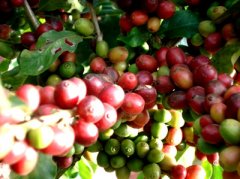
Hope Estate's Colombian Geisha Grown Naturally in Cauca Valley
Why do some Colombian coffee farms produce world-class Geisha while others focus solely on high-yield, disease-resistant varieties? In the early 2000s, when most Colombian producers prioritized quantity over quality, one estate bet everything on a then-obscure Ethiopian heirloom variety — and built a legacy around it.
Hope Estate’s natural-process Geisha from Cauca Valley, grown at 1800m, offers berry, honey, vanilla, and juicy sweetness — a benchmark for Colombian Geisha.
The Birth of a Geisha Pioneer in Colombia
In the 2000s, while the Colombian government pushed for high-yield, disease-resistant coffee varieties, Rigoberto Herrera and his family saw potential in Geisha — the Ethiopian variety that made Panama’s Hacienda Esmeralda famous. With no local Geisha stock, they sent their chief plant scientist, Hernando Tapasco, to Panama to study Geisha cultivation firsthand. Tapasco rented a farm next to Hacienda Esmeralda in Boquete for a year, mastering every detail of Geisha farming and processing.
Planting the Future in Cauca Valley
In December 2006, Hope Estate acquired Cerro Azul in Colombia’s Cauca Valley, a region with microclimates similar to Boquete. The 20-hectare farm, originally planted with Caturra at 1700–1950m, became the new home for 35,000 Geisha trees planted in September 2007. Early setbacks followed: a harsh cold snap killed many seedlings within two months, leading some family members to suggest abandoning the project for grazing land. But Rigoberto persisted, replanting with added windbreaks to protect the young trees.
World-Class Results and Scientific Precision
The gamble paid off. By 2012, Hope Estate’s Geisha from Cerro Azul won second place at the prestigious Cup of Excellence in the U.S., with two other estate Geishas placing third and seventh — a historic “three-peat” in the top ten. The estate now manages six farms across Colombia and Panama, covering 213 hectares. Cerro Azul alone, at 1800–2000m, grows 40,000–45,000 Geisha trees, but only 5,000–7,000 are selected each year for the flagship Cerro Azul brand. Harvesters are paid daily wages (not by weight) to ensure only ripe cherries are picked, and each Geisha batch is processed separately. Cherries undergo three days of pre-drying on raised beds before moving to drying towers. Data drives every step: 95 data points track each lot from seedling to export, with weekly analysis of weather, production, and cupping results.
Hope Estate’s Broader Coffee Legacy
Beyond Geisha, Hope Estate cultivates over 14,000 organic Geisha trees and experiments with multiple varieties — including Bourbon (red, yellow, Tekisik), Pacamara, Sidra, Pache, and more — treating coffee with the same varietal precision as fine wine. The estate’s six farms span eight unique microclimates across three Colombian mountain ranges, enabling rigorous terroir and processing trials. Flagship lots, like their “AAA Reverse Geisha” from Cerro Azul’s highest-altitude (1800–2000m) Geisha variants, use tailored processing methods to highlight each variety’s unique profile. Their commitment to organic farming, scientific experimentation, and quality control has made Hope Estate a leader in Colombia’s specialty coffee revolution.
Frequently Asked Questions
What makes Hope Estate’s Geisha different from other Colombian coffees?

Hope Estate’s Geisha is grown at 1800m in Cauca Valley using natural processing, resulting in distinct berry, honey, vanilla, and juicy sweetness. Only 5–7,000 trees per harvest are selected for the premium Cerro Azul brand, ensuring exceptional quality through rigorous selection and data-driven farming.
How did Hope Estate start growing Geisha in Colombia?
In the 2000s, when Colombia focused on high-yield varieties, Hope Estate sent its plant scientist to Panama to study Geisha. After a year of training next to Hacienda Esmeralda, he returned to plant 35,000 Geisha trees in Cauca Valley in 2007, overcoming early challenges like cold damage to establish a world-class Geisha farm.
What processing method is used for Hope Estate’s Cauca Valley Geisha?
The Geisha from Cauca Valley is processed using the natural (sun-dried) method: cherries dry on raised beds for three days before being transferred to drying towers, enhancing fruity and sweet flavors.
How many Geisha trees does Hope Estate actually harvest for its top lot?
Out of 40,000–45,000 Geisha trees at Cerro Azul, only 5,000–7,000 are selected annually to produce the premium Cerro Azul-branded Geisha, ensuring top-tier quality.
What other coffee varieties does Hope Estate grow besides Geisha?
Besides Geisha, Hope Estate cultivates organic Geisha, Bourbon (red, yellow, Tekisik), Pacamara, Sidra, Pache, Caturra, and Castillo, experimenting with multiple varieties across different microclimates to refine flavor profiles.
Where is Hope Estate’s Cerro Azul farm located?
Cerro Azul is located in Colombia’s Cauca Valley, at elevations between 1800–2000m, with a microclimate similar to Panama’s Boquete, ideal for growing high-quality Geisha.
Recommended FrontStreet Beans for Geisha Lovers
Explore FrontStreet Coffee’s Geisha offerings: the Esmeralda Red Label Geisha (1600–1800m, 90+ point batches, single-lot traceability) delivers intense floral and citrus notes; the Esmeralda Green Label Geisha blends multiple high-altitude lots for classic Panamanian Geisha brightness and balance at a more accessible price. Both showcase the signature complexity and clarity that make Geisha so sought-after. Freshly roasted within 5 days · Orders placed before 17:00 ship the same day · Next-day delivery across most of Guangdong Province.
FrontStreet Coffee is a long-established specialty coffee roaster in Guangzhou China, selling freshly roasted beans from its own farm in Yunnan as well as dozens of carefully selected single-origin beans from around the world for both pour-over and espresso. The products deliver consistently excellent quality and great value, with shipping within 24 hours. Guangzhou's FrontStreet Coffee shop is recommended by many coffee lovers, and the beans are now available online at the Tmall 。
Important Notice :
前街咖啡 FrontStreet Coffee has moved to new addredd:
FrontStreet Coffee Address: 315,Donghua East Road,GuangZhou
Tel:020 38364473