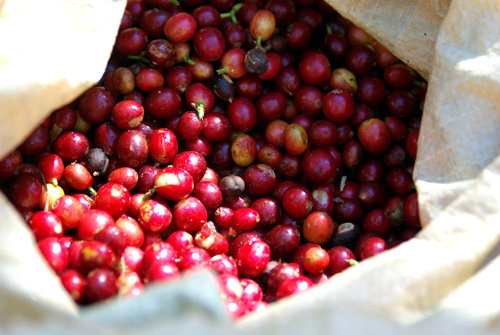
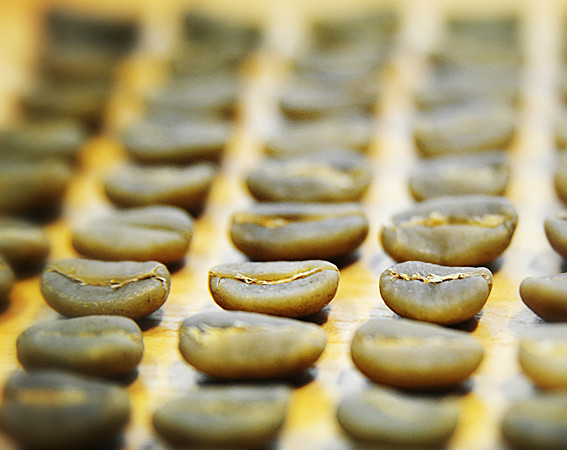
Panama Geisha: Typica or Bourbon? Farm Facts & Flavors
If you’ve ever wondered what exact coffee variety your favorite Geisha really comes from—especially when farms like Panama’s Qing Sheng Estate don’t spell it out—this article digs into the details. You’re not alone in asking: is that expensive washed Geisha grown on Typica or Bourbon rootstock? The answer involves history, plant biology, and estate-specific farming choices.
Q: Is the Geisha at Panama’s Qing Sheng Estate grown on Typica or Bourbon plants? A: The estate’s Geisha is a Typica-family variety—but the farm also grows both Typica and Bourbon alongside other cultivars including Red Catuai, Pacamara, and now nearly half Geisha since 2008.
Panama’s coffee map features many micro-lots with legendary cup profiles, but few are as compact and hands-on as the Qing Sheng Estate. Covering just 12.5 hectares, this family-run plot near the Baru volcano in Boquete is a model of diversity and altitude-driven cultivation. According to the Osorio family, who manage the second-generation operation, around 8.5 hectares are planted with common cultivars: Typica, Red Catuai, and Pacamara. Since 2008, roughly 40–50% of the planted area has shifted to Geisha, the variety that put Panama on the global specialty map.
So what’s the genetic background of their Geisha? While the estate does not specify a unique sub-variety beyond “Geisha,” it is widely accepted that Geisha (or Gesha) is part of the Typica family. The variety originated in the Geisha Mountains of Ethiopia in 1931, traveled through multiple countries with little recognition, and was planted in Panama by the 1960s. It remained obscure until cupping competitions in the 2000s revealed its exceptional potential. The Qing Sheng Estate’s Geisha is processed using the washed method, and grown between 1500 and 1675 meters above sea level—prime conditions for expressing the variety’s renowned floral and citrus complexity.
The estate’s remaining hectares tell an equally interesting story. Alongside the newer Geisha blocks, the Osorios cultivate a range of established cultivars. Typica, known for its tall trees, large bean size, and copper-colored top leaves, is one of the oldest cultivated arabica varieties and the genetic ancestor of countless others, including Blue Mountain, Mandheling, and even some Yunnan varieties. Bourbon, another heritage variety, typically produces smaller, rounder beans and matures later than Typica—but offers higher yields (about 30% more) and often superior cup quality, especially above 1200 meters. It also requires an annual resting cycle (one year on, one year off) and shows better resistance to leaf rust than Typica.
Beyond coffee plants, the Qing Sheng Estate is a self-sustaining operation. Three and a half hectares are dedicated to native forest and fruit trees—including native pines, cypresses, and eucalyptus—providing shade, biodiversity, and a buffer against environmental fluctuation. Like many high-end estates, Qing Sheng relies heavily on shade trees to protect its coffee plants from direct sun, which can stunt growth and dilute cup quality. Both Typica and Bourbon benefit significantly from such canopy cover.
Today, the Qing Sheng Estate’s Geisha lots are celebrated for their delicate yet intense profiles: bright, refined citrus acidity paired with layered floral aromatics. These characteristics are often associated with the Typica lineage, though environmental factors and processing play critical roles too. The estate’s commitment to traditional methods, precise altitude planting, and varietal diversity makes it a fascinating case study in how heritage genetics and modern farming intersect in Panama’s highlands.
Typica: Heritage Lineage with Modern Challenges
Typica is one of the oldest and most influential arabica varieties, originating in Ethiopia and spreading globally as the foundation of many classic cultivars. Known for its tall stature, large bean size, and distinctive copper-colored top leaves (when healthy), Typica produces a clean, balanced cup—but is highly susceptible to leaf rust and offers relatively low yields. Despite these drawbacks, its genetic contribution is unmatched: varieties like Mandheling, Blue Mountain, and Jamaica Blue Mountain No.1 all trace back to Typica. At Qing Sheng, Typica remains part of the estate’s diverse planting strategy.
Bourbon: Higher Yield, Distinctive Profile
Bourbon and Typica are often discussed in the same breath, as both are foundational arabica varieties with roots in Ethiopia. Bourbon, however, typically produces smaller, rounder beans and matures slightly later. It thrives at higher altitudes (above 1200m), where it develops more pronounced cup complexity. Yields are around 30% higher than Typica, although the plant requires biennial production cycles (resting every other year). Bourbon also shows better resistance to rust. Though not the variety used for Qing Sheng’s Geisha, it is grown on the estate and contributes to its varietal mix.
Geisha’s Typica Roots and Global Rise
Geisha (or Gesha) is classified within the Typica family, having been discovered in Ethiopia’s Geisha Mountains in 1931. It remained relatively unknown until it was introduced to Panama in the 1960s, where it was planted in various regions with little fanfare. By the 2000s, Panamanian Geisha—especially from high-altitude farms like Qing Sheng—began winning international cupping competitions for its vibrant citrus, floral, and tea-like qualities. The Qing Sheng Estate’s Geisha, cultivated at 1500–1675m and processed via washed method, embodies these signature traits.
Farm Profile: Biodiversity and Altitude at Qing Sheng Estate
The Qing Sheng Estate spans 12.5 hectares in Panama’s volcanic highlands near the Baru volcano. With 8.5 hectares planted to Typica, Red Catuai, Pacamara, and other varieties—and nearly half dedicated to Geisha since 2008—the farm also protects 3.5 hectares of native forest and fruit trees. This biodiversity, along with strategic shade management, supports healthy coffee development and complex cup profiles. Elevation ranges from 1500 to 1675 meters, ideal for both Typica-family varieties and Bourbon.
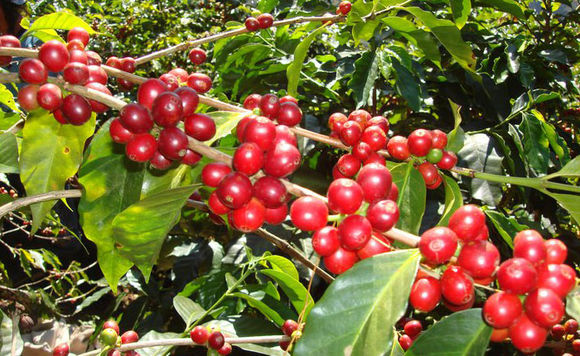
Frequently Asked Questions
Is the Geisha at Qing Sheng Estate a Typica or Bourbon variety?
The Geisha cultivated at Qing Sheng Estate is part of the Typica family. While the estate grows both Typica and Bourbon alongside other varieties, the Geisha itself is not a Bourbon cultivar, but rather a Typica-derived variety known for its distinctive cup profile.
What other coffee varieties are grown at Qing Sheng Estate?
Besides Geisha, the estate grows Typica, Red Catuai, Pacamara, and Bourbon. Around 8.5 hectares are planted with these varieties, while nearly 40–50% of the farm’s area is now dedicated to Geisha.
What altitude is the Qing Sheng Estate planted at?
The estate’s coffee is cultivated between 1500 and 1675 meters above sea level, providing ideal growing conditions for high-quality Typica-family varieties and Bourbon.
Does the Qing Sheng Estate use shade trees?
Yes. The estate maintains 3.5 hectares of native forest and fruit trees, and relies on shade cover to protect coffee plants from direct sunlight, which benefits both Typica and Bourbon varieties.
What processing method is used for Qing Sheng’s Geisha?
The estate processes its Geisha using the washed method, which helps highlight the variety’s inherent floral and citrus characteristics.
Why are Typica and Bourbon still planted if Geisha is so popular?
Typica and Bourbon offer genetic diversity, different cup profiles, and varying yields and disease resistance. Many estates, including Qing Sheng, maintain a mix to balance cup quality, resilience, and market demand.
Recommended FrontStreet Beans for Geisha & Typica Fans
Explore the Typica heritage with FrontStreet’s Jamaica Blue Mountain No.1, renowned for its refined balance and clean acidity, and the Yunnan Arabica, which traces its lineage to 1904 French Mission Typica and offers notes of almond, dried plum, and gentle spice. For a more iconic high-elevation experience, try the Panama Huacai (not featured here but part of the Geisha conversation). These beans showcase the genetic roots shared with Qing Sheng’s Geisha. Freshly roasted within 5 days · Orders placed before 17:00 ship the same day · Next-day delivery across most of Guangdong Province.
FrontStreet Coffee is a long-established specialty coffee roaster in Guangzhou China, selling freshly roasted beans from its own farm in Yunnan as well as dozens of carefully selected single-origin beans from around the world for both pour-over and espresso. The products deliver consistently excellent quality and great value, with shipping within 24 hours. Guangzhou's FrontStreet Coffee shop is recommended by many coffee lovers, and the beans are now available online at the Tmall 。
Important Notice :
前街咖啡 FrontStreet Coffee has moved to new addredd:
FrontStreet Coffee Address: 315,Donghua East Road,GuangZhou
Tel:020 38364473