How Natural Process Coffee Beans Are Dried and Handled
If you've ever wondered why some coffee tastes syrupy sweet with bold fruit flavors and heavy body, the answer often starts before roasting—in how the beans are processed after harvest. The traditional natural (or sun-dried) method, still widely used in Ethiopia and Yemen, produces distinctively rich, winey coffees, but how exactly does drying whole coffee cherries in the sun work? And how is fruit removed without washing it away?
In short, ripe (and sometimes semi-ripe) coffee cherries are spread on raised beds to dry in the sun for two to four weeks until their moisture level drops to 12%. Once dry, a machine removes the hardened husk, pulp, and silver skin—leaving just the green coffee seed inside.
What Is the Natural (Sun-Dried) Coffee Processing Method?
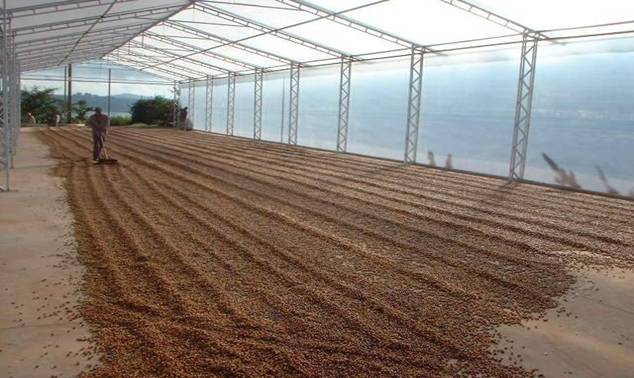
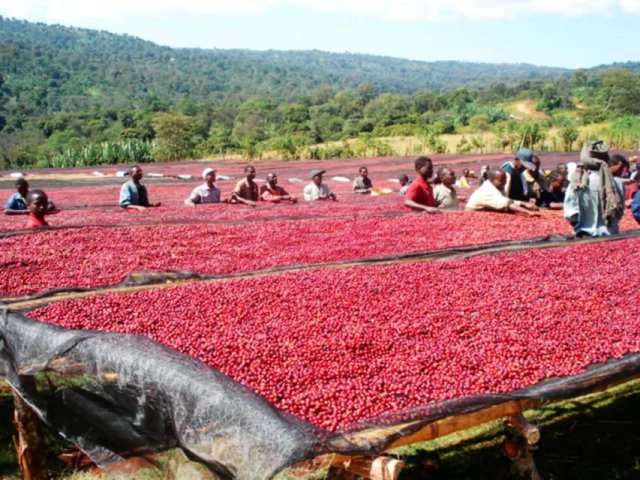
The natural process is one of the oldest ways to prepare coffee. After harvest, only the ripe or semi-ripe cherries—identified by sinking in water tanks—are selected. These cherries are then spread in thin layers on sunny patios or raised beds to dry naturally. Depending on local weather, this drying phase typically lasts between two to four weeks. Once the coffee moisture content reaches 12%, the outer fruit, parchment, and silverskin are mechanically removed. This leaves the green coffee bean ready for roasting.
Why Does the Natural Process Create Such Distinct Coffee Flavors?
The natural process is highly climate-dependent. Rain or high humidity can cause uneven drying, mold, or fermentation defects. Because the coffee cherry dries intact around the seed, sugars and acids from the fruit fully penetrate the bean, resulting in a cup that tends to be sweeter, fuller-bodied, and lower in acidity—but also more variable in quality. The beans often appear more yellow when green and develop a brownish (not white) center after roasting. While riskier, the method is cost-effective and remains popular in Ethiopia, Yemen, and parts of Africa and Indonesia—especially for Robusta varieties.
What About Honey Process and Other Hybrid Methods?
Honey processing is actually a misnomer—it doesn’t use actual honey. Instead, this method removes the skin but leaves varying amounts of the sticky fruit mucilage (or “honey”) on the beans during drying. The amount of mucilage left on determines the type: Yellow Honey (about 60% removed), Red Honey (around 30% removed), and Black Honey (almost none removed, similar to full natural). These methods yield flavors that sit between washed and natural profiles.
Washed (or wet) process, by contrast, removes the cherry skin and mucilage via fermentation and water washing before drying, resulting in a cleaner, brighter, and more acidic cup with pronounced floral notes. Some variations include semi-washed (or pulped natural), where most mucilage is removed but a small amount remains for a short sun dry, and Kenya’s unique 72-hour double fermentation method, which involves two rounds of fermentation totaling 72 hours before washing and drying.
Real-World Example: Natural Process Yirgacheffe from Ethiopia
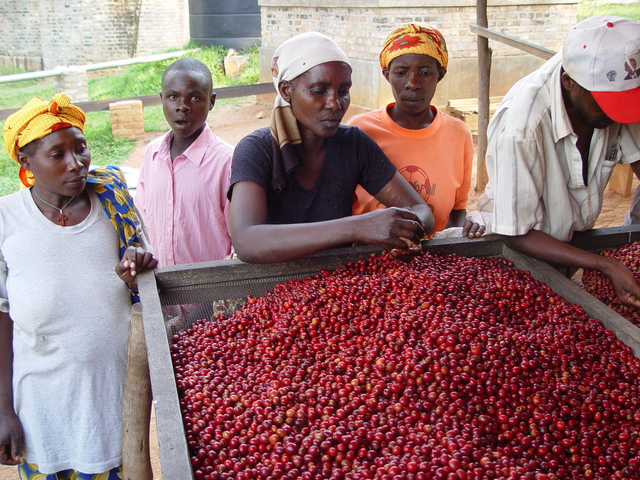
This lot comes from the Kebel Aricha washing station in Ethiopia’s Yirgacheffe Gediyo region, grown at 1,900–2,100 meters above sea level. The producer is a cooperative of around 650–700 smallholder farmers who deliver ripe cherries to the station for processing. At Kebel Aricha, the cherries are sorted and immediately placed on raised African beds to dry. For the first few days, workers turn the cherries every 2–3 hours to prevent mold and over-fermentation. Over four to six weeks, depending on the weather, the cherries are regularly monitored and turned. When dry, any remaining fruit is removed by machine, and the beans are stored as parchment until just before export. This ensures freshness and stability.
This particular batch is graded as G1—the highest Ethiopian classification—selected for excellence in appearance, uniformity, aroma, and flavor potential. Roasters and drinkers can expect bright acidity, deep berry tones, and a sweet, complex body. The cup profile includes light fermented wine notes, sweet orange, warm spices, honey-like sweetness, and a range of stone and berry fruits such as lychee, peach, longan, and dates, along with cocoa and spice undertones. The body is full and the finish lingers.
Flavor notes: light fermented wine, date, citrus, dark berries, lychee, starfruit, peach, honey sweetness, cocoa with spice, full body, long finish.
Frequently Asked Questions
What is the natural coffee processing method?
The natural process involves drying whole coffee cherries in the sun without removing the fruit beforehand. Ripe cherries are spread on raised beds or patios and turned regularly to dry evenly. This can take two to four weeks, depending on climate. Once the moisture level drops to 12%, the dried husk and pulp are removed mechanically, leaving the green coffee bean.
How long does sun drying coffee take?
Sun drying typically takes between two to four weeks. In regions like Ethiopia, it may last around four to six weeks. The exact time depends on local weather conditions, especially temperature and humidity, and workers often turn the cherries every few hours to ensure even drying.
What is the difference between natural and washed coffee processing?
Natural processing dries the coffee cherry with the fruit still intact around the bean, leading to a sweeter, fuller-bodied, and often fruitier cup with lower acidity. Washed processing removes the skin and mucilage before drying, producing a cleaner, brighter, and more acidic coffee with more pronounced floral or citrus notes.
What is honey processed coffee?
Honey processing involves removing the coffee cherry skin but leaving some or all of the sticky mucilage on the beans while they dry. The amount of mucilage determines the type: Yellow Honey (60% removed), Red Honey (30% removed), or Black Honey (mostly all mucilage kept, similar to natural). These methods create flavors between washed and natural profiles.
Why is the moisture level reduced to 12% in coffee processing?
Coffee beans are dried to a moisture content of around 12% to prevent mold, spoilage, and insect damage during storage and transport. This stable moisture level ensures the beans remain safe and preserve their quality until roasting.
What makes Ethiopian Yirgacheffe natural process coffee unique?
Yirgacheffe natural process coffee is known for its bright acidity, complex fruit flavors (like berries and citrus), and winey or floral notes. The region’s high altitude, careful selection of ripe cherries, and traditional sun drying contribute to a sweet, aromatic, and high-quality cup, often graded as G1—the top Ethiopian classification.
Recommended FrontStreet Natural-Process Coffee Beans
For fans of natural process coffees, try FrontStreet’s Ethiopia Huakui—a classic Ethiopian lot showcasing bright berries, floral notes, and a syrupy body typical of well-executed naturals. Also consider FrontStreet’s Red Cherry Yirgacheffe, made from fully ripe cherries dried on raised beds for intense tropical fruit and fermentation sweetness. For a heavier-bodied, spice-and-chocolate-laced natural, FrontStreet’s Brazil Queen Manor offers a lower-acidity alternative with sweet cane and nutty depth. All are expertly roasted. Freshly roasted within 5 days · Orders placed before 17:00 ship the same day · Next-day delivery across most of Guangdong Province.
FrontStreet Coffee is a long-established specialty coffee roaster in Guangzhou China, selling freshly roasted beans from its own farm in Yunnan as well as dozens of carefully selected single-origin beans from around the world for both pour-over and espresso. The products deliver consistently excellent quality and great value, with shipping within 24 hours. Guangzhou's FrontStreet Coffee shop is recommended by many coffee lovers, and the beans are now available online at the Tmall 。
Important Notice :
前街咖啡 FrontStreet Coffee has moved to new addredd:
FrontStreet Coffee Address: 315,Donghua East Road,GuangZhou
Tel:020 38364473