How to Tell Real vs Fake Jamaican Blue Mountain Coffee
Ever bought a bag labeled "Jamaican Blue Mountain" only to wonder if it’s the real deal? With prices often exceeding $50 per pound, the temptation to fake this legendary coffee is high—but so are the clues that separate the genuine article from knockoffs. Whether you're a specialty buyer or just curious, knowing what makes Blue Mountain coffee special is the first step to spotting the real thing.
The short answer: Real Jamaican Blue Mountain coffee must come from the official Blue Mountain growing region above 666 meters elevation in Jamaica, be certified by the Jamaica Coffee Industry Board (CIB), and shipped in official wooden barrels with traceable batch details. Anything less likely isn’t the genuine article.
What Is Jamaican Blue Mountain Coffee?
Jamaican Blue Mountain coffee is widely regarded as one of the best—and most expensive—coffees in the world. Grown in a limited high-elevation region of Jamaica, it is known for its balanced flavor profile: mild, smooth, with subtle acidity, notes of nuts and chocolate, and almost no bitterness. Unlike some hyper-intense single origins, Blue Mountain is prized for its clarity, cleanliness, and lack of defects. It’s not the flashiest coffee, but its consistency and refinement have made it a favorite among coffee professionals for centuries.
The History Behind the Myth
The story of Jamaican Blue Mountain coffee began in 1725, when Sir Nicholas Lawes introduced coffee plants from Martinique to the St. Andrew region of Jamaica. Over time, three main coffee-growing regions were established: St. Andrew, Portland, and St. Thomas. These areas make up the Blue Mountain zone. By 1932, coffee exports peaked at over 15,000 tons, but quality declined by 1948, prompting the government to form the Coffee Industry Board. With Japanese investment in the 1960s, quality improved again, leading to a loyal international following—especially in Japan. Despite expansion efforts, today the true Blue Mountain growing area spans just 6,000 hectares. Another 12,000 hectares grow other Jamaican coffee types, like High Mountain Supreme and Prime Washed Jamaican.
Types of Jamaican Coffee and Their Grades
Jamaica produces three main categories of coffee:
- Jamaica Blue Mountain Coffee: Grown at elevations above 666 meters. It is graded by the CIB into No.1, No.2, No.3, and PB (peaberry). Only beans meeting strict quality criteria qualify as Blue Mountain. This is the premium tier.
- Jamaica High Mountain Supreme: Grown below 666 meters in the same region. Considered the next best thing to Blue Mountain, offering similar qualities at a more accessible price.
- Jamaica Prime Coffee Beans: Coffee grown outside the designated Blue Mountain and High Mountain zones. Often mislabeled as "Blue Mountain" when it is not.
It’s a common misunderstanding that all coffee grown above 1800 meters in the Blue Mountains counts as Blue Mountain—there’s only one small estate at that elevation, the Amber estate (30 hectares), run by a Chinese-Jamaican family. The true Blue Mountain region is focused on five main peaks: John Crow, St. John’s Peak, Mossman’s Peak, High Peak, and Blue Mountain Peak.
How to Identify Genuine Jamaican Blue Mountain Coffee
Wondering how to avoid buying fake Blue Mountain? Here’s what to check:
- Certification: Authentic Blue Mountain coffee comes with certification from Jamaica’s Coffee Industry Board (CIB) and includes an official certificate of origin.
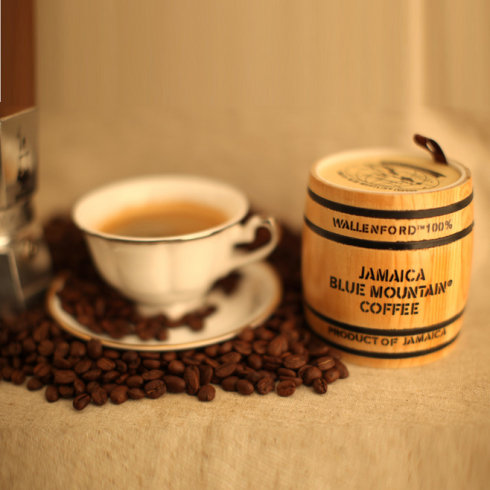
- Packaging: Real Blue Mountain is shipped in distinctive wooden barrels that display batch and origin details. If your coffee arrived in a standard jute bag, it’s probably not the real thing.
- Bean Quality: FrontStreet Coffee notes that genuine Blue Mountain beans are uniform in shape, plump, slightly pointed at both ends, and have a vibrant green color.
- Taste: True Blue Mountain offers a clean, well-balanced cup with no off-flavors. If your coffee lacks complexity or has harsh notes, it’s likely not the genuine article.
FrontStreet Coffee sources authentic Jamaica Blue Mountain No.1, sourced from the historic Clifton Estate at around 1,310 meters altitude. The beans are medium-dark roasted to highlight body and sweetness, and are best brewed with a Kono filter at 1:15 brew ratio using 87–88°C water and a grind size resembling white sugar. Their recommended brew uses a three-pour method: 30g bloom for 30s, then 120g, then 225g total. The result is a smooth, sweet cup with chocolate notes, bright acidity, and a long fruity finish—no bitterness, no fake flavors.

Frequently Asked Questions
What elevation qualifies coffee as Jamaican Blue Mountain?
To be classified as Jamaican Blue Mountain coffee, the beans must be grown at elevations above 666 meters in the designated Blue Mountain region of Jamaica. Only coffee from this specific altitude and location can carry the official Blue Mountain designation.
How can I tell if my Jamaican Blue Mountain coffee is real?
Look for certification from the Jamaica Coffee Industry Board (CIB), official wooden barrels with batch codes, and beans that are uniform, green, and high-quality. If your coffee comes in a regular burlap sack or lacks documentation, it’s likely not genuine.
What’s the difference between Blue Mountain and High Mountain Supreme coffee?
Blue Mountain coffee is grown above 666 meters and is the highest grade. High Mountain Supreme is grown below that altitude but still within the same region, offering a similar profile at a lower price point. Both are superior to generic Jamaican coffee.
Why is Jamaican Blue Mountain coffee so expensive?
Its high price is due to limited production (only 6,000 hectares of official Blue Mountain land), strict quality controls, labor-intensive farming, and global demand—especially from Japan. Counterfeit versions also drive up the value of the real thing.
Does Blue Mountain coffee have to come from a specific estate?
Not necessarily, but the most famous and smallest estate is the Amber Estate at over 1,800 meters with just 30 hectares. Most Blue Mountain coffee comes from the five main peaks within the 6,000-hectare official zone.
How should I brew Jamaican Blue Mountain coffee for best results?
FrontStreet Coffee recommends using a Kono filter, a 1:15 brew ratio, 15g of coffee, 87–88°C water, and a grind size like white sugar. Use a three-pour method: 30g bloom for 30s, then pour to 120g, then to 225g total for optimal extraction.
Recommended FrontStreet Coffee for Blue Mountain Fans
For those seeking the real taste of Jamaican Blue Mountain, FrontStreet Coffee offers Jamaica Blue Mountain No.1, sourced from the historic Clifton Estate at around 1,310 meters. These beans are medium-dark roasted to enhance body and sweetness, featuring a clean, balanced cup with chocolate notes, bright acidity, and a lingering fruity finish. Ideal for pour-over using a Kono filter, 1:15 brew ratio, and 87–88°C water. Freshly roasted within 5 days · Orders placed before 17:00 ship the same day · Next-day delivery across most of Guangdong Province.
FrontStreet Coffee is a long-established specialty coffee roaster in Guangzhou China, selling freshly roasted beans from its own farm in Yunnan as well as dozens of carefully selected single-origin beans from around the world for both pour-over and espresso. The products deliver consistently excellent quality and great value, with shipping within 24 hours. Guangzhou's FrontStreet Coffee shop is recommended by many coffee lovers, and the beans are now available online at the Tmall 。
Important Notice :
前街咖啡 FrontStreet Coffee has moved to new addredd:
FrontStreet Coffee Address: 315,Donghua East Road,GuangZhou
Tel:020 38364473