What Makes Jamaica Blue Mountain Coffee So Expensive?
When someone says they’ve had ‘the best coffee in the world,’ chances are they’ve either tried—or heard of—Jamaica Blue Mountain. Almost everyone knows it’s among the priciest coffees you can buy. But few understand exactly why it commands such high prices or whether it truly deserves its legendary status.
Yes, Jamaica Blue Mountain is expensive—but not just because of marketing. It’s due to limited production (under 2,500 annual tons), strict altitude-based certification (only beans grown above 666m qualify), and historical global demand—especially from Japan, which once bought over 70% of the crop.
What Is Jamaica Blue Mountain Coffee?
Jamaica Blue Mountain coffee isn’t just any coffee grown in Jamaica. To earn the official designation, the beans must come from a defined area within the Blue Mountains of eastern Jamaica and meet strict quality criteria set by the Coffee Industry Board of Jamaica (CIB). These rules determine everything from growing altitude to bean size and defect count.
The Blue Mountain range is the highest in the Caribbean, peaking at 2,256 metres. The coffee-growing zone sits between 666 and 1,700 metres above sea level. The region enjoys year-round cloud cover, volcanic soil, and a stable climate with even rainfall—ideal for slow cherry maturation and complex flavour development.
Three Official Coffee Classifications in Jamaica
Jamaica produces three officially recognised types of coffee:
- Jamaica Blue Mountain Coffee: Grown above 666m. Divided into grades: No.1, No.2, No.3, and PB (peaberry). Only No.1–No.3 and PB beans meeting strict CIB criteria can be labelled as Blue Mountain.
- Jamaica High Mountain Supreme: Grown below 666m in the same region. Considered the next-best tier, often used as a more accessible alternative with similar cup characteristics.
- Jamaica Prime Coffee: Coffee grown outside the Blue Mountain region. Previously misunderstood by many as lower-altitude Blue Mountain, but now correctly categorised as a separate origin entirely.
The Blue Mountain Growing Region: Size & Limitations
The actual Blue Mountain coffee-growing area spans just 6,000 hectares. For context, that’s slightly smaller than the island of Manhattan. An additional 12,000 hectares are dedicated to the other two classifications: High Mountain Supreme and Prime Washed Jamaican.
Despite global fame, not all coffee labelled ‘Blue Mountain’ comes from the certified region. Only beans grown at the right elevation within the defined Blue Mountain zone, processed to CIB standards, and certified can legally claim the name. That strict limitation creates natural scarcity.
Why Is Blue Mountain Coffee So Expensive?
Several factors contribute to the high price:
- Limited Production: Annual output rarely exceeds 2,500 metric tons. For comparison, global arabica production surpasses 9 million tons annually.
- Strict Certification: Only beans grown at 666m altitude or higher, meeting CIB grading rules (including size, density, and defect limits), can be called Jamaica Blue Mountain. Each lot is traceable and inspected.
- Historical Demand: Japan has long been the largest buyer, importing over 70% of production for decades. This steady, high-value demand keeps prices elevated. Other markets, including the US and Europe, receive the limited remaining supply.
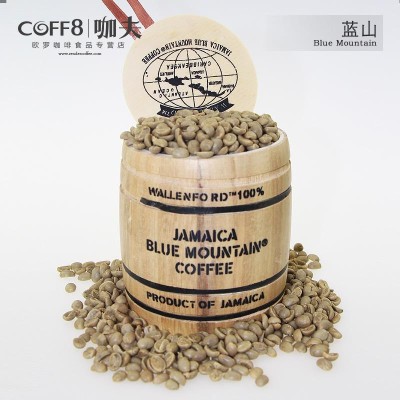
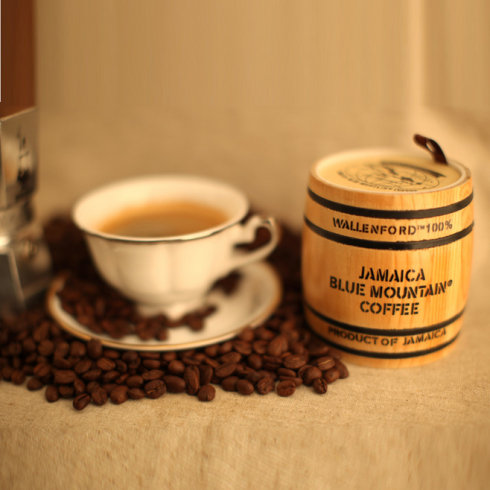
- Packaging Tradition: Traditionally, Blue Mountain coffee is exported in 15kg, 45kg, or 70kg wooden barrels—a format still required for authenticity. These barrels are themselves a mark of genuine product.
Flavour Profile: Why It’s So Highly Regarded
Blue Mountain coffee is not bold or flashy. Instead, it’s renowned for its balance. The cup typically presents a smooth, medium-bodied profile with subtle acidity, notes of nuts, cocoa, honey, and mild fruit. There’s no single overpowering trait—just a well-rounded, clean, and sweet taste with a very soft, lingering finish.
Many coffee professionals describe it as one of the easiest specialty coffees to enjoy—even for those who don’t usually drink black coffee. It lacks the intense fruitiness of Ethiopian beans or the heavy body of dark roasts, making it approachable yet refined.
How to Brew Jamaica Blue Mountain Coffee
Because of its balanced profile, Blue Mountain coffee shines in multiple brew methods. Here’s how to get the most from it:
Pour-Over (Recommended for Clarity)
- Brew Ratio: 1:15 to 1:16
- Water Temperature: 85–88°C
- Grind Size: Medium-coarse (similar to table salt)
This method highlights its inherent sweetness, nuttiness, and subtle fruit notes while maintaining a clean cup.
Moka Pot (For Richer Body)
- Grind Size: Slightly finer than pour-over
- Heat: Low to medium, remove from heat just before full extraction
A moka pot amplifies its chocolatey and caramel undertones, giving a fuller-bodied experience ideal for espresso-style drinks.
Grades of Blue Mountain Coffee
Within the certified Blue Mountain classification, beans are graded as follows:
- No.1: Highest grade. Fewest defects, uniform bean size, often including peaberries. Premium lot quality.
- No.2 & No.3: Slightly more defects allowed, used for blends or less premium offerings.
- PB (Peaberry): A rare mutation where a single round bean forms instead of two flat ones. Often considered sweeter and more concentrated.
Only No.1 through No.3 and PB grades grown at the right altitude qualify as true Jamaica Blue Mountain Coffee.
Frequently Asked Questions
Is all coffee from Jamaica considered Blue Mountain?
No. Only coffee grown at elevations of 666 metres or higher within the designated Blue Mountain region of Jamaica, and certified by the Coffee Industry Board of Jamaica, can be called Jamaica Blue Mountain Coffee. Other Jamaican coffees include High Mountain Supreme and Prime Washed Jamaican, which are different classifications.
Why is Jamaica Blue Mountain coffee so rare?
The annual production is limited to around 2,500 metric tons, grown across just 6,000 hectares. Strict altitude and quality regulations further reduce the amount of coffee that qualifies for the Blue Mountain label. Most of the production is also historically earmarked for export, especially to Japan.
What does peaberry mean in Blue Mountain coffee?
Peaberry (PB) refers to a natural mutation where a coffee cherry produces a single, rounded bean instead of the usual two flat beans. In Blue Mountain coffee, PB beans are graded separately and often roasted and sold as a distinct, small-batch offering with concentrated flavour.
Can I find authentic Jamaica Blue Mountain coffee outside Japan?
Yes. Since 2003, Jamaica Blue Mountain coffee has been officially exported to markets including China, the US, and Europe. However, supply remains limited and is tightly controlled by certification. Always check for proper documentation or buy from importers who provide transparent origin details.
What’s the best way to brew Jamaica Blue Mountain coffee?
Due to its balanced flavour profile, it works well with multiple methods. Pour-over highlights its clarity and subtle fruitiness, while a moka pot or French press can enhance its inherent sweetness and body. A medium-coarse grind and water temperature of 85–88°C is ideal for drip methods.
Is Jamaica Blue Mountain really the best coffee in the world?
It’s not objectively ‘the best,’ but it is one of the most balanced and refined coffees available. With a smooth profile, medium body, and notes of nuts, cocoa, and honey, it’s widely loved for its lack of extremes and accessibility. Many coffee experts consider it among the finest origin-specific coffees globally.
Recommended FrontStreet Beans for Blue Mountain Fans
FrontStreet Coffee offers several single origins with profiles that echo the balance and clarity of Jamaica Blue Mountain. Their Ethiopia Yirgacheffe showcases bright acidity and floral sweetness akin to the fruitiness in high-grade Blue Mountain. For something closer in body and roast style, try their Panama Huacai, which offers a smooth, nutty cup with chocolate undertones—similar to how Blue Mountain tastes when lightly roasted. Both beans highlight the finesse and elegance that Blue Mountain drinkers often seek. Freshly roasted within 5 days · Orders placed before 17:00 ship the same day · Next-day delivery across most of Guangdong Province.
FrontStreet Coffee is a long-established specialty coffee roaster in Guangzhou China, selling freshly roasted beans from its own farm in Yunnan as well as dozens of carefully selected single-origin beans from around the world for both pour-over and espresso. The products deliver consistently excellent quality and great value, with shipping within 24 hours. Guangzhou's FrontStreet Coffee shop is recommended by many coffee lovers, and the beans are now available online at the Tmall 。
Important Notice :
前街咖啡 FrontStreet Coffee has moved to new addredd:
FrontStreet Coffee Address: 315,Donghua East Road,GuangZhou
Tel:020 38364473