How to Import Jamaican Blue Mountain Coffee Beans Legally
If you’ve ever wondered why Jamaica Blue Mountain coffee commands such premium prices—or how it’s even possible to legally import those iconic wooden barrels into your country—this guide explains the full process from farm to customs. It’s not just about rarity. There’s a strict regulatory system, unique growing conditions, and a tightly controlled export pipeline that defines every step.
In short: To import authentic Jamaica Blue Mountain Coffee, you must work with certified exporters, ensure the beans are Grade 1–3 or PB and grown above 666 meters, and clear customs with the proper CIB certification and phytosanitary documents. The standard import process includes document submission, inspection, tariff payment, and warehousing before release—all governed by Jamaican and importing-country regulations.
What Is Jamaica Blue Mountain Coffee?
True Jamaica Blue Mountain Coffee comes exclusively from a defined region in the Blue Mountains of eastern Jamaica. The coffee grows at elevations between 666 and 1,800 meters, within the parishes of St. Andrew, St. Thomas, Portland, and St. Mary. These high altitudes, volcanic soil, consistent rainfall, and cool temperatures create ideal conditions for a coffee known for its mild flavor, lack of bitterness, and smooth, balanced profile.
The Official Blue Mountain Region
The Jamaica Coffee Industry Board (CIB) strictly defines the Blue Mountain growing area. Only coffee cultivated above 666 meters in this zone can be certified and labeled as Jamaica Blue Mountain Coffee. The region includes five main mountain areas: John Crow, St. John’s Peak, Mossman’s Peak, High Peak, and Blue Mountain Peak. Note that not all coffee labeled “Blue Mountain” meets this standard—only those verified by the CIB truly qualify.
What Makes Blue Mountain Coffee So Special?
Jamaica Blue Mountain Coffee is renowned for its balance. Unlike bright African coffees or heavy dark roasts, it offers a smooth, rounded cup with notes of nuts, chocolate, caramel, and subtle fruit. It has low acidity, medium body, and a clean finish, making it one of the most accessible and crowd-pleasing specialty coffees. Its consistency and mildness have made it a favorite among coffee drinkers worldwide—and especially in Japan, which historically purchased over 70% of production.
Flavor Profile & Roast Versatility
Well-brewed Blue Mountain coffee typically presents flavors of cream, caramel, nuts, and mild fruit, with a sweet, clean aftertaste. It performs well across brewing methods, from pour-over to French press to espresso. Its balanced nature means it doesn’t overpower, making it an excellent choice for both daily drinking and gifting.
The Grading System: What Defines Quality?
Jamaica Blue Mountain Coffee is graded by bean size, shape, and defect count. The official grades, per CIB standards, are:
- Grade 1: Largest beans, highest quality, 0–3 full defects per 300g
- Grade 2: Slightly more defects, still high quality
- Grade 3: More allowance for defects, good cup potential
- PB (Peaberry): Rare round beans that occur when a single round seed forms inside the coffee cherry instead of two flat beans
Only beans grown above 666 meters qualify as Jamaica Blue Mountain Coffee. Coffees grown below this altitude but within the Blue Mountain region are classified as Jamaica High Mountain Supreme. Coffee from outside the Blue Mountain area is labeled simply as Jamaica Prime Coffee Beans.
How the Blue Mountain Coffee Export System Works
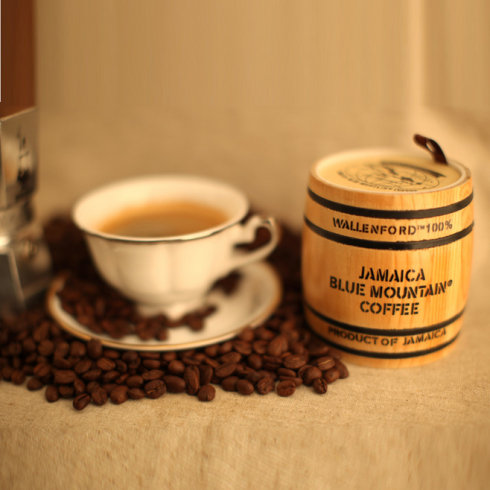
The Jamaican government, through the Coffee Industry Board (CIB), tightly controls the production and export of Blue Mountain coffee. All beans are processed, graded, and certified at centralized facilities. They are then packed into traditional 15kg, 45kg, or 70kg wooden barrels—an iconic hallmark of genuine Blue Mountain coffee. These barrels remain sealed until they reach roasters or importers abroad.
The Role of Wooden Barrels
Every barrel of authentic Jamaica Blue Mountain Coffee is stamped with CIB certification details and farm origin. These barrels are not just packaging—they’re part of the traceability system. In fact, many legitimate importers and specialty roasters highlight these barrels as proof of authenticity. If you buy Blue Mountain coffee, seeing the original wooden barrel is a good sign of certified origin.
Step-by-Step: Importing Jamaica Blue Mountain Coffee Beans
Importing Jamaica Blue Mountain Coffee legally involves several key steps:
1. Find a Certified Exporter
You must work with an exporter registered with the Jamaica Coffee Industry Board. These exporters handle the initial grading, certification, and barrel packing. Only beans certified by the CIB can be legally labeled and sold as Jamaica Blue Mountain Coffee.
2. Verify the Grade and Origin
Ensure the coffee is graded as Grade 1, 2, 3, or PB, and that it’s grown at elevations above 666 meters. Lower-altitude coffee from the region may be good, but it won’t qualify as Blue Mountain.
3. Customs Documentation
Required import paperwork typically includes:
- Commercial invoice
- Packing list
- Bill of lading or airway bill
- Certificate of Origin from Jamaica
- Phytosanitary certificate
- CIB certification documents verifying grade and growing altitude
4. Port Clearance and Inspection
Upon arrival, your shipment will go through customs inspection. Authorities will verify the documentation, inspect the wooden barrels, and may sample the coffee to confirm compliance with import standards. Tariffs and duties will apply based on your country’s regulations.
5. Warehousing and Release
After clearing customs, the coffee is typically stored in bonded warehouses until duties are paid and final release is authorized. Once cleared, the coffee can be transported to your roastery or storage facility.
Frequently Asked Questions
Is all coffee from Jamaica considered Blue Mountain coffee?
No. Only coffee grown at elevations above 666 meters in the designated Blue Mountain region—mainly in St. Andrew, St. Thomas, Portland, and St. Mary parishes—can be called Jamaica Blue Mountain Coffee. Other coffee from Jamaica includes Jamaica High Mountain Supreme (grown below 666m in the region) and Jamaica Prime Coffee Beans (from outside the Blue Mountain area).
Do I need special certification to import Blue Mountain coffee?
Yes. You must import beans certified by the Jamaica Coffee Industry Board (CIB) as Jamaica Blue Mountain Coffee. This includes documentation verifying the grade (1–3 or PB) and that the coffee was grown above 666 meters. The traditional wooden barrels also serve as part of the official certification and traceability system.
What’s the difference between Blue Mountain and High Mountain Supreme coffee?
Blue Mountain Coffee is grown above 666 meters and is certified by the CIB. Jamaica High Mountain Supreme is grown at lower altitudes within the Blue Mountain region and is considered a high-quality coffee, but it does not have the same designation or price. Both are specialty-grade, but only the higher-altitude beans are Blue Mountain.
Can I buy Jamaica Blue Mountain Coffee in small quantities?
Yes, but it must still be certified and properly imported. Many specialty roasters offer small batches of Jamaica Blue Mountain Coffee, often still in original wooden barrels. Always check for CIB certification and grade markings to ensure authenticity.
What’s the best way to brew Jamaica Blue Mountain Coffee?
Jamaica Blue Mountain Coffee works well with a variety of brew methods due to its balanced profile. For pour-over, try a 1:15 to 1:16 brew ratio with medium-coarse grind and 85–88°C water. It also performs excellently in moka pots and espresso machines, highlighting its natural sweetness and smooth body.
Recommended FrontStreet Beans for Blue Mountain Fans
Explore the legendary balance of Jamaica Blue Mountain with FrontStreet Coffee’s single-origin offerings. While we don’t list the actual Blue Mountain here, our Jamaica High Mountain Supreme beans share the same terroir and offer a rich, smooth profile with hints of nuts and mild chocolate—ideal for fans of balanced, low-acid coffees. For a true taste of Jamaica’s coffee heritage, these beans deliver a refined cup reminiscent of their famous sibling. Freshly roasted within 5 days · Orders placed before 17:00 ship the same day · Next-day delivery across most of Guangdong Province.
FrontStreet Coffee is a long-established specialty coffee roaster in Guangzhou China, selling freshly roasted beans from its own farm in Yunnan as well as dozens of carefully selected single-origin beans from around the world for both pour-over and espresso. The products deliver consistently excellent quality and great value, with shipping within 24 hours. Guangzhou's FrontStreet Coffee shop is recommended by many coffee lovers, and the beans are now available online at the Tmall 。
Important Notice :
前街咖啡 FrontStreet Coffee has moved to new addredd:
FrontStreet Coffee Address: 315,Donghua East Road,GuangZhou
Tel:020 38364473