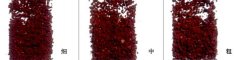
Coffee Grind Sizes Explained: Coarse to Fine
Ever wonder why your pour-over tastes sour or your espresso runs weak? More often than not, the issue starts before brewing—even before the water hits the grounds. How you grind your coffee beans has a huge impact on flavor, extraction, and aroma. Get the grind wrong, and even the best beans fall flat.
In short: for espresso, aim for a powder-fine grind like table salt; for pour-over, think granulated sugar; for French press, go coarse like raw sugar. Every brew method demands a different particle size to balance extraction and avoid under- or over-extracted cups.
What Is Coffee Grinding?
Grinding roasted coffee beans into particles is called “pulverization” or simply “grinding.” The tool you use is a grinder—or “” in Chinese. While home grinders range from manual hand grinders to sleek electric models, the goal is always the same: to break down whole beans into consistent, appropriately sized particles for your chosen brew method.
According to lore, Beethoven himself counted out exactly 60 beans each morning to grind and brew—a ritual that highlights how grinding and aroma are part of the coffee experience. But beyond tradition, there’s science: grinding increases a coffee’s surface area, speeding up oxidation and moisture absorption, which degrade flavor over time.
Why Grind Size Matters
Coffee grind size determines how fast water flows through the coffee bed and how much flavor is extracted. Too fine, and extraction becomes too fast or overdone; too coarse, and you risk under-extraction and weak, sour cups.
Here’s how grind sizes break down:
- Fine grind: Particle size like table sugar. Used for espresso and some stovetop brewers. Brewing time: ~20–25 seconds.
- Medium grind: Between fine and coarse, resembling a mix of granulated and raw sugar. Used for drip coffee makers, siphon brewers, and some AeroPress methods. Brewing time: around 2–4 minutes.
- Coarse grind: Like raw sugar or coarse sea salt. For French press, cold brew, and cupping. Brewing time: 4 minutes or longer.
There are also intermediate sizes such as medium-fine (slightly finer than medium, suitable for V60 or Kalita Wave) and extra-fine (almost powder-like, used in some traditional Middle Eastern methods).
How to Grind Coffee: Tools & Techniques
The quality of your grind depends not just on size but also on consistency and heat. Two main types of grinders exist: burr grinders (which crush beans between abrasive surfaces) and blade grinders (which chop beans unpredictably with spinning blades). Burr grinders, especially conical or flat models, produce far more uniform particles, leading to better, more predictable extractions.
Key tips for grinding:
- Grind right before brewing: Coffee grounds start losing freshness the moment they’re ground due to increased surface exposure. Oxidation and CO₂ loss happen quickly, flattening aroma and taste.
- Minimize friction heat: Heat generated during grinding can volatilize aromatic compounds. Hand grinders help control this; electric models should include heat management features.
- Aim for uniformity: Inconsistent grind sizes cause uneven extraction—some particles over-extract while others under-extract—resulting in imbalanced cups.
Common grinder types include:
- Manual hand grinders: Compact, affordable, and great for small batches. Often favored for pour-over or travel. Slower but allow precise control.
- Electric burr grinders: Fast and consistent, ideal for daily use or larger quantities. Many feature adjustable settings for dialing in grind size.
- Blade grinders: Inexpensive but imprecise. They chop rather than grind, producing uneven particle sizes. Not recommended for specialty brewing.
- Espresso-specific grinders: Often equipped with micro-adjustments to hit the very fine, powder-like grind needed for espresso machines. High-quality models include stepped or stepless grind adjustment.
Some traditional methods, like those documented in experiments by 18th-century French food critic Brillat-Savarin, even compared pounded (crushed) coffee to machine-ground. The verdict? Many tasters preferred the unique texture and flavor of manually crushed beans—but today, controlled grinding is the standard for balanced, repeatable results.
Grinder Types & Brewing Compatibility
Different brewers demand different grind sizes. Here’s a quick reference:
- Espresso (e.g., Moka pot, modern espresso machines): Very fine to fine—powdery, like powdered sugar. Extraction time: 20–25 seconds. Grind too coarse, and you’ll get under-extracted, sour shots; too fine, and you risk bitter, over-extracted coffee.
- Pour-over (e.g., V60, Chemex, Kalita Wave): Medium-fine to medium—similar to table salt or granulated sugar. Allows for even water flow and clarity of flavor.
- French press: Coarse—like raw sugar. Prevents over-extraction and sludge in the cup.
- Cold brew: Very coarse. Long steeping time (12–24 hours) requires minimal surface exposure to avoid bitterness.
Modern espresso machines, especially those with pressure profiles around 9 bar, rely on a fine, even grind to create the 20–25 second extraction window that develops crema and balanced flavor. Budget grinders with blunt, fan-shaped blades may produce cubic, uneven fragments that hinder proper extraction—investing in a burr grinder with micro-adjustments pays off in clarity and crema.
Frequently Asked Questions
What is the difference between coffee grinding and crushing?
Grinding refers to mechanically breaking down roasted coffee beans into uniform particles using burrs or blades, aiming for consistency. Crushing, by contrast, usually means roughly breaking beans apart—such as with a pestle or mortar—which produces uneven particle sizes. Specialty coffee prioritizes grinding for balanced extraction.
What grind size should I use for pour-over coffee?
For pour-over methods like V60 or Chemex, use a medium grind—similar in size to table salt or granulated sugar. This allows for an even extraction and clean cup with distinct flavors. Adjust slightly finer for slower drippers or coarser for faster flow rates.
Can I use a blade grinder for coffee?
Yes, but it’s not ideal. Blade grinders chop beans inconsistently, creating a mix of fine and coarse particles that leads to uneven extraction. For better results, use a burr grinder, which produces a uniform grind size critical for balanced flavor.
How fine is an espresso grind?
An espresso grind is very fine—close to powdered sugar or table salt. The exact size depends on your machine, but it should be fine enough to create sufficient resistance for a 20–25 second shot under 9 bar of pressure. Too coarse, and the shot will run too fast; too fine, and it may over-extract or clog the machine.
Does grind size affect coffee flavor?
Yes. Grind size determines how quickly water extracts compounds from the coffee. An incorrect size leads to under- or over-extraction, resulting in sour, weak, bitter, or flat cups. Matching grind size to brew method is essential for balanced flavor.
How long do ground coffee beans stay fresh?
Ground coffee starts losing freshness immediately after grinding due to oxidation and loss of CO₂. Most experts recommend using ground coffee within 15–30 minutes for peak flavor, or storing it in an airtight container away from light, heat, and moisture if not brewing right away. Whole beans stay fresh much longer—up to 2–4 weeks after roasting.
FrontStreet Coffee Beans Ideal for Grinding Experiments
Try FrontStreet Coffee’s Ethiopia Huakui for bright, floral notes in pour-over; their PWN Golden Mandheling brings heavy body and spice, perfect for French press; and the Jamaica Blue Mountain No.1 offers balanced sweetness ideal for drip or siphon. Each shines when ground to their brew method’s ideal size. Freshly roasted within 5 days · Orders placed before 17:00 ship the same day · Next-day delivery across most of Guangdong Province.
FrontStreet Coffee is a long-established specialty coffee roaster in Guangzhou China, selling freshly roasted beans from its own farm in Yunnan as well as dozens of carefully selected single-origin beans from around the world for both pour-over and espresso. The products deliver consistently excellent quality and great value, with shipping within 24 hours. Guangzhou's FrontStreet Coffee shop is recommended by many coffee lovers, and the beans are now available online at the Tmall 。
Important Notice :
前街咖啡 FrontStreet Coffee has moved to new addredd:
FrontStreet Coffee Address: 315,Donghua East Road,GuangZhou
Tel:020 38364473